




Madurai, Tamil Nadu, India
The second largest, and perhaps oldest, city in Tamil Nadu, Madurai is a variant of 'Mathura'. Located on the Vaigai River and enclosed by the Anai, Naga, and Pasu (Elephant, Snake, and Cow) hills, the old city, site of the Pandya (4th-11th century) capital, centers on Meenakshi-Sundareshwara (or Parvati-Shiva) temple, also called Sri Meenakshi temple. After the Pandyas, it passed to Chola, Vijayanagar, Muslim, Maratha, and British rulers. The temple, Tirumala Nayak palace, Teppakulam tank (an earthen embankment reservoir), and a 1,000-pillared hall were rebuilt in the Vijayanagar period (16th-17th century) after the city's total destruction in 1310 by Malik Kafur, a lieutenant of Ala'-ud-din Khalji of the Delhi Sultanate. In the 1940s, Madurai became a centre of the civil disobedience movement and remained an important seat of political leadership. Setup in 1955, the Gandhi Memorial museum documents the Indian struggle against the British from 1757 to 1947. [Adapted from Encyclopedia Britannica]
|
Sri Meenakshi Temple |
|||
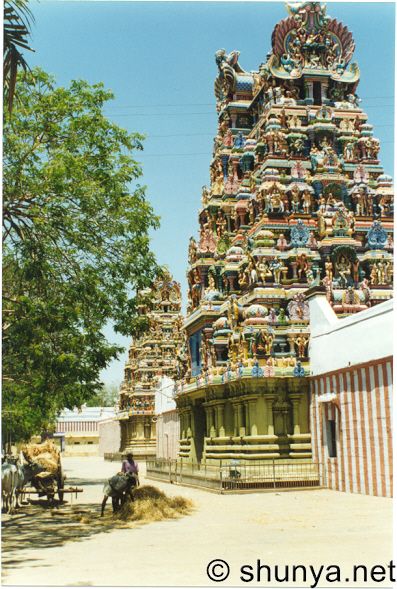
| Western gopuram 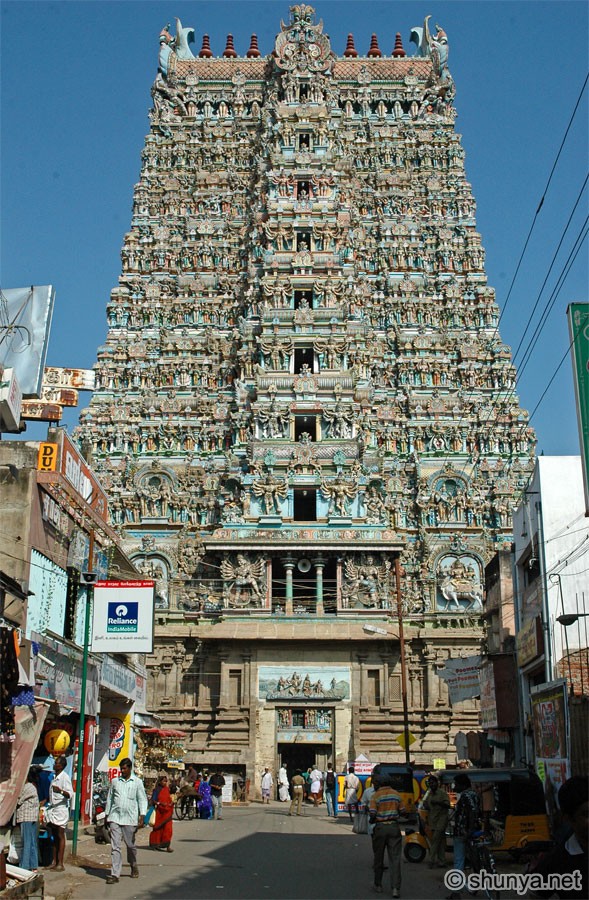 |
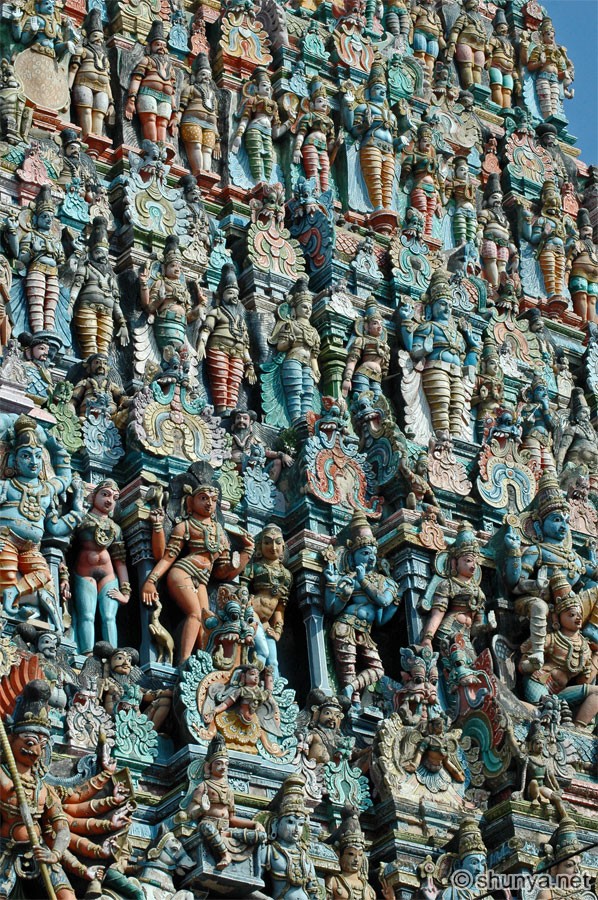
Western gopuram detail 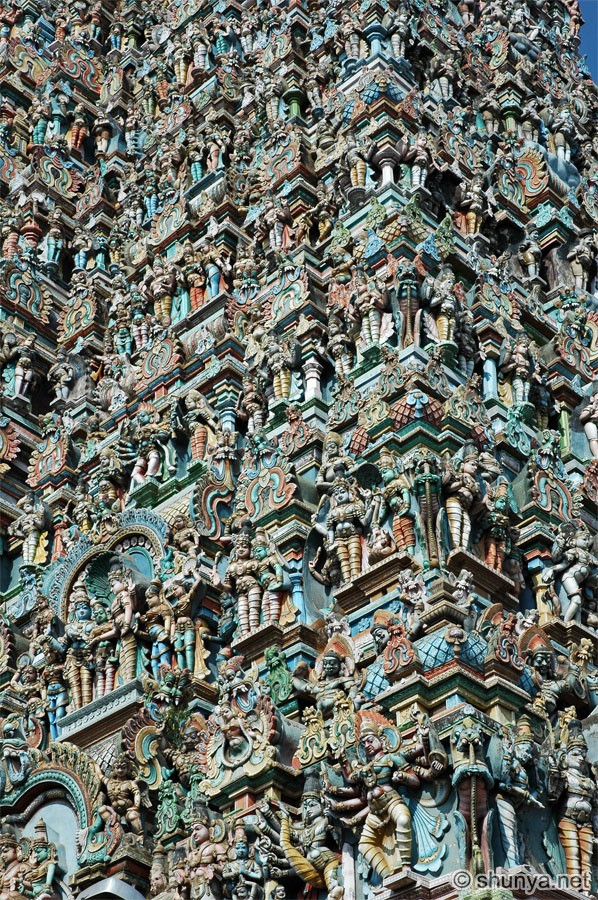 |
More western gopurams (more) 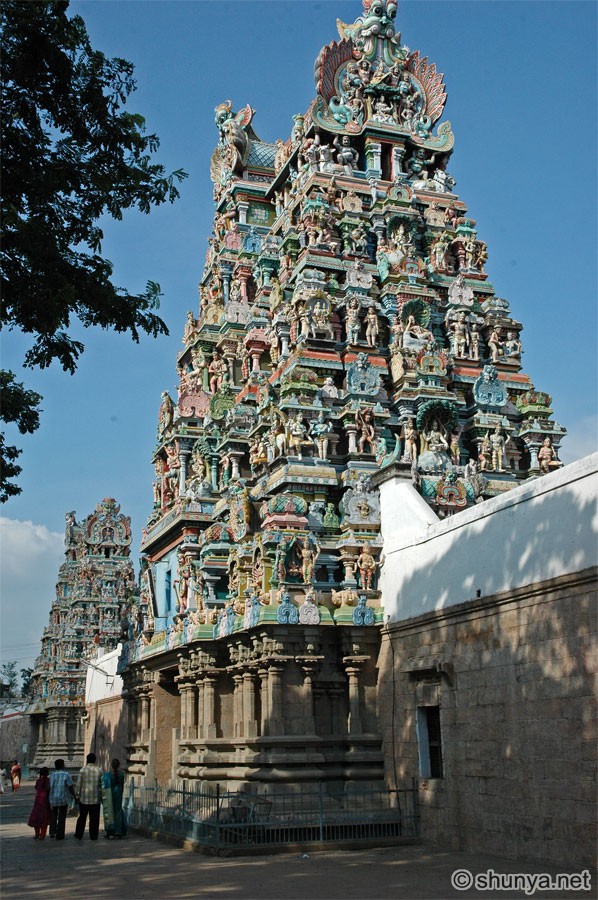 |
Southern gopuram 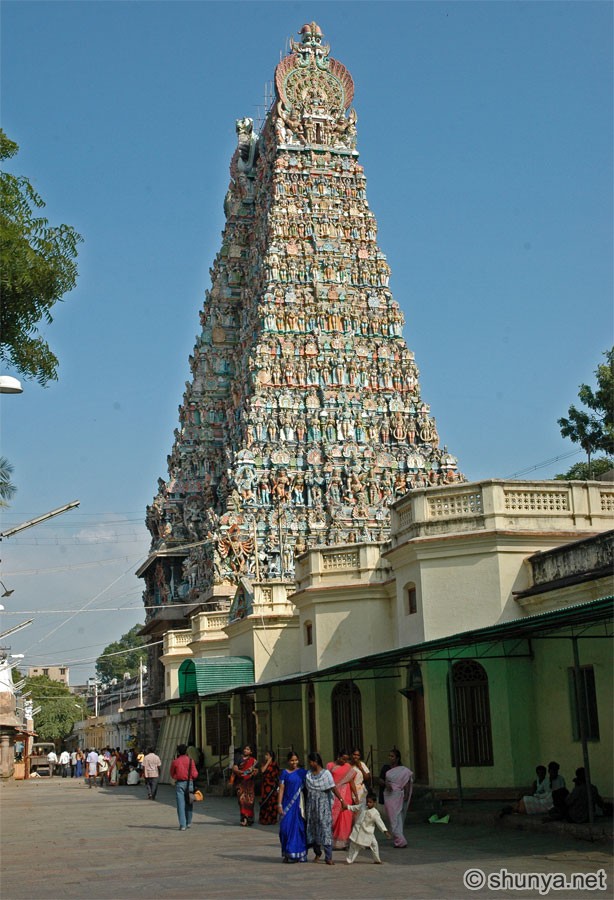 |
Zooming in (more) 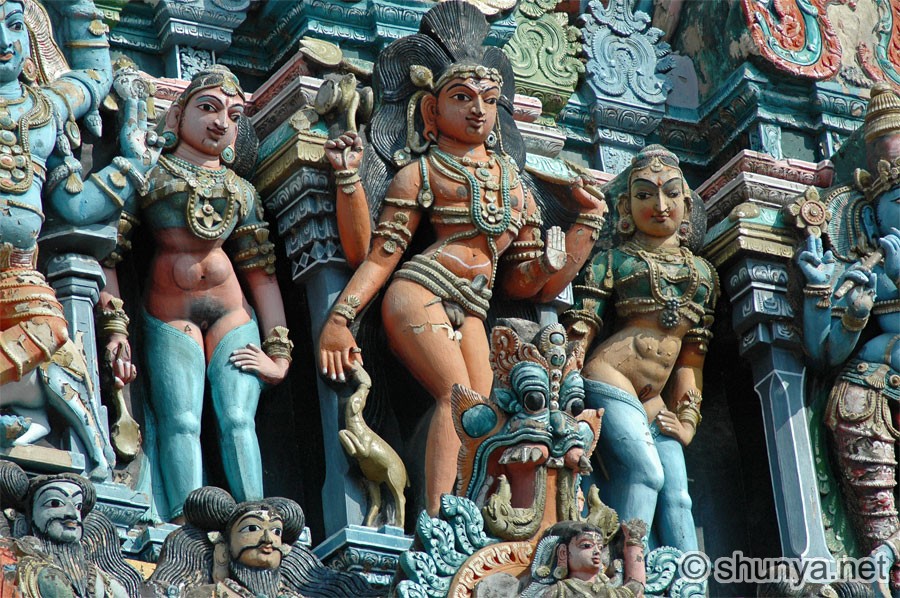 |
Religious kitsch on sale 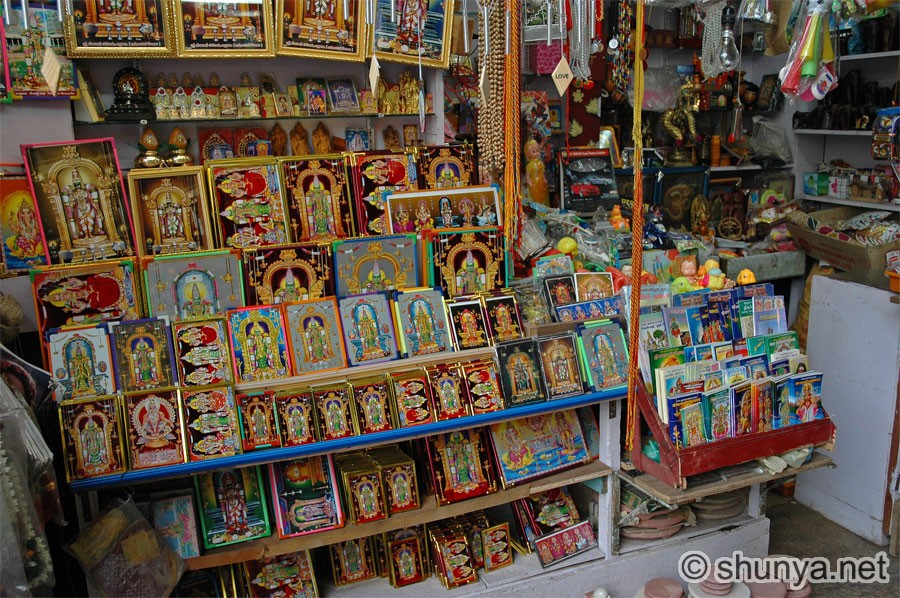 |
||
Market inside the temple 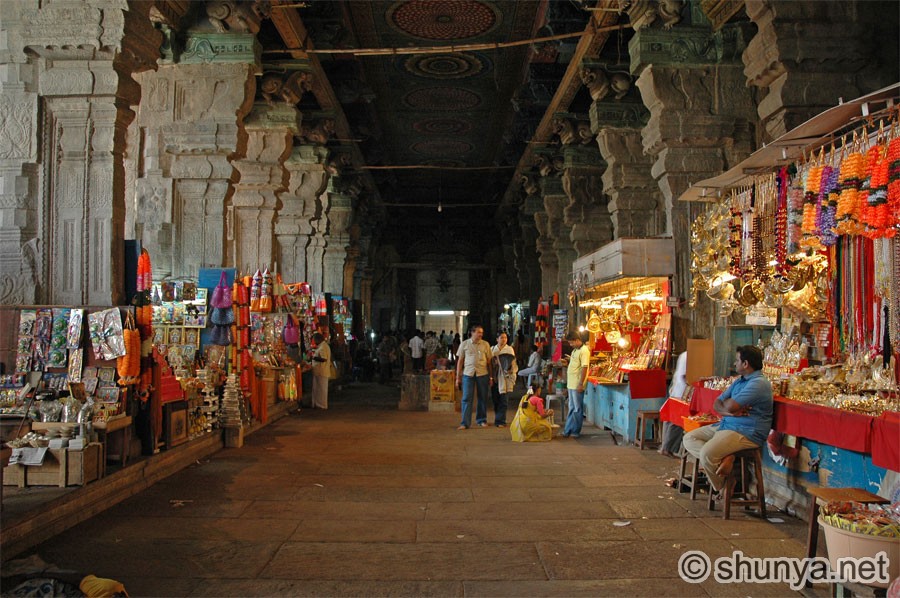 |
En route Shiva's shrine 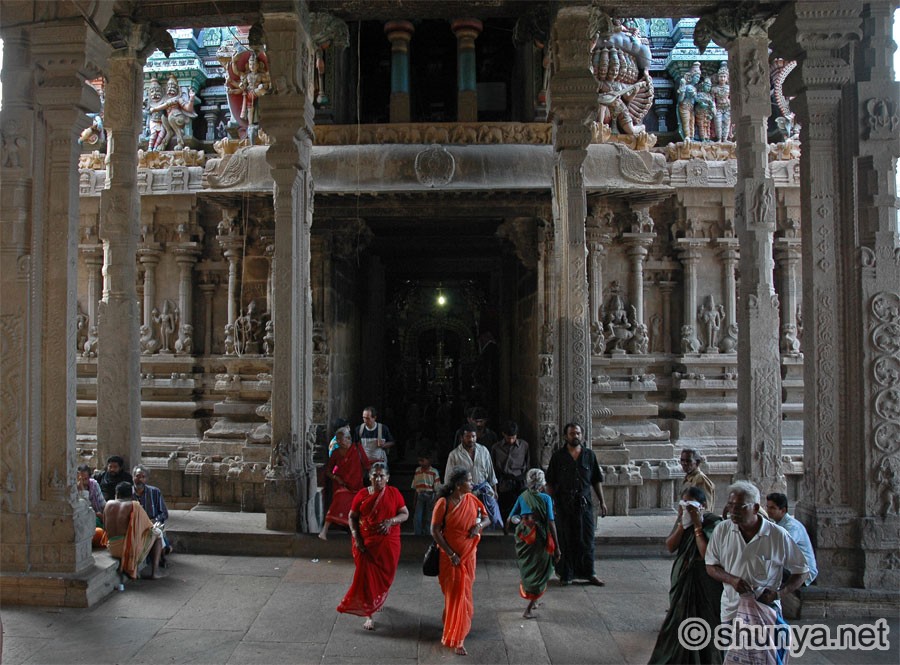 |
||
Pillar details 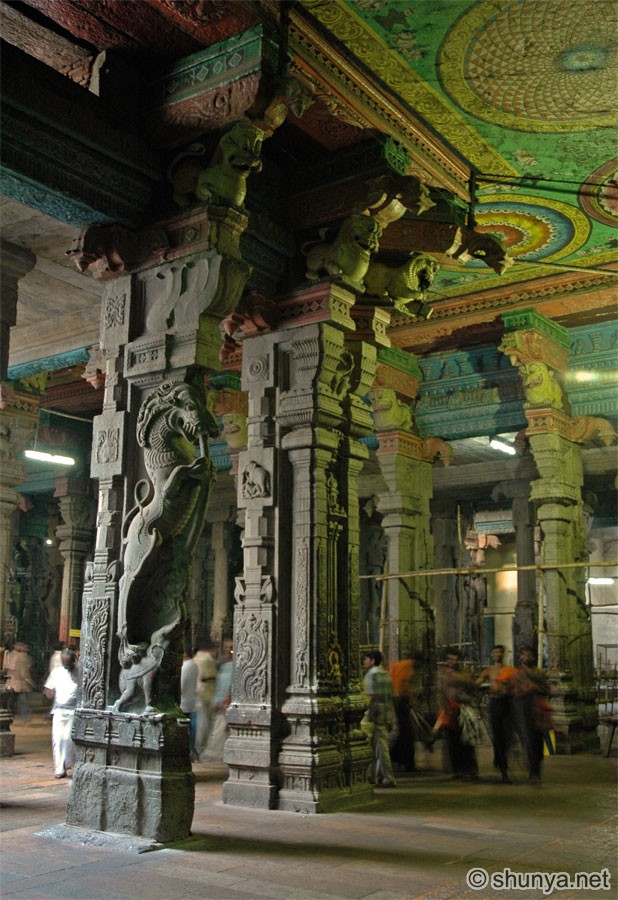 |
Hallway and ceiling detail 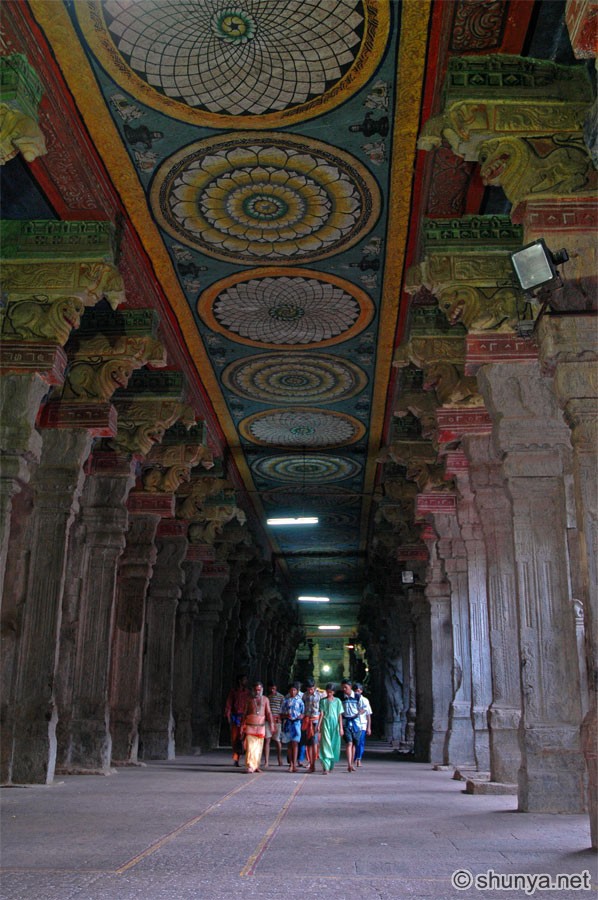 |
Pillar details 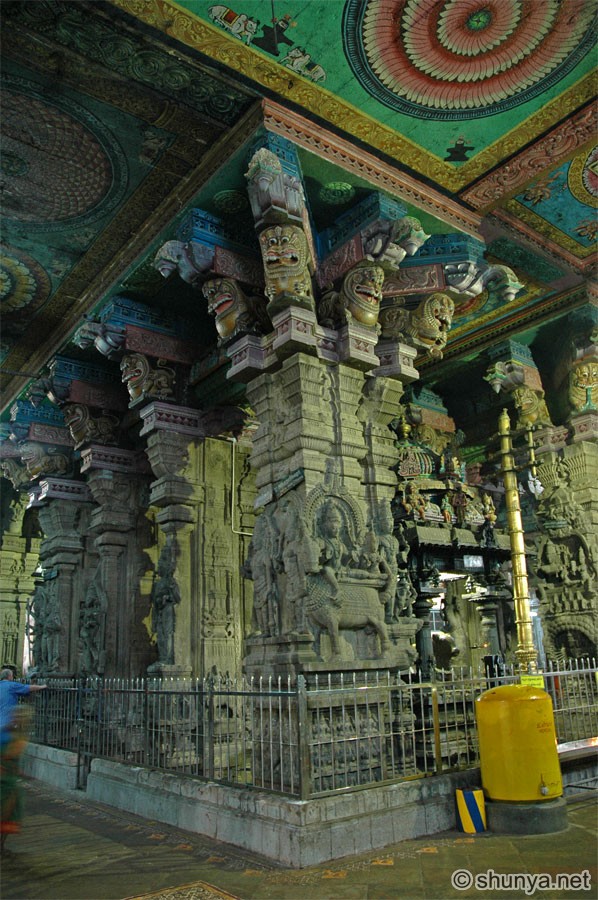 |
Holy men 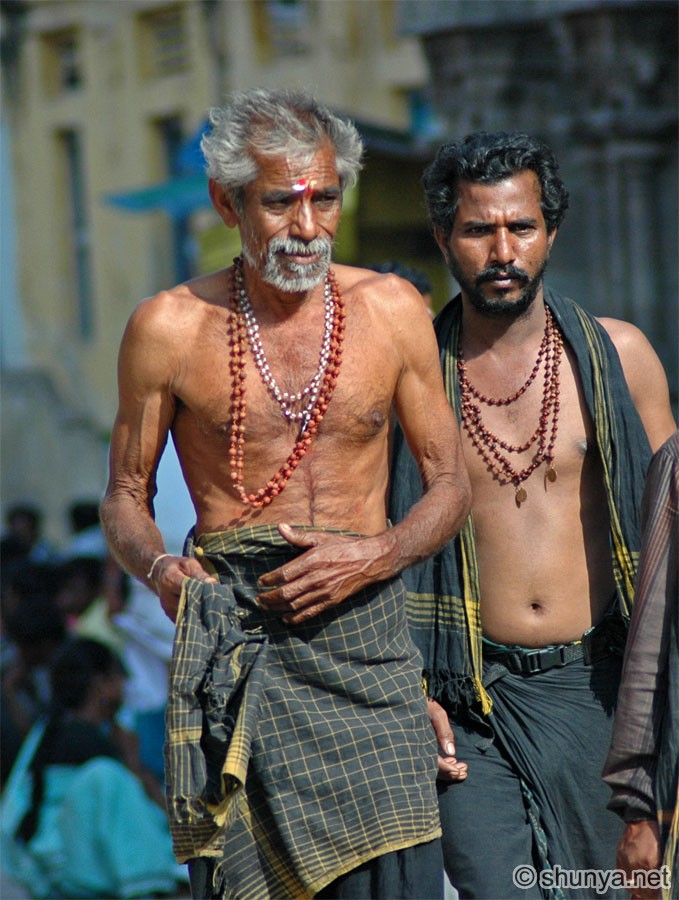 |
Outside the inner sanctum 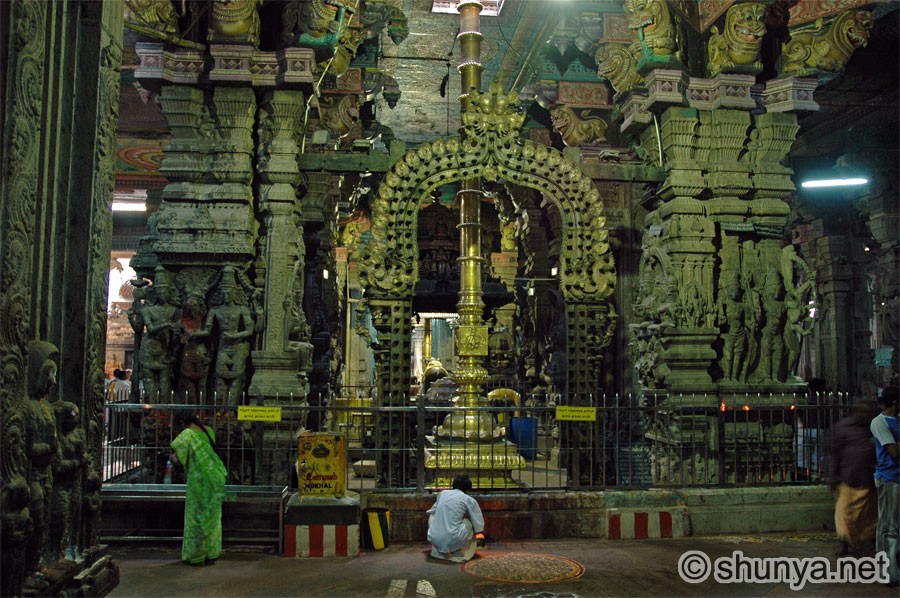 |
Votive lamps 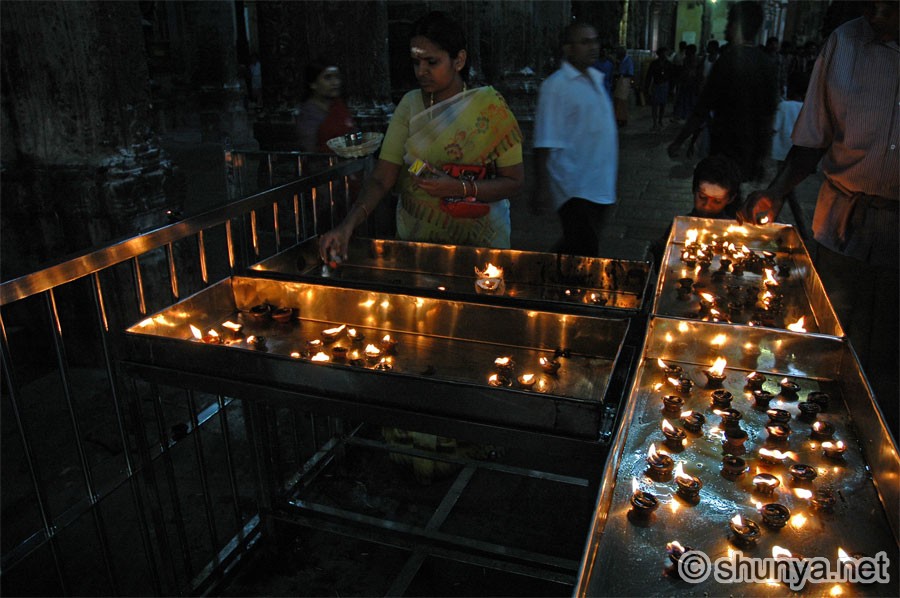 |
||
Corridor behind inner sanctum 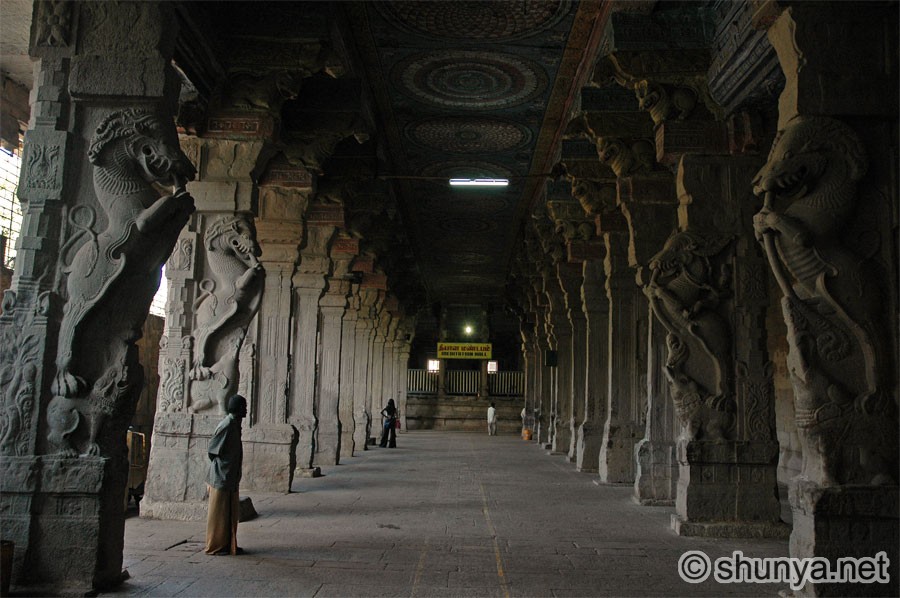 |
Holy men 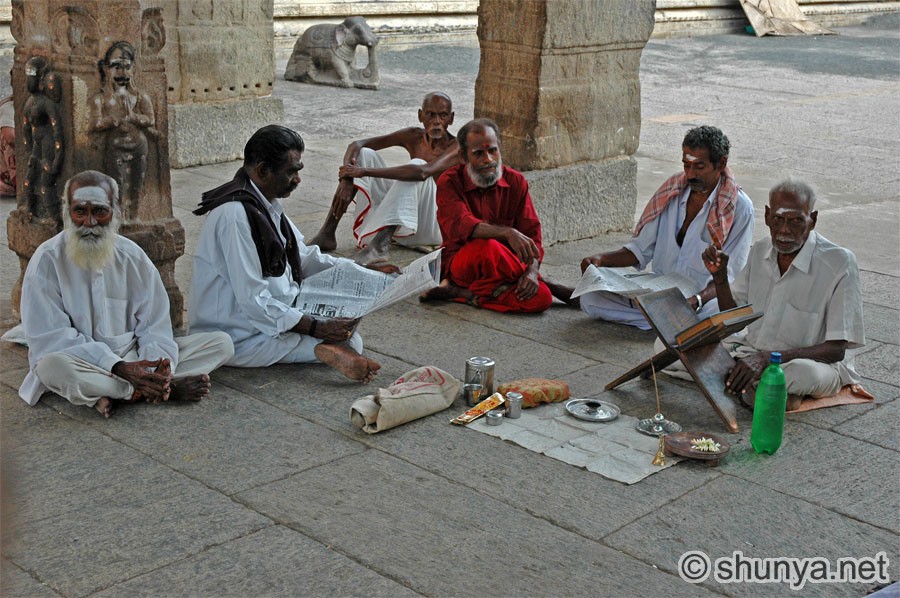 |
||
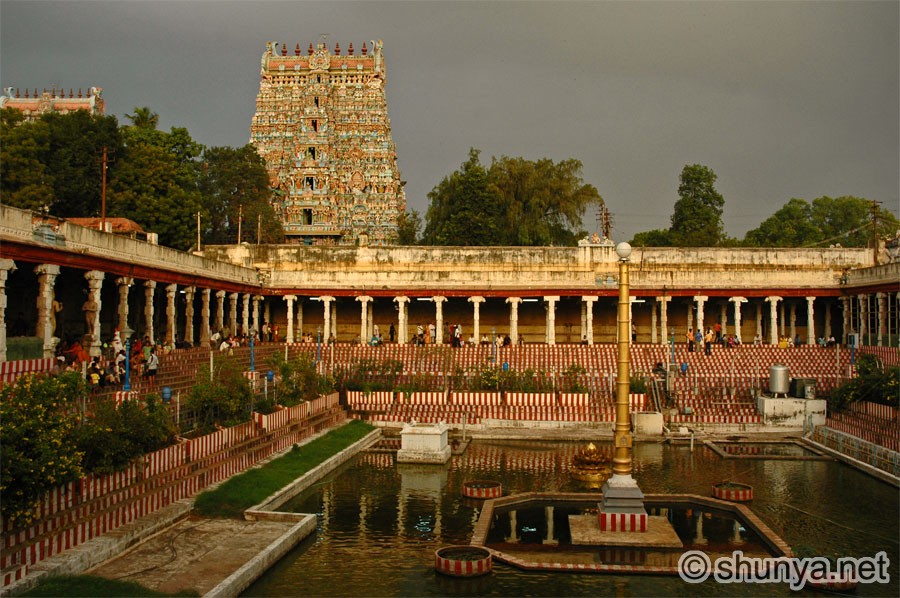
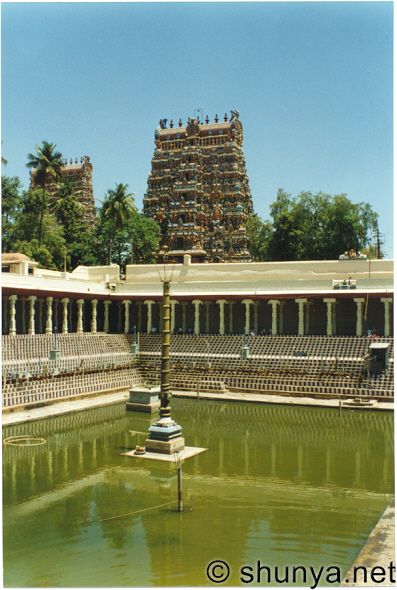
Temple tank 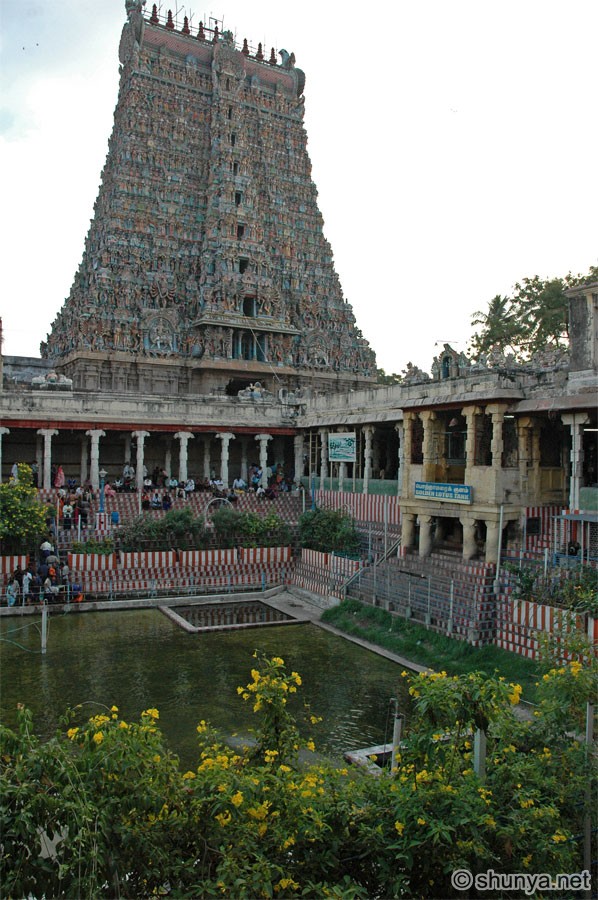 |
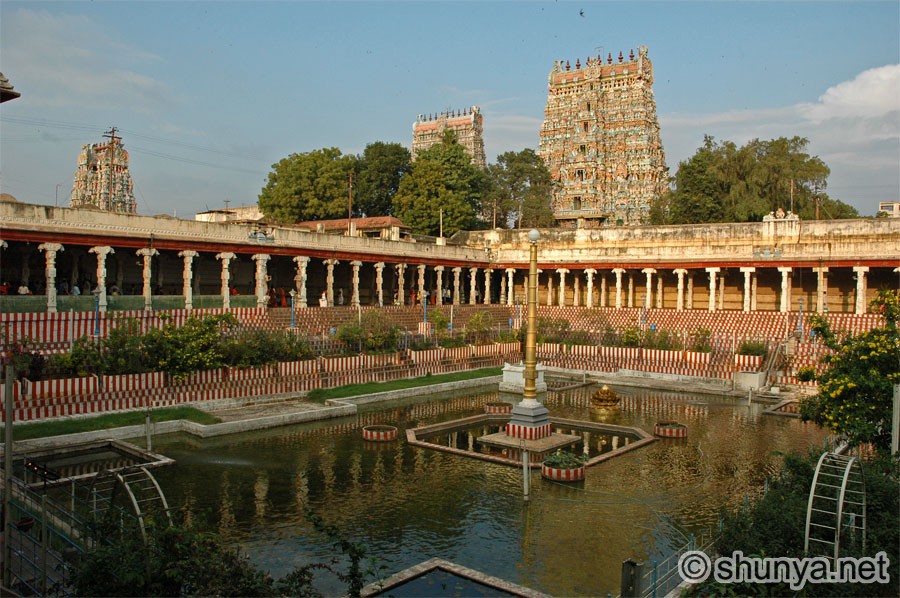 |
Way to Meenakshi shrine 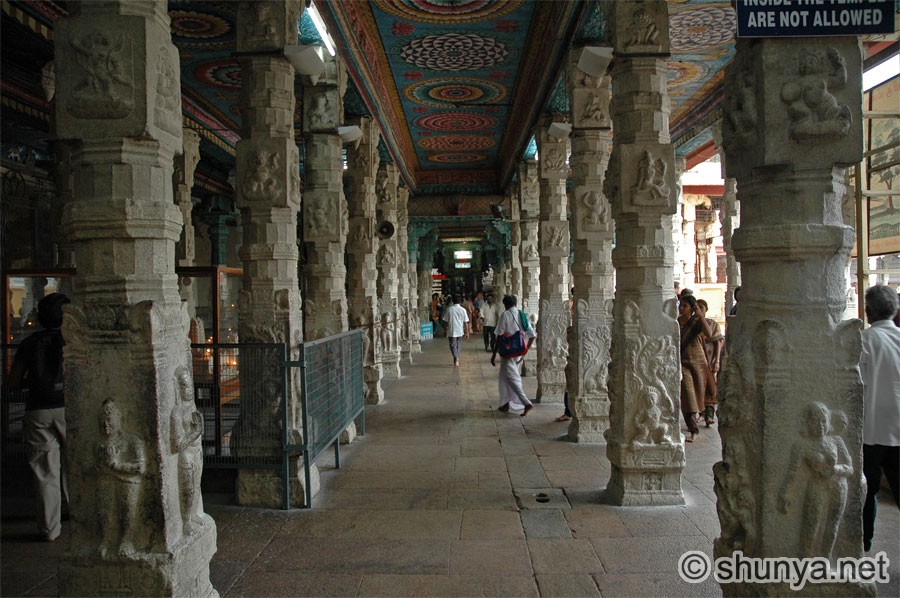 |
Meenakshi shrine 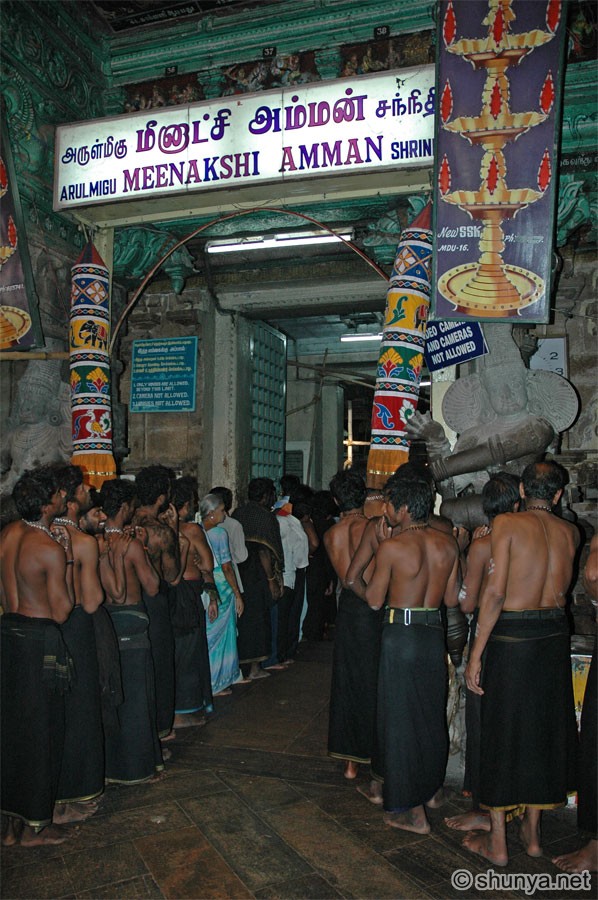 |
Pillared hall 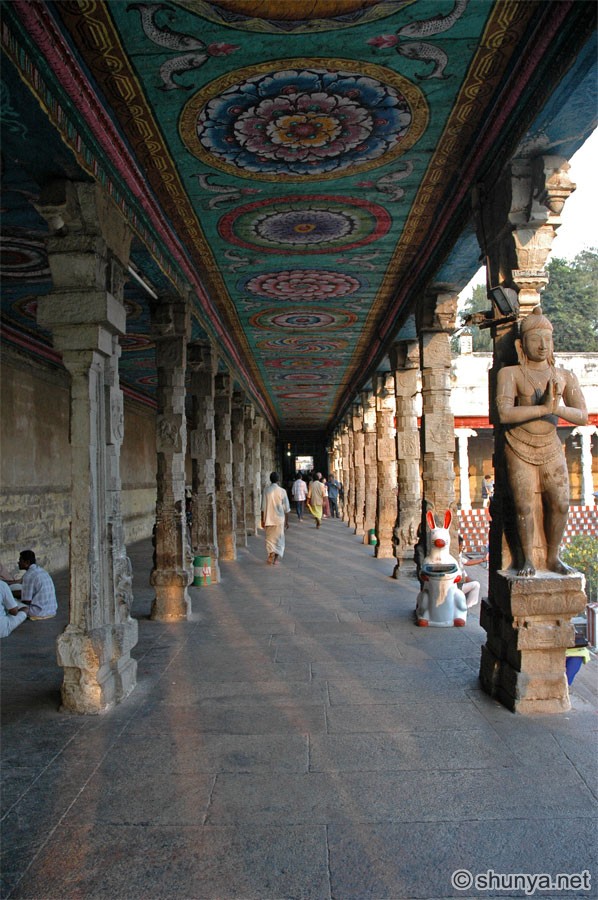 |
Nandi worshippers 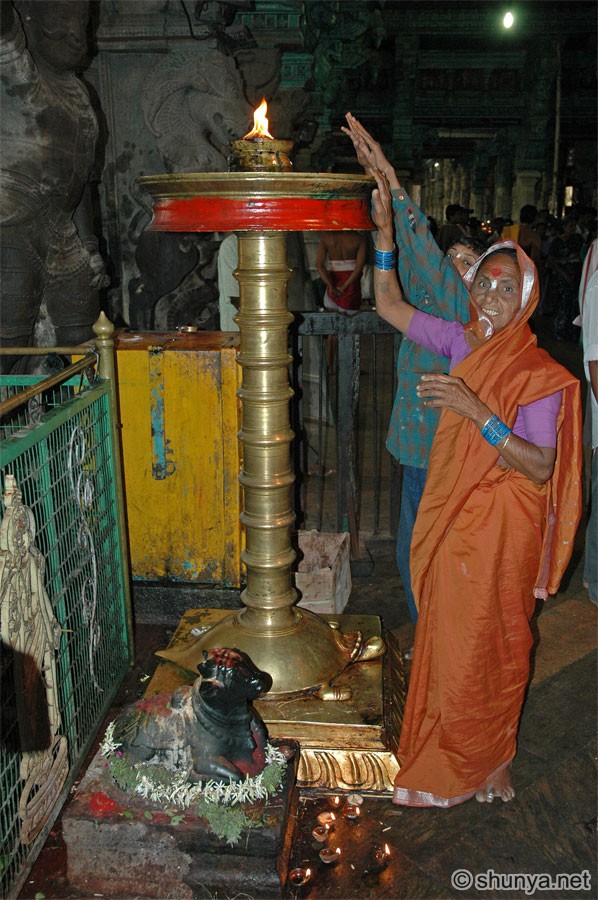 |
Random temple corner 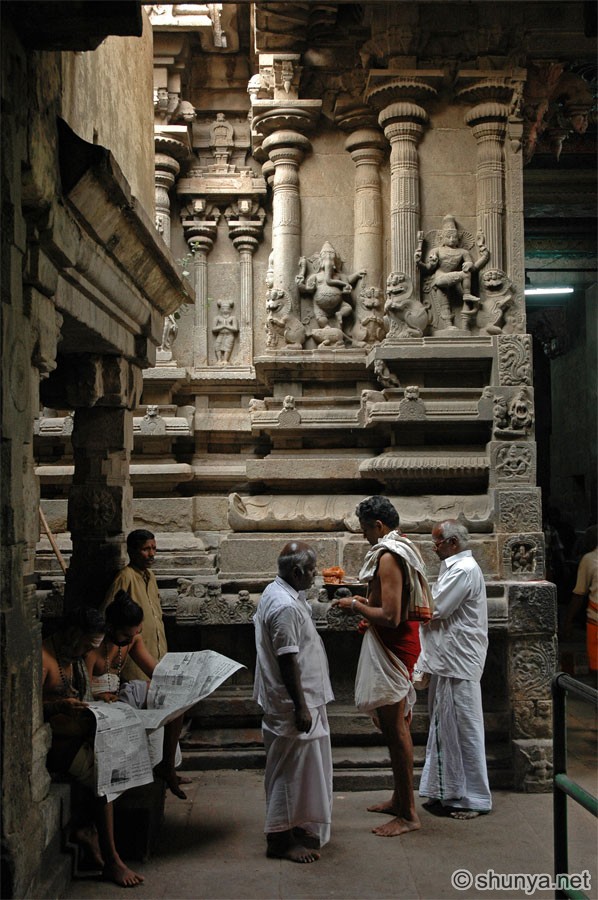 |
Pillars and ceiling 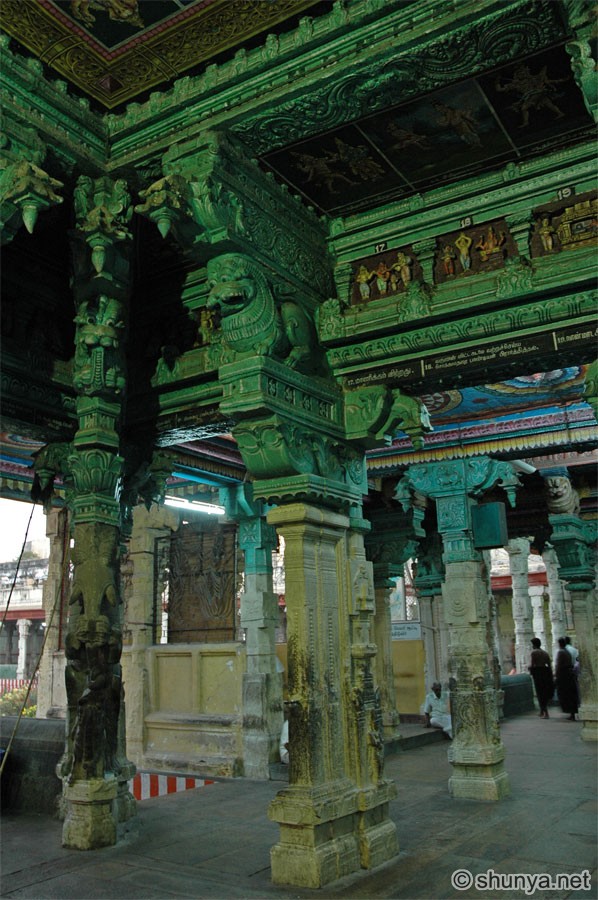 |
Pujari downtime 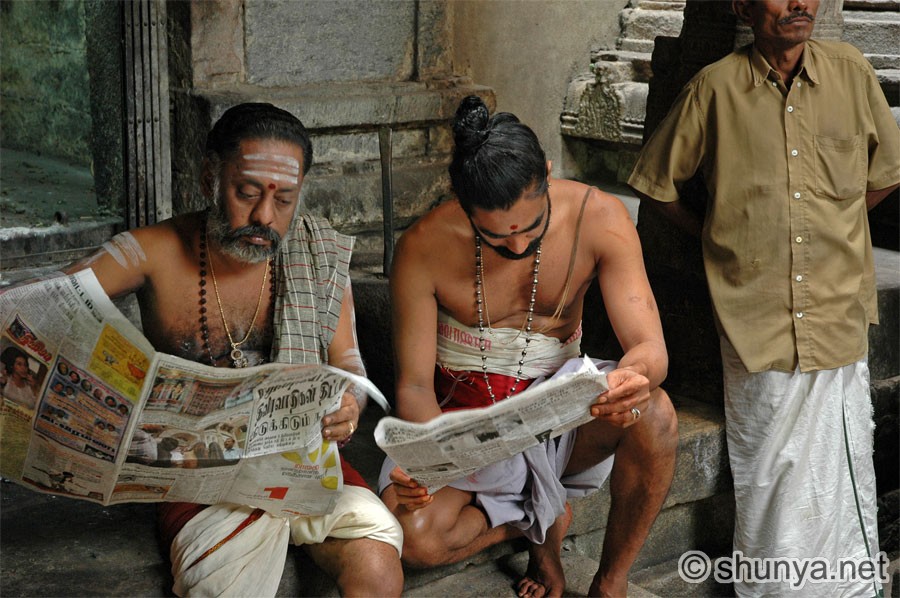 |
Pillar tops 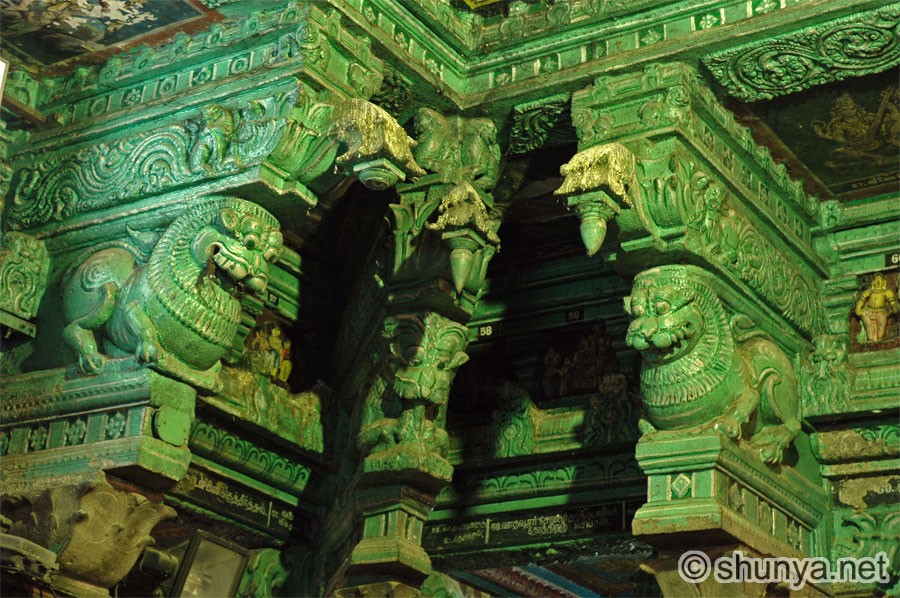 |
Queuing for Amman 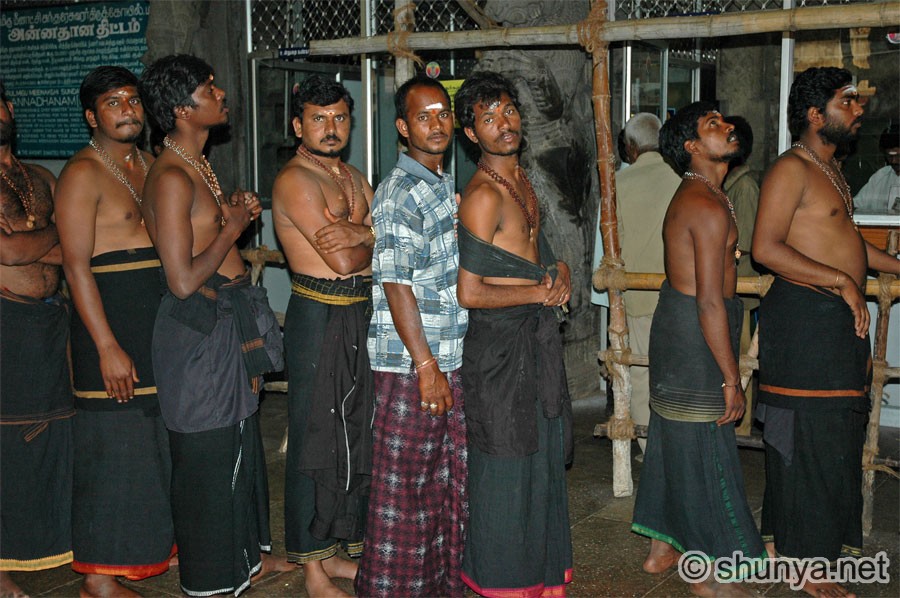 |
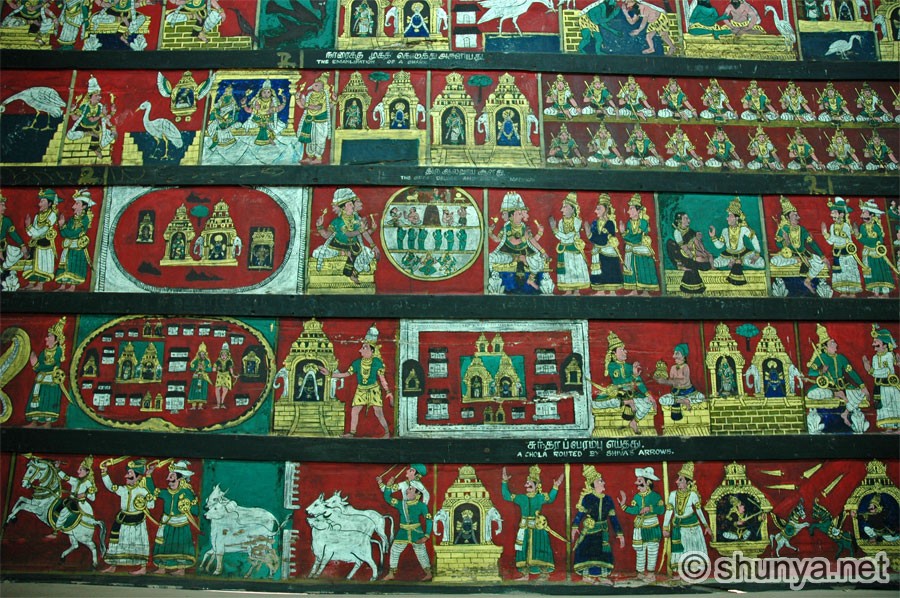
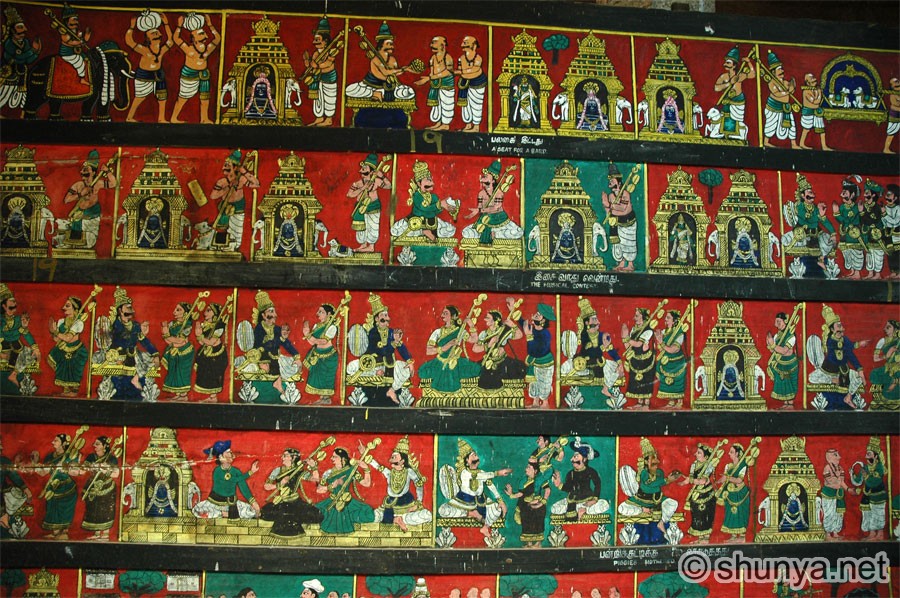
Ancient stories on a wall 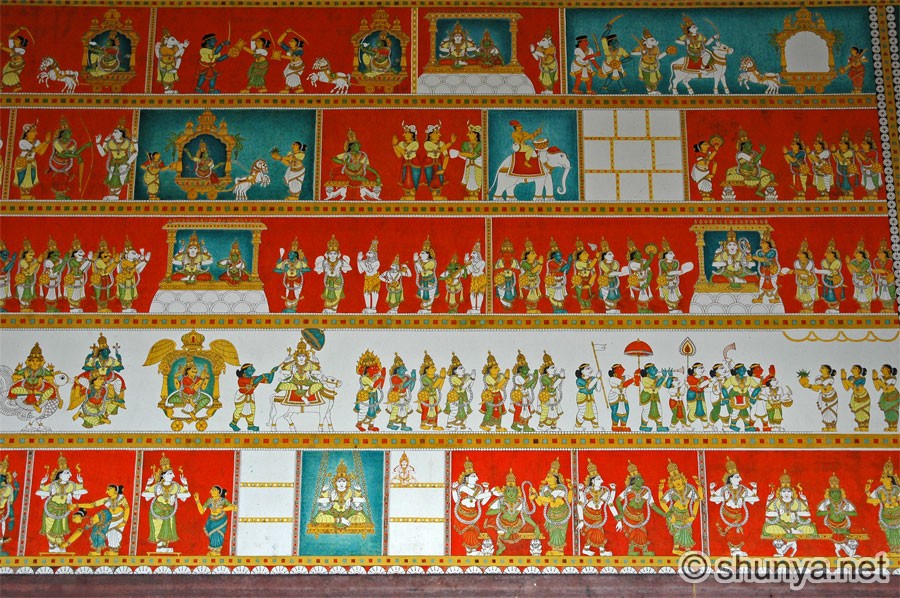 |
|
Sri Meenakshi Temple Museum |
|||
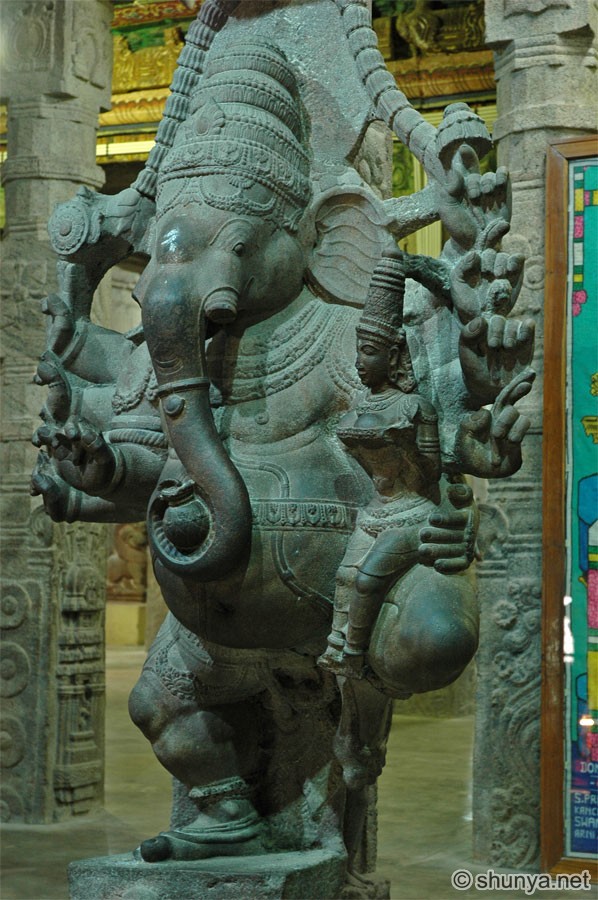
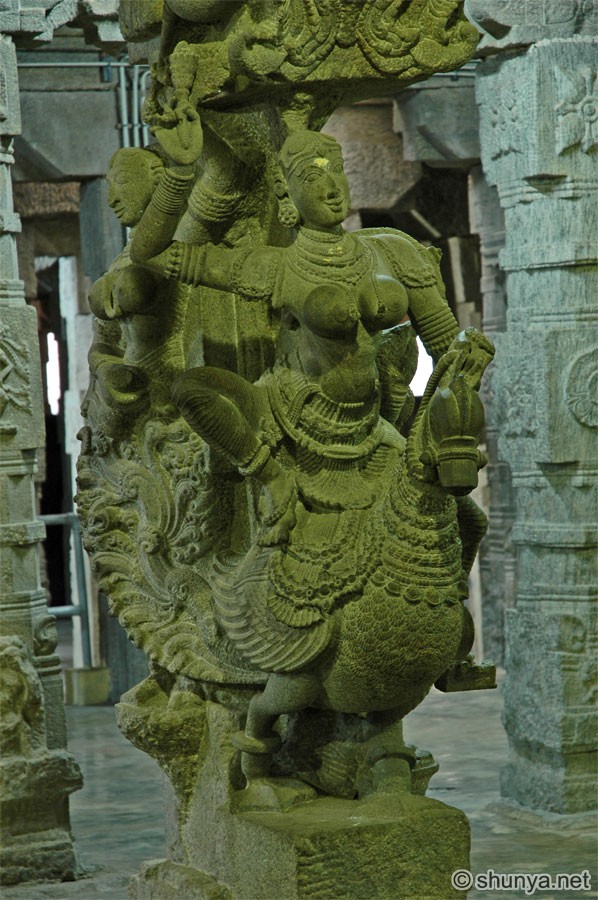
Woman or goddess? 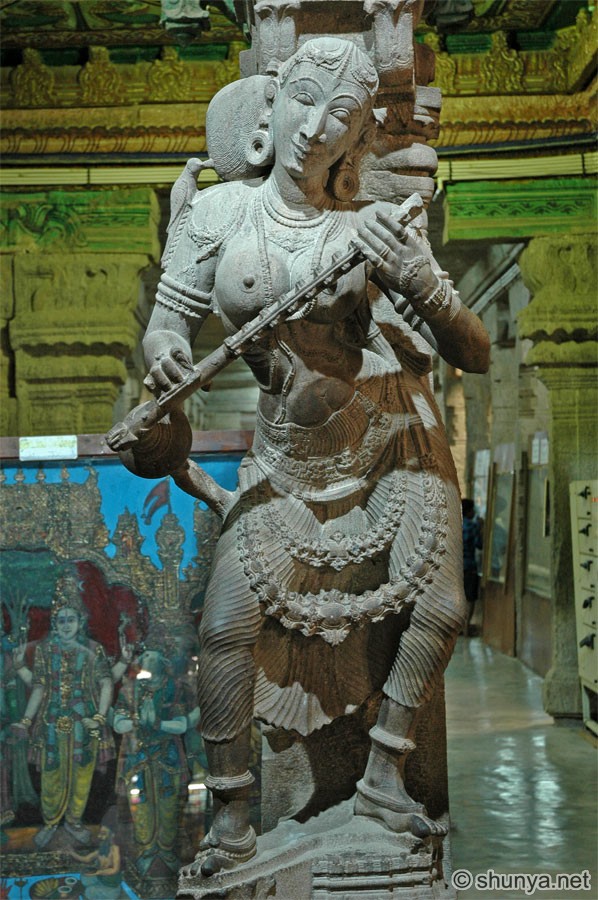 |
Left of museum entrance (more) 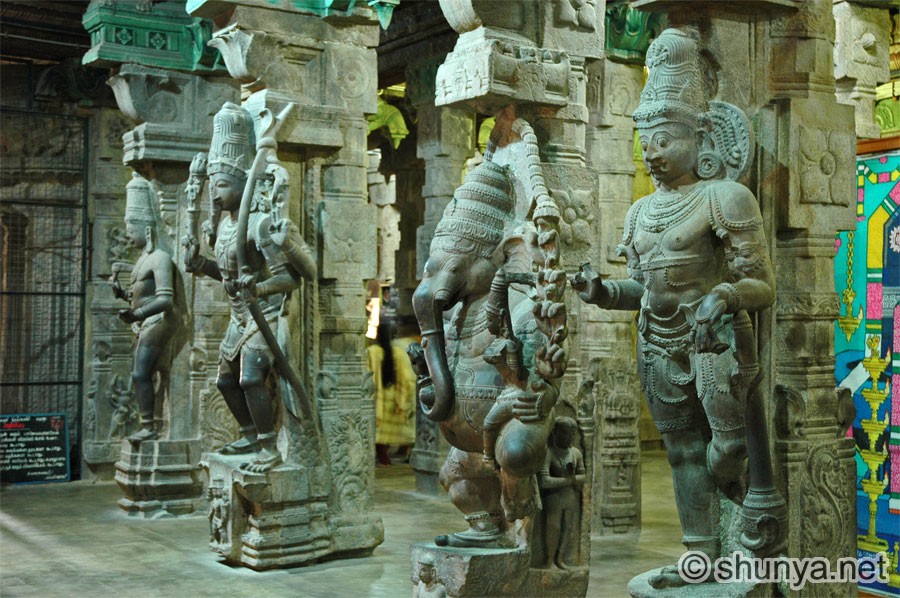 |
Right of museum entrance 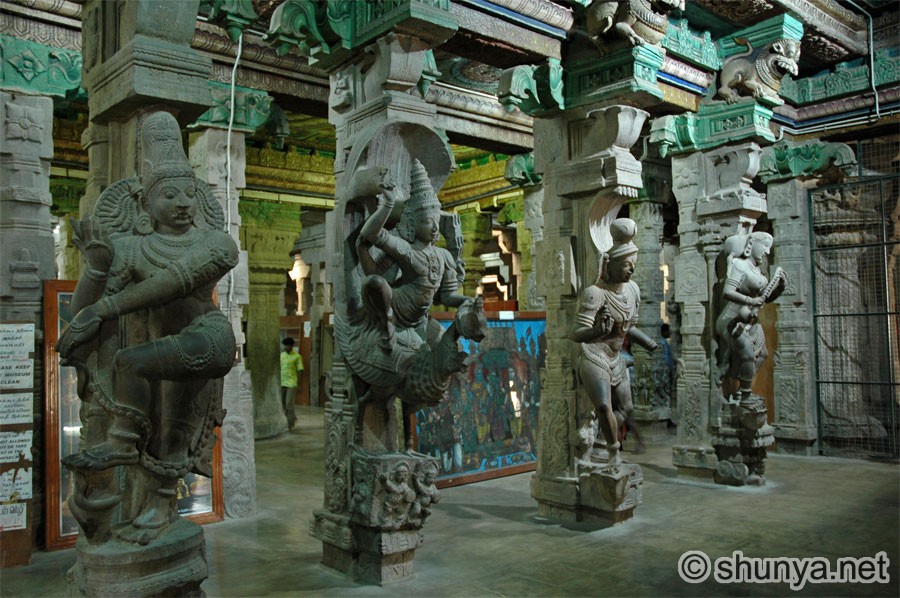 |
Man or woman? 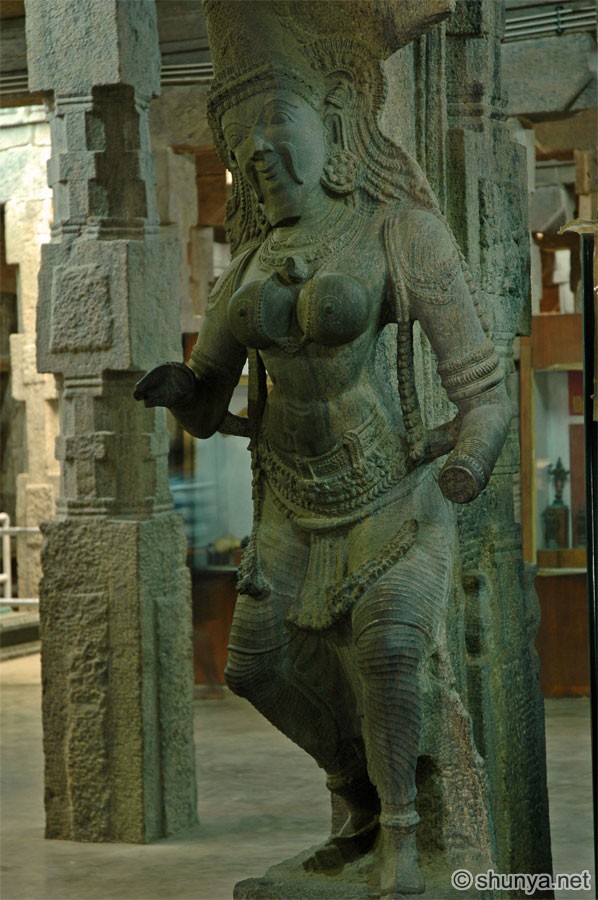 |
| 1,000-pillared hall, main passage 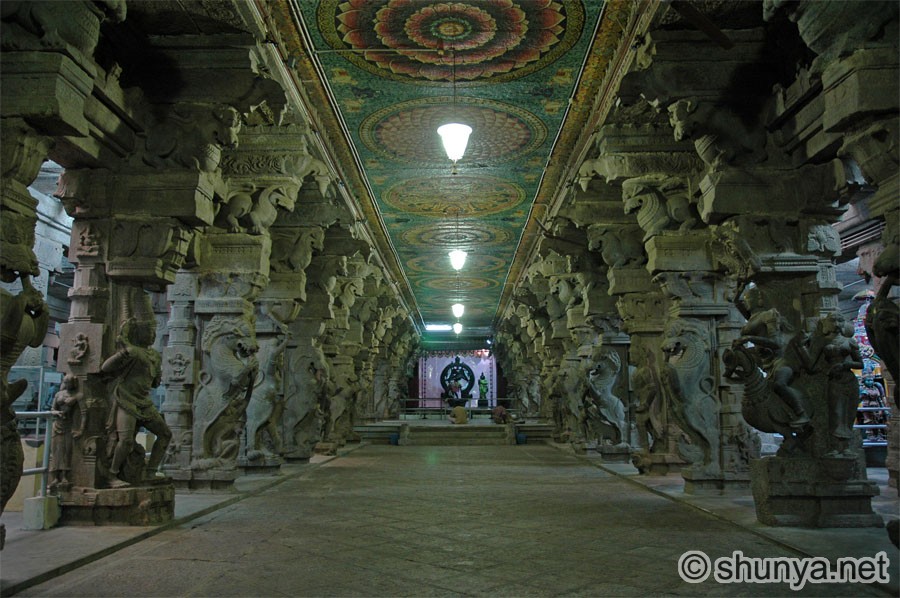 |
Left flank of passage (more) 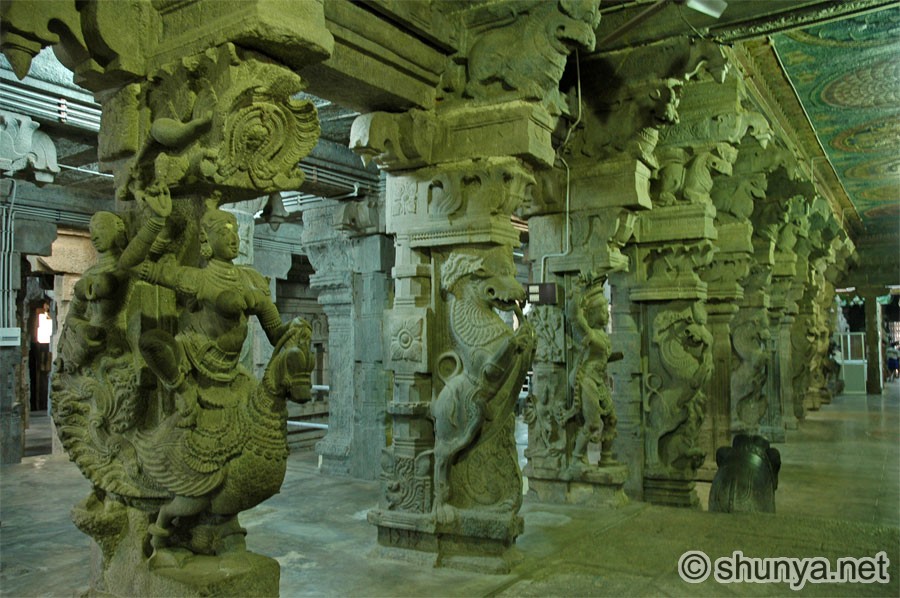 |
Shiva & Parvati in the center 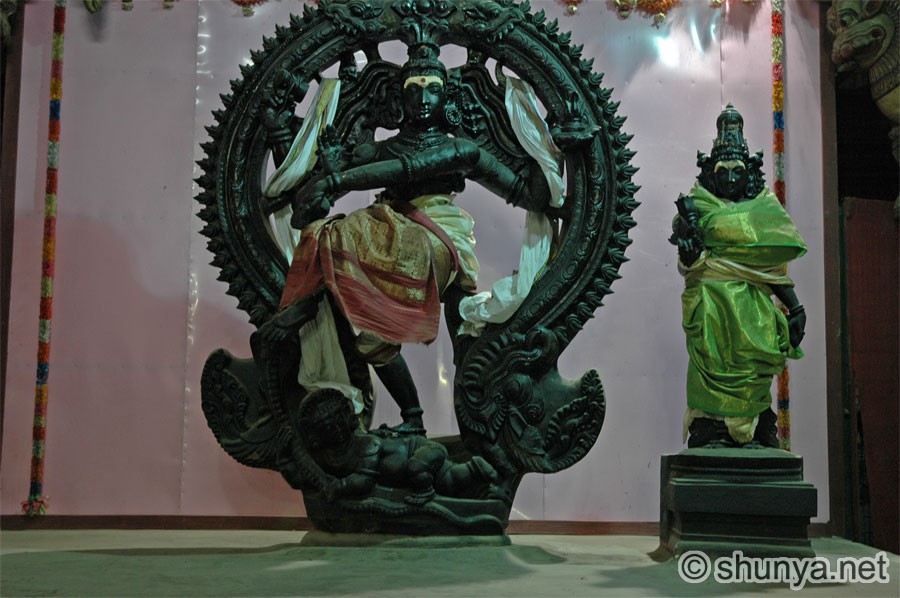 |
Right flank of passage 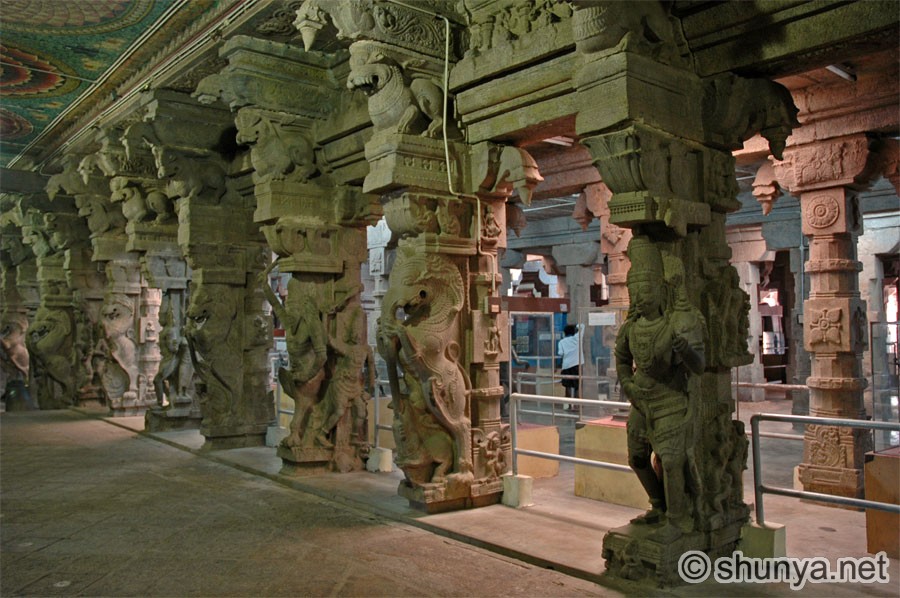 |
Resting tourist 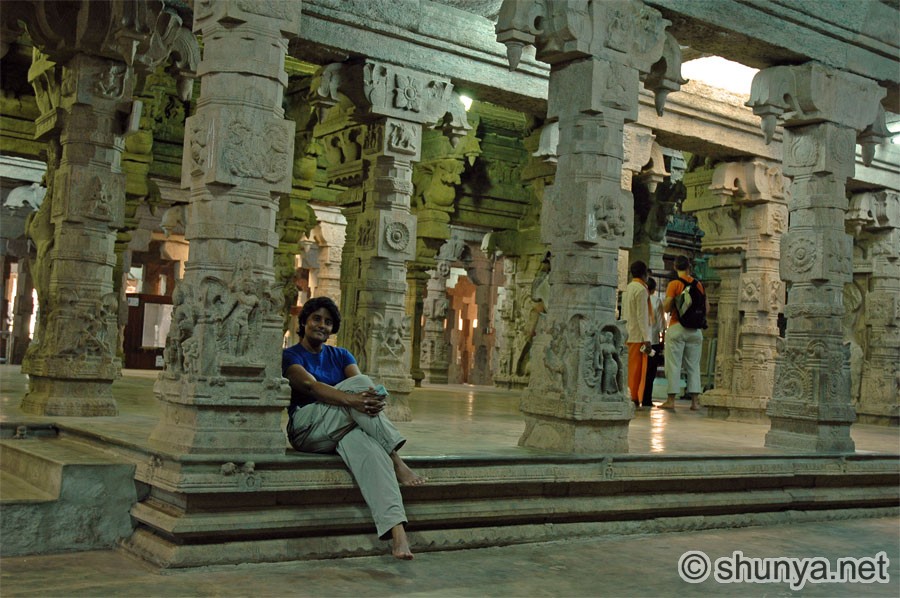 |
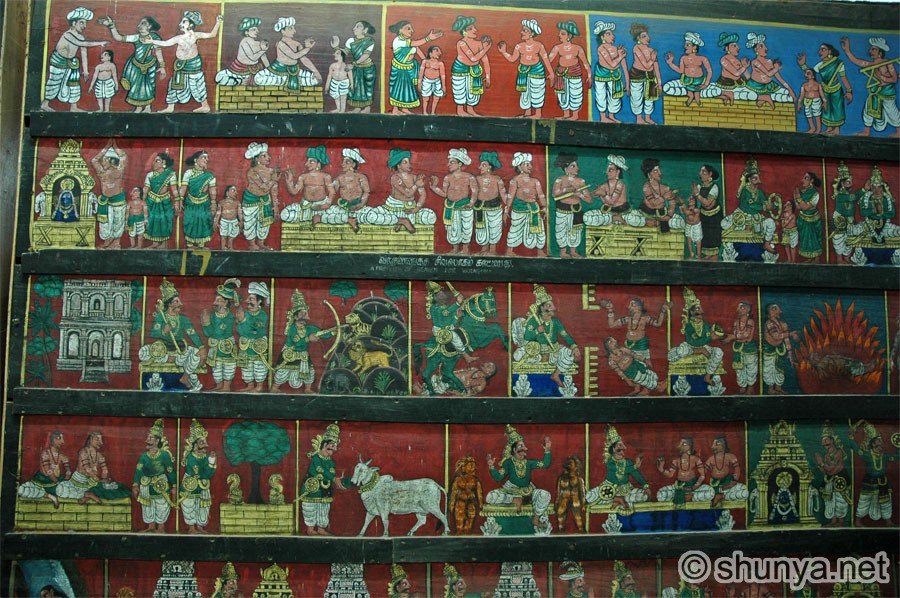
Illustrated ancient stories 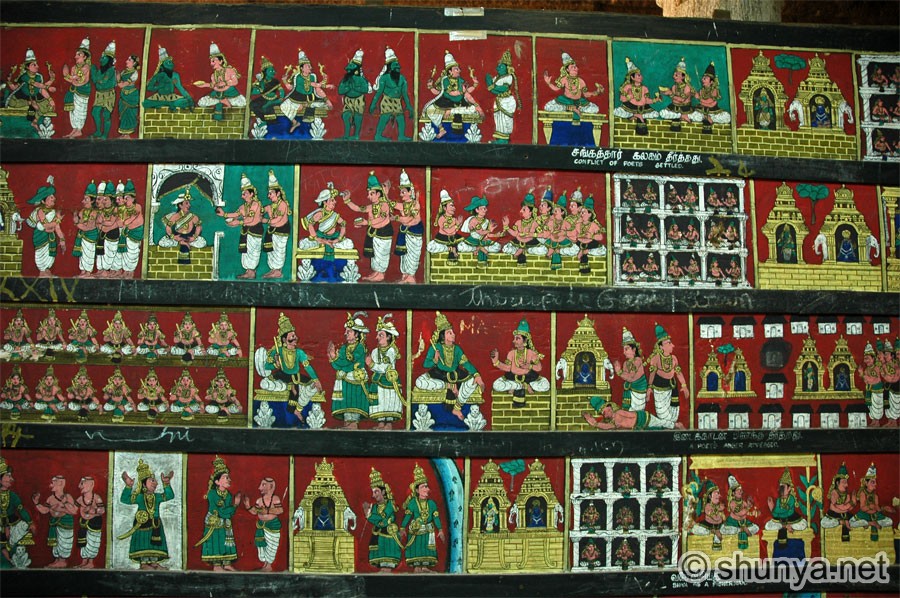 |
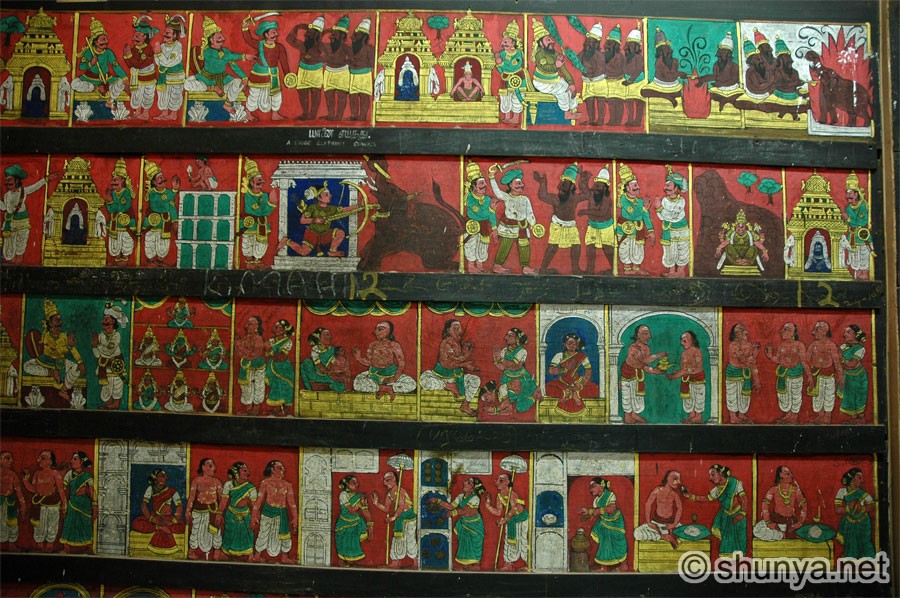 |
Chariot for the gods 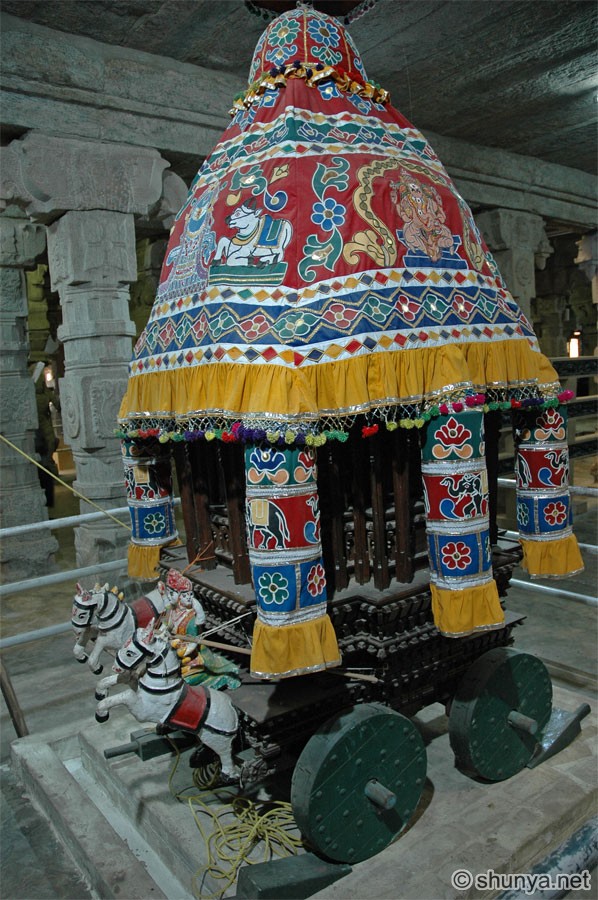 |
|
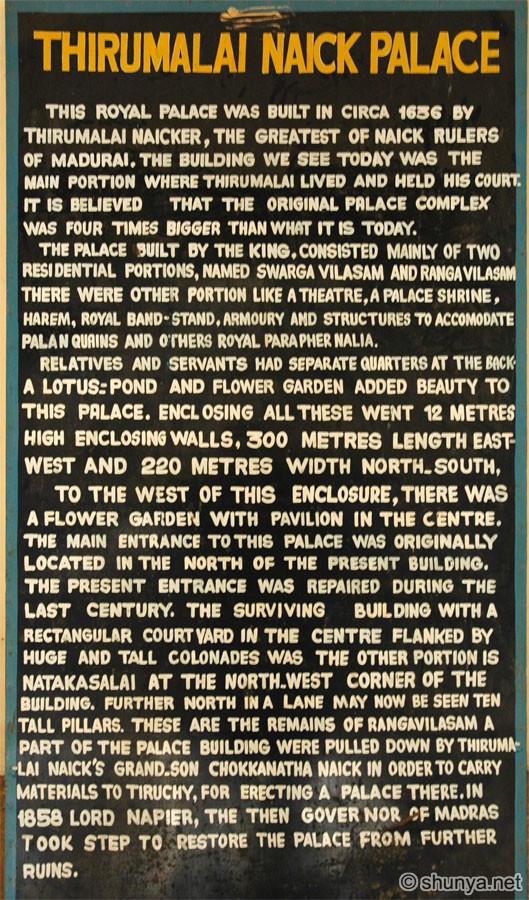
Thirumalai Nayak's Palace ▒ |
|||
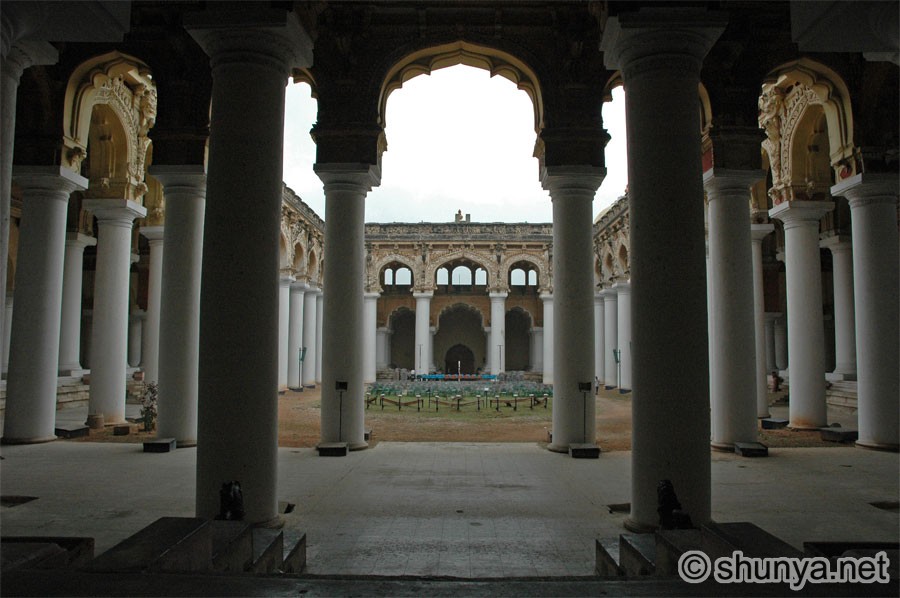
| Palace entrance 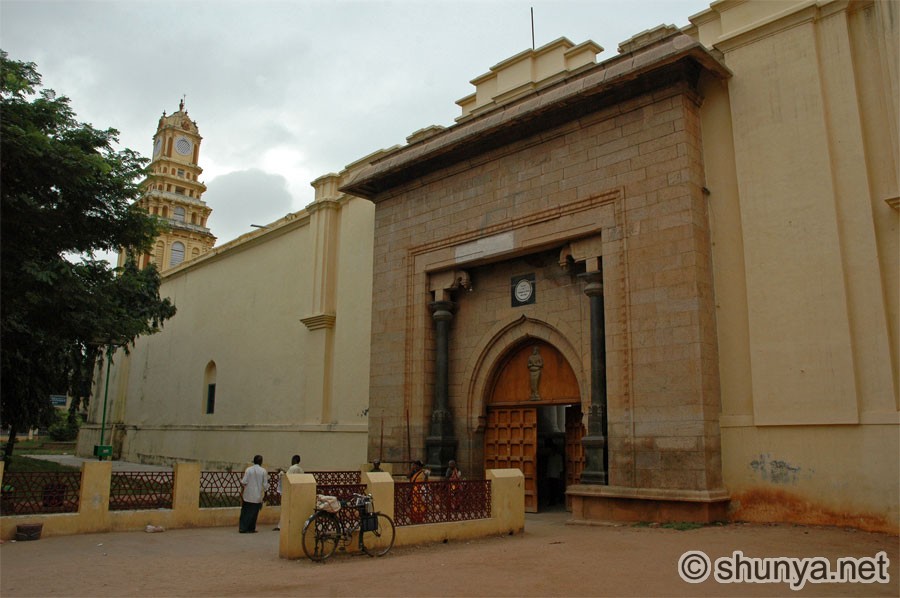 |
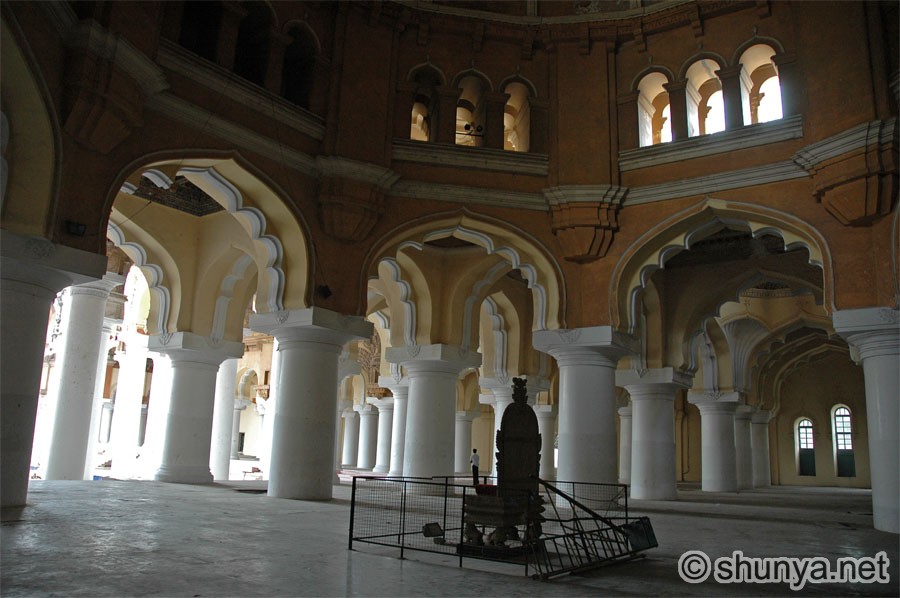
Durbar hall ▒ 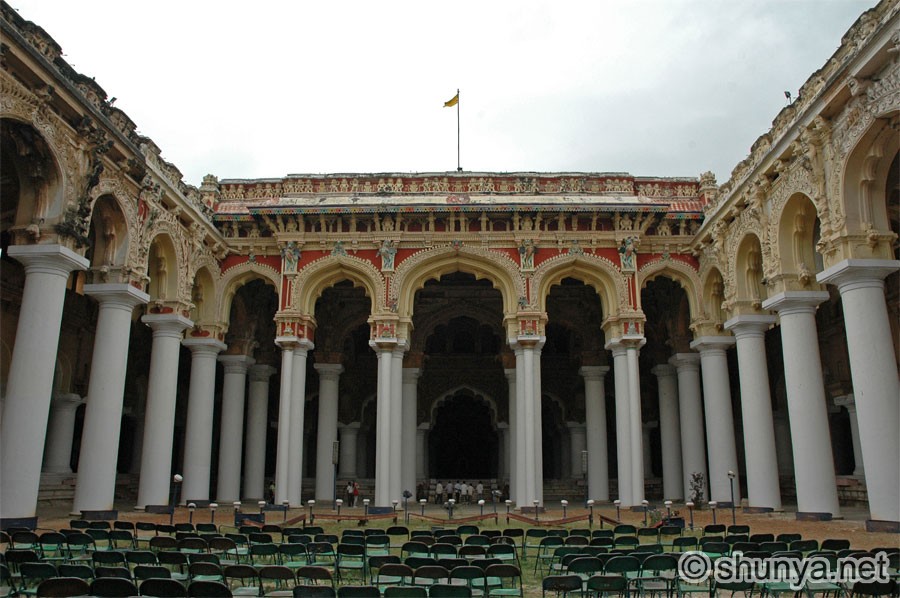 |
Lots of pillars 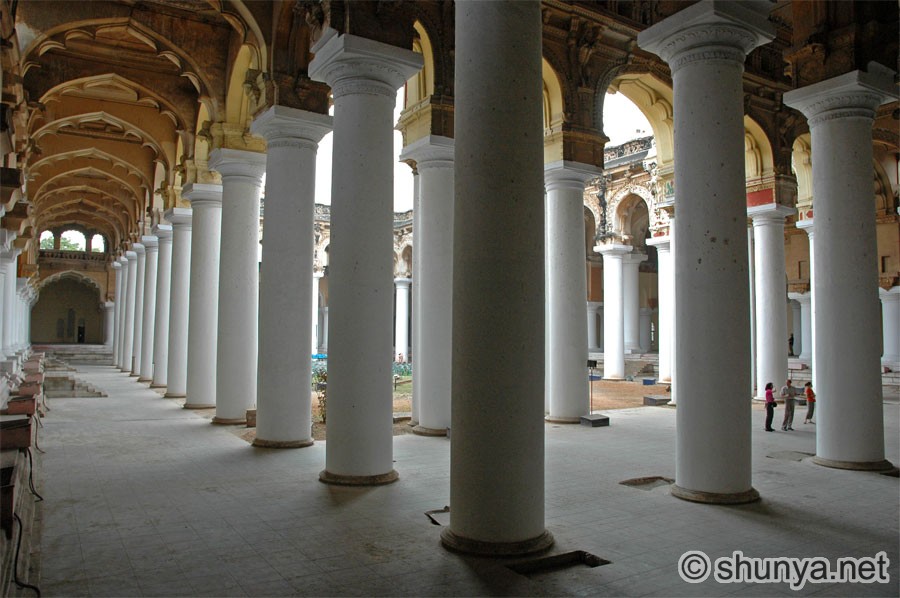 |
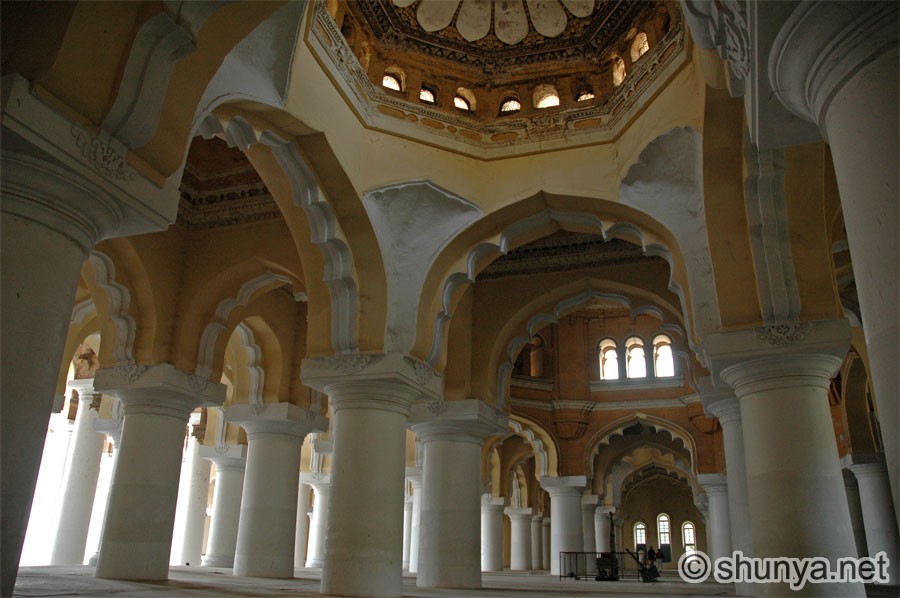 |
Ceiling detail 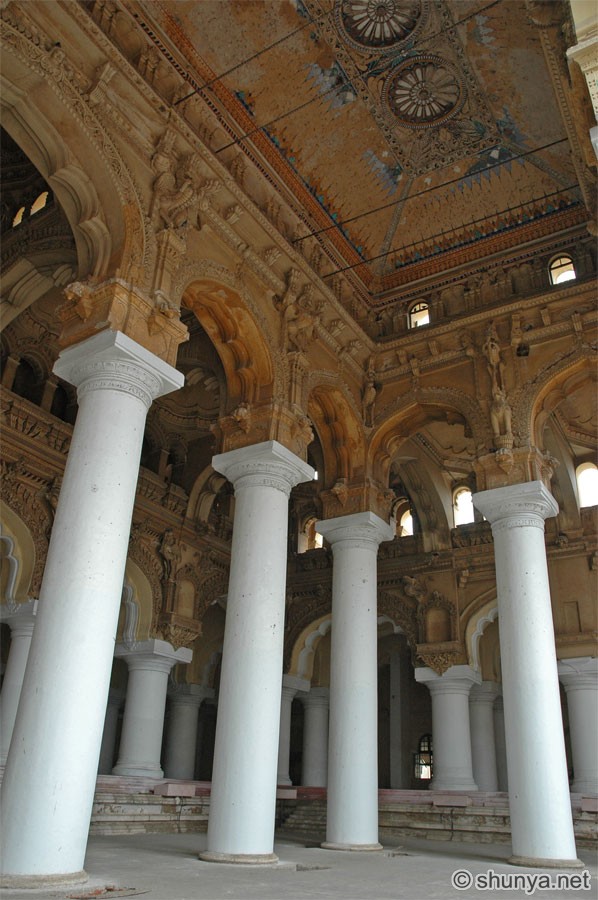 |
Built in 1636 CE 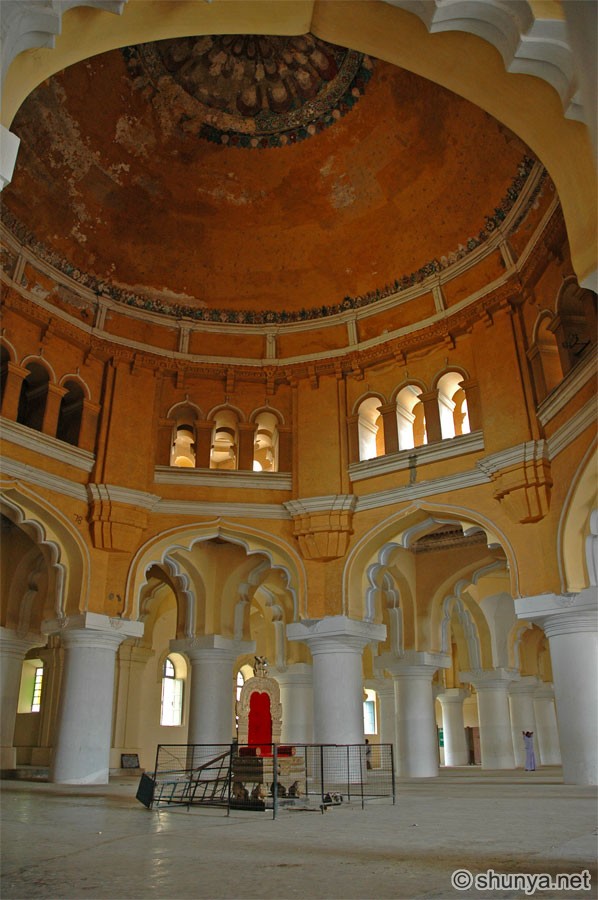 |
Indo-Saracenic architecture 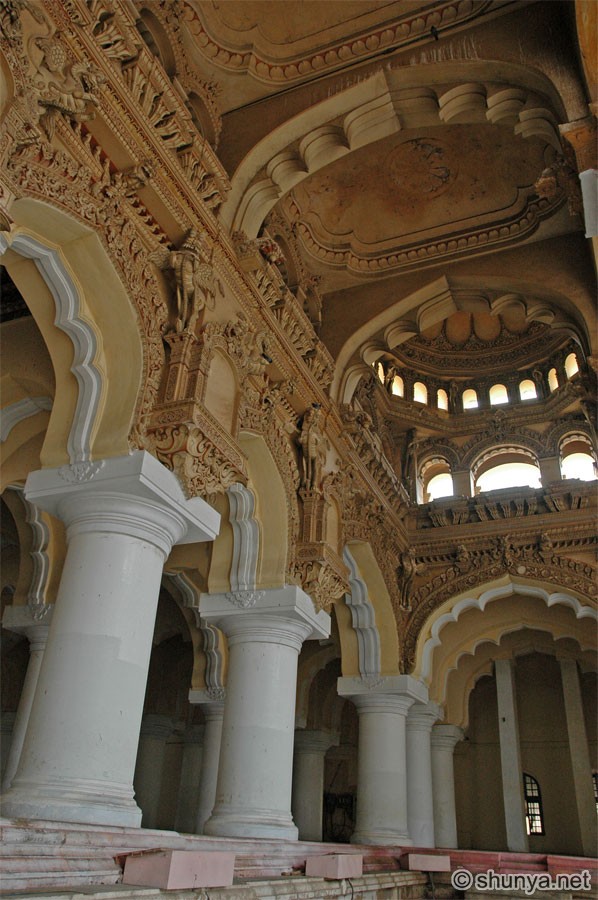 |
Seat of the king 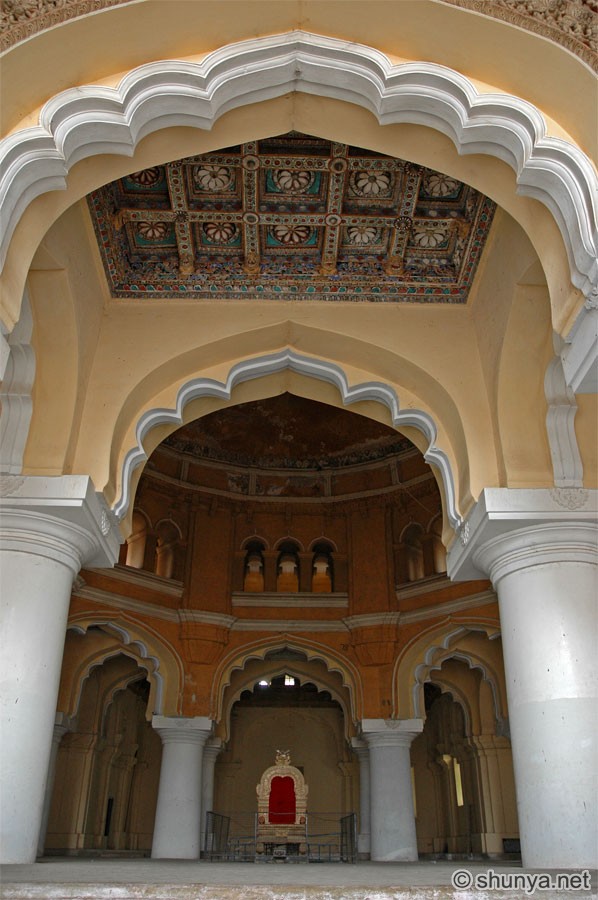 |
Pillars & ceiling 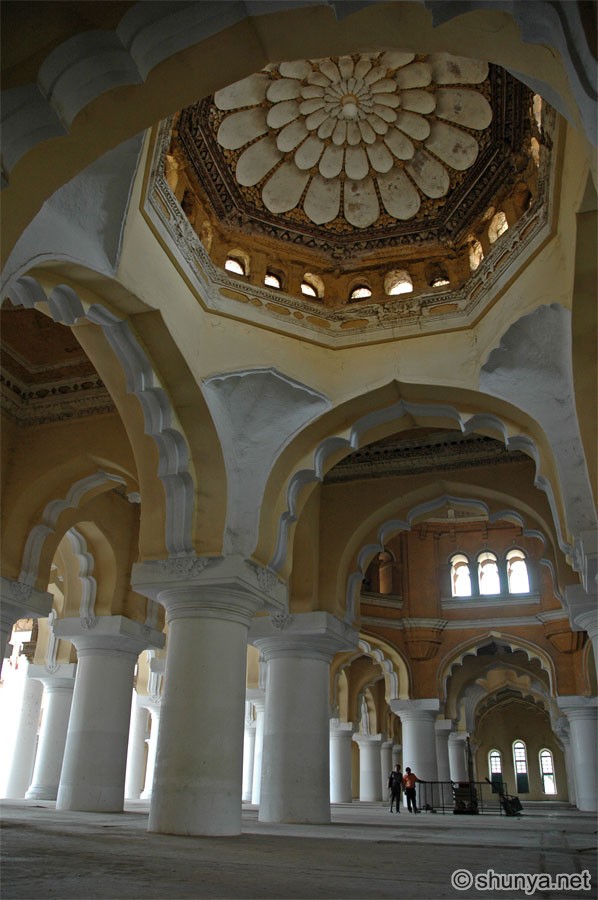 |
Columns & arches 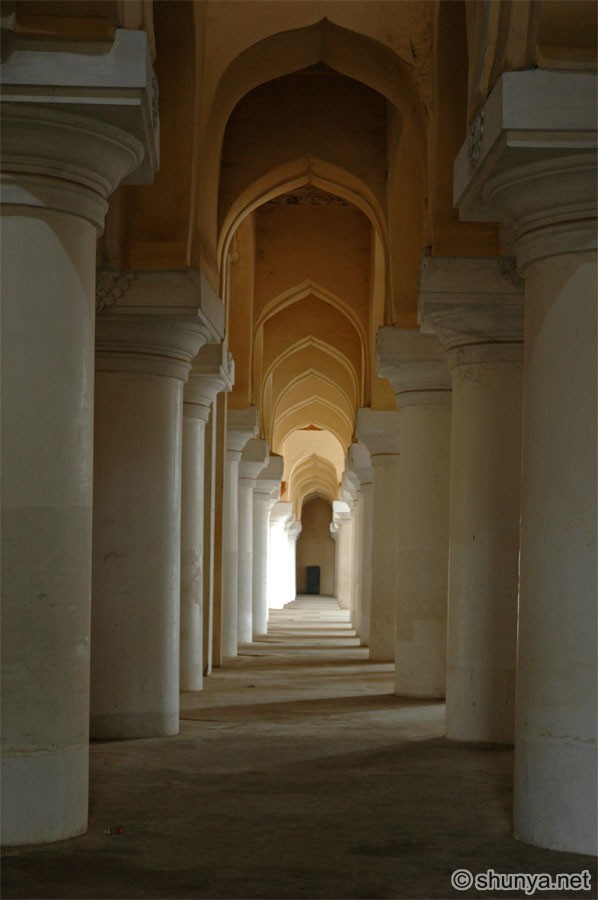 |
Columns & arches 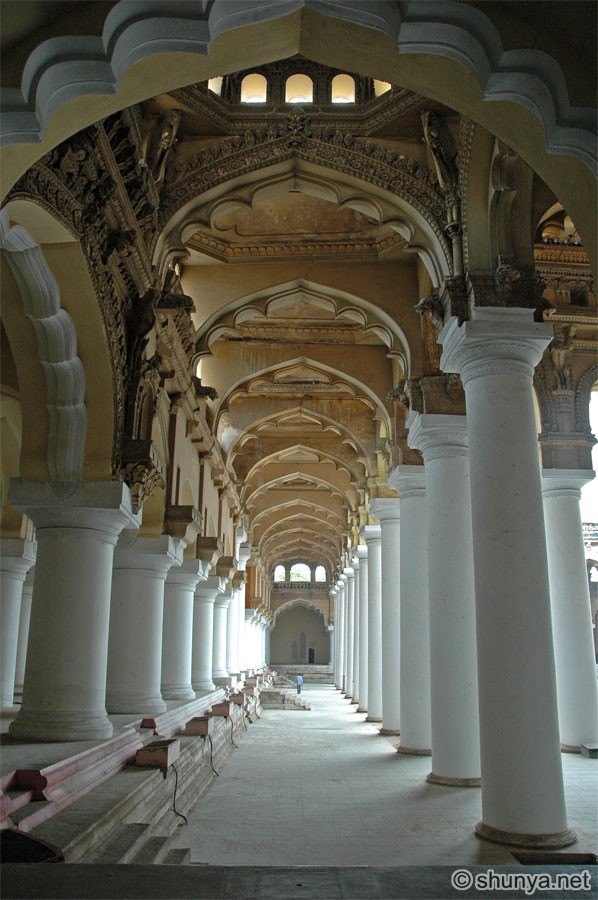 |
Thirumalai Nayak 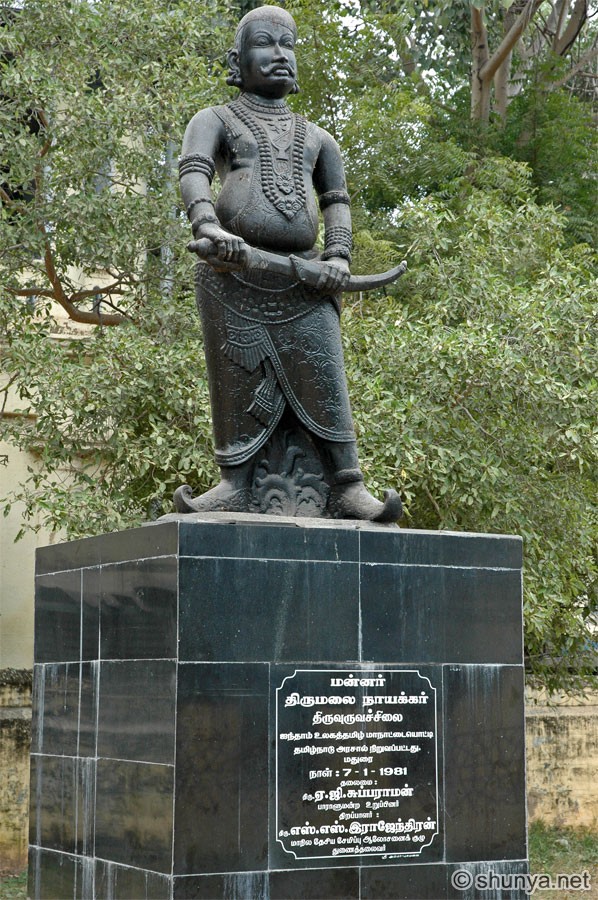 |
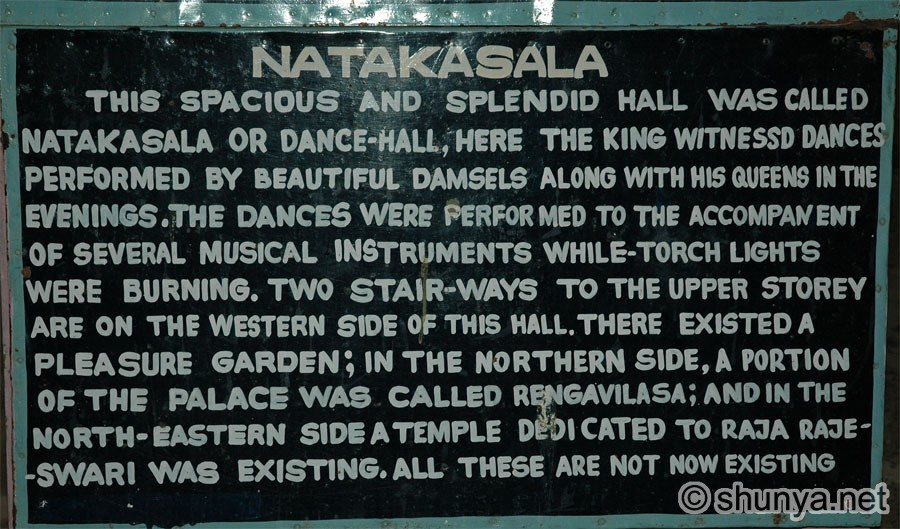
Dance & music hall ▒ 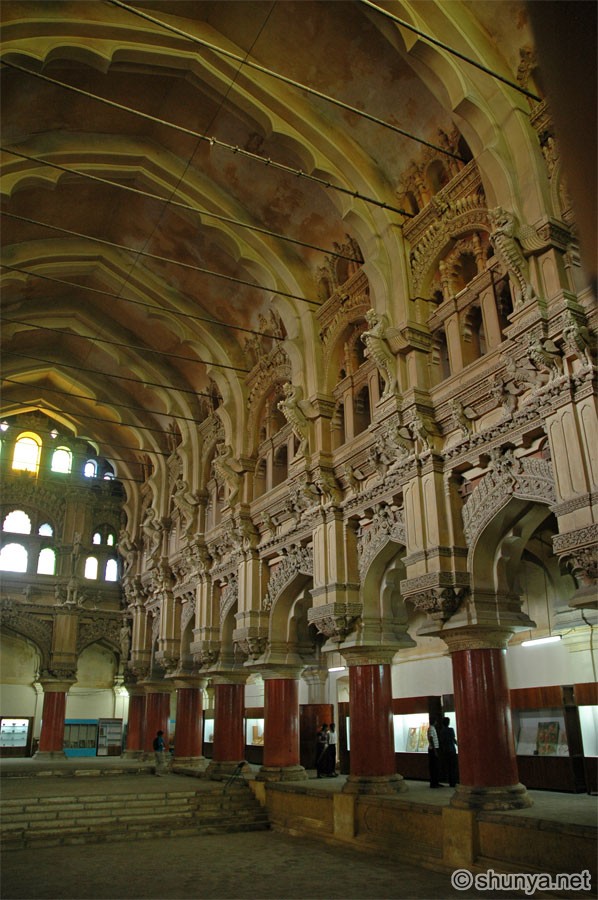 |
To entertain the king 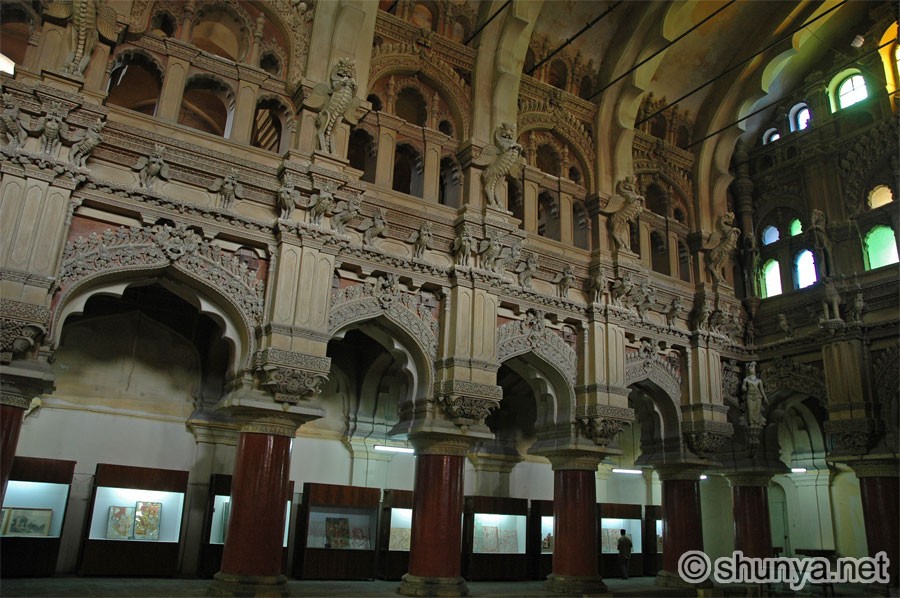 |
Designed by an Italian 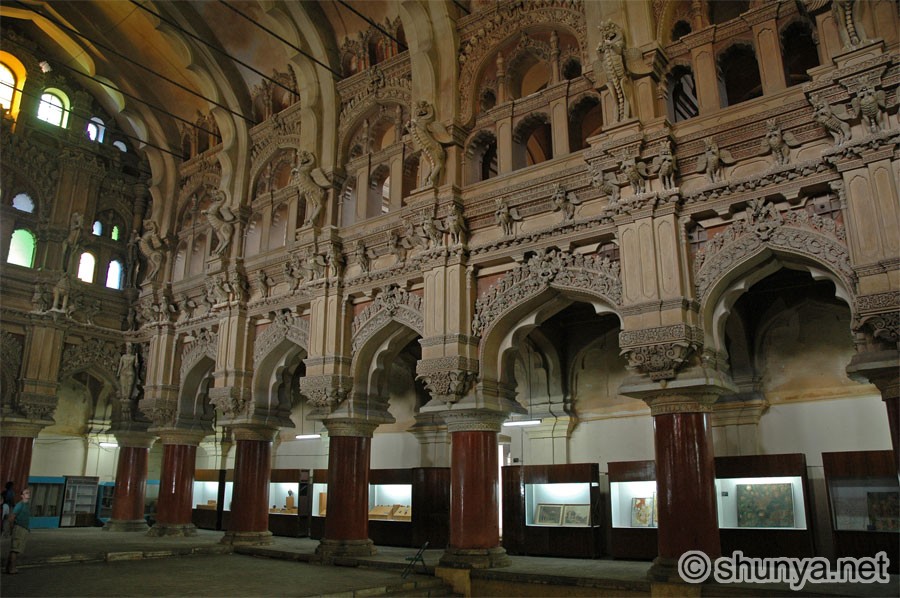 |
Wall detail 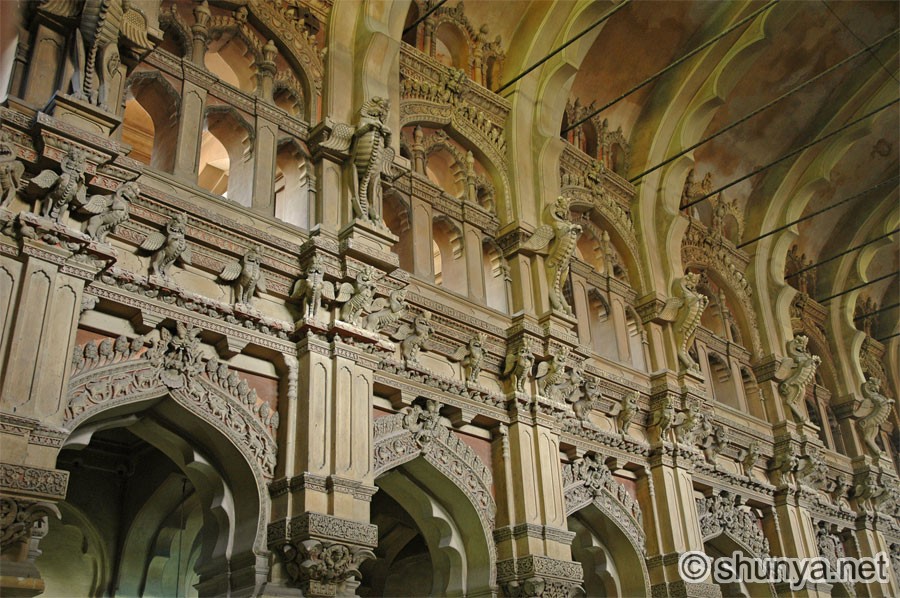 |
Vaigai river 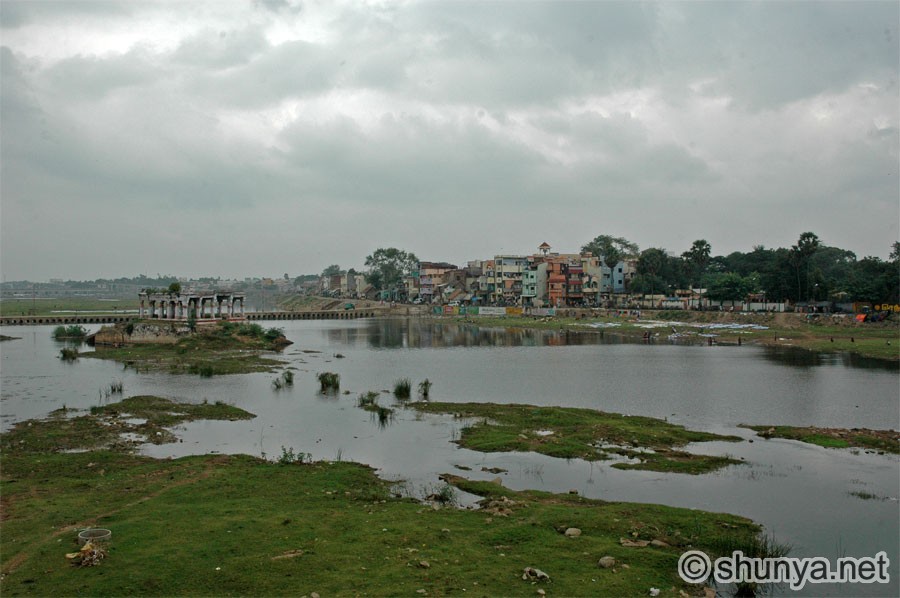 |
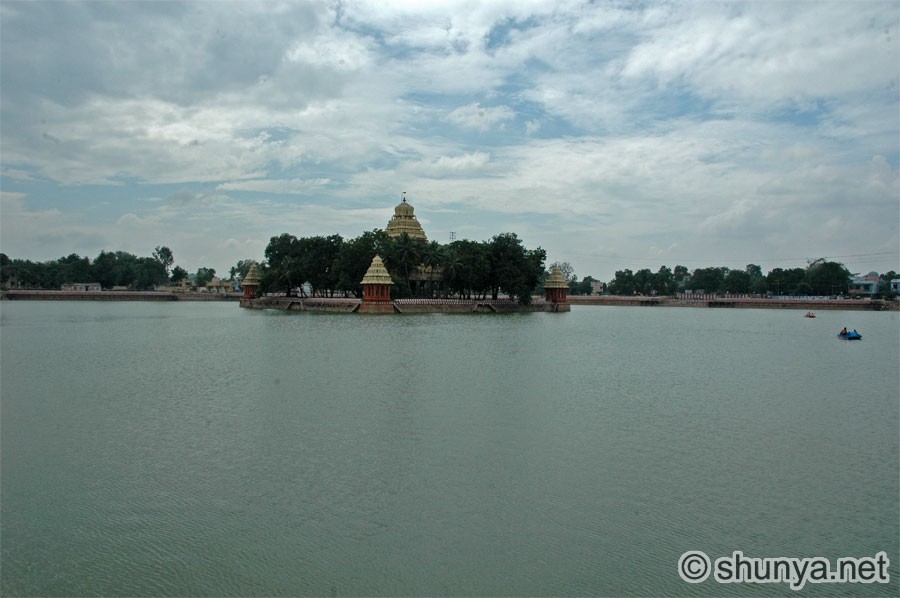
Teppakulam tank (more) 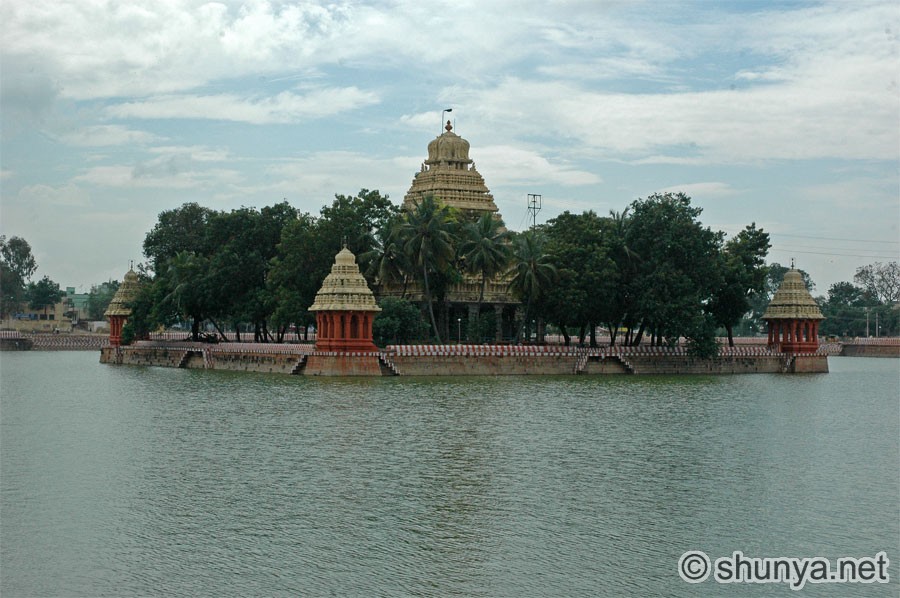 |
Gandhi Memorial museum 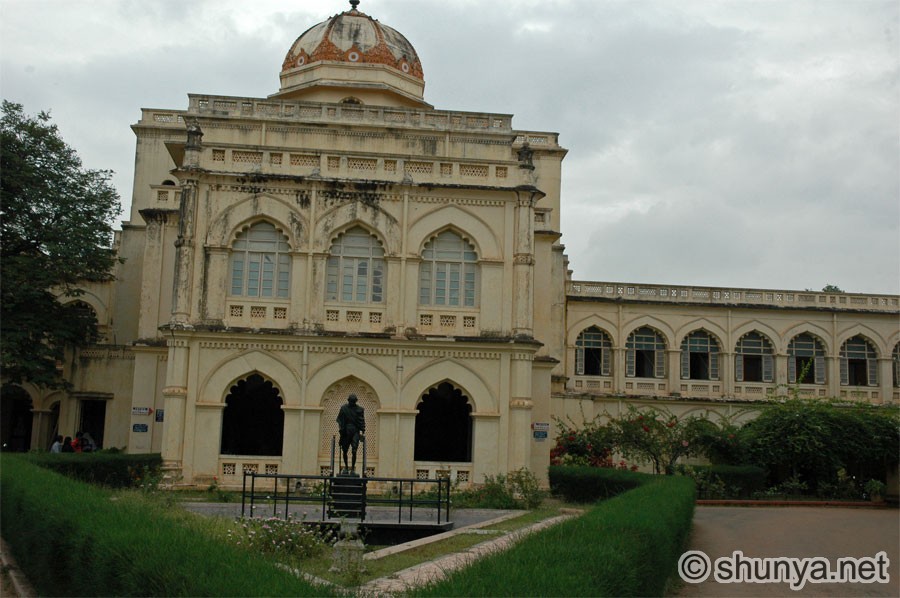 |
Lunch spot 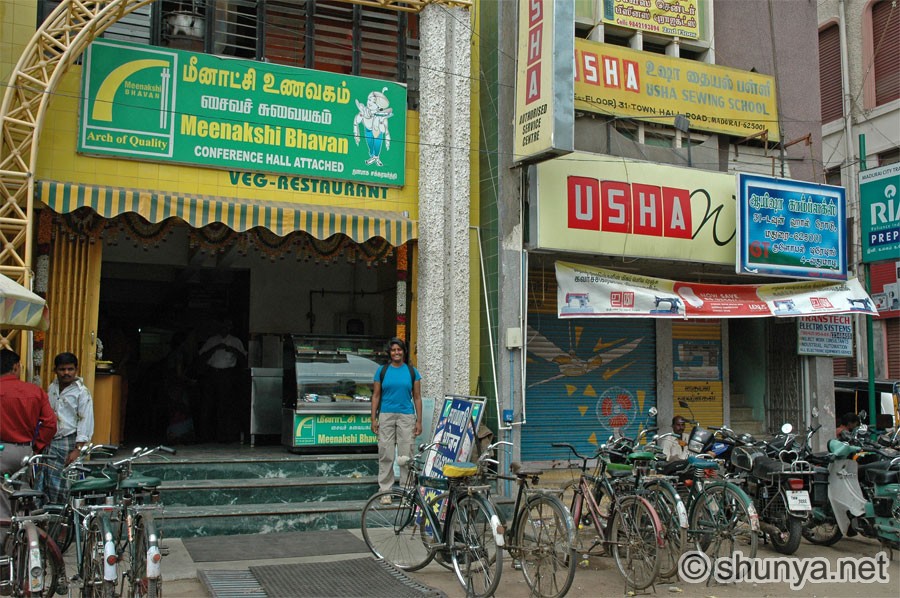 |

Designed in collaboration with Vitalect, Inc. All rights reserved. |