






Sanchi, Madhya Pradesh, India
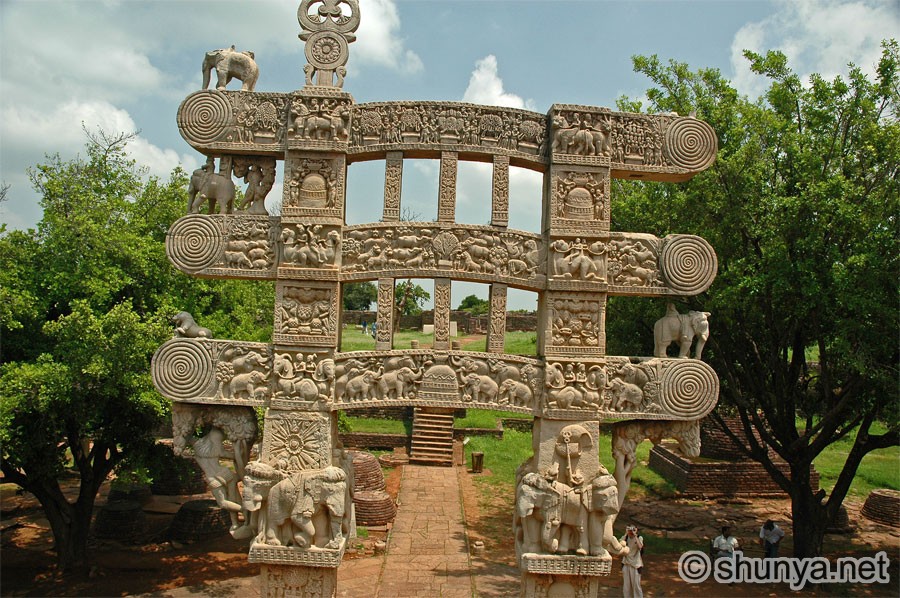
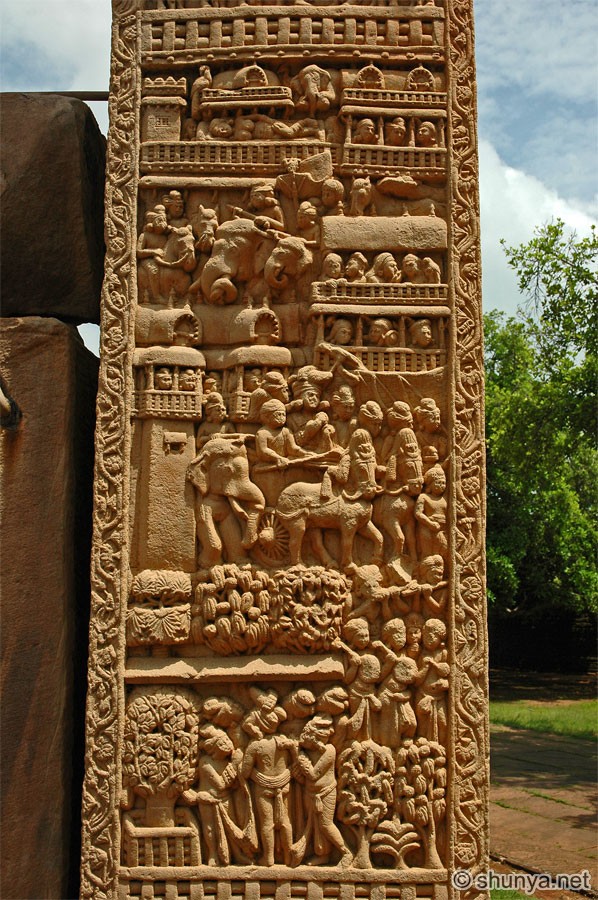
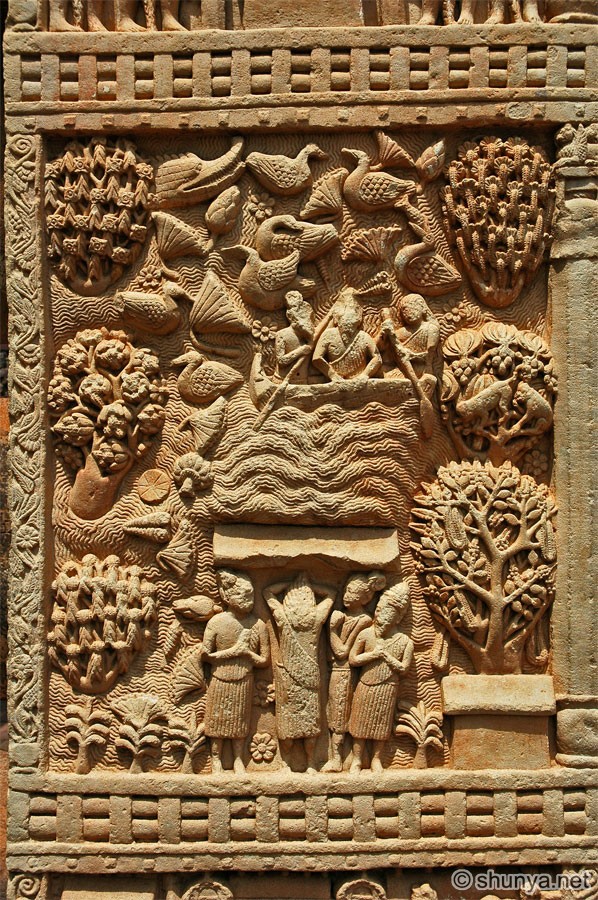
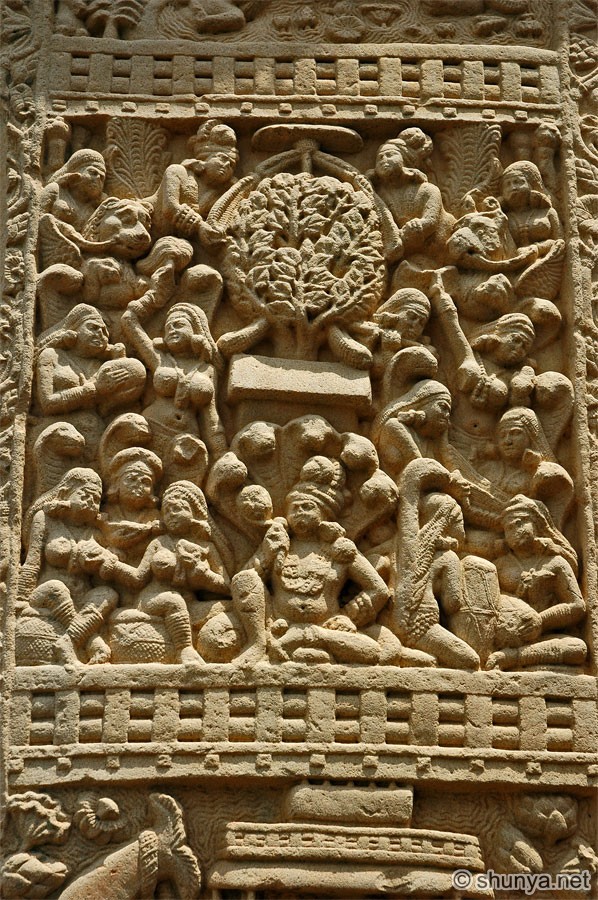
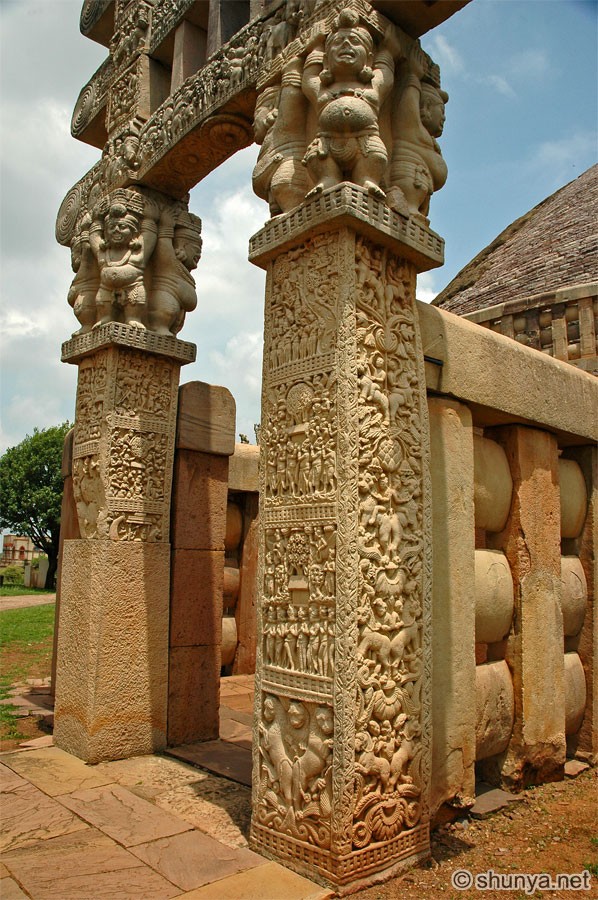
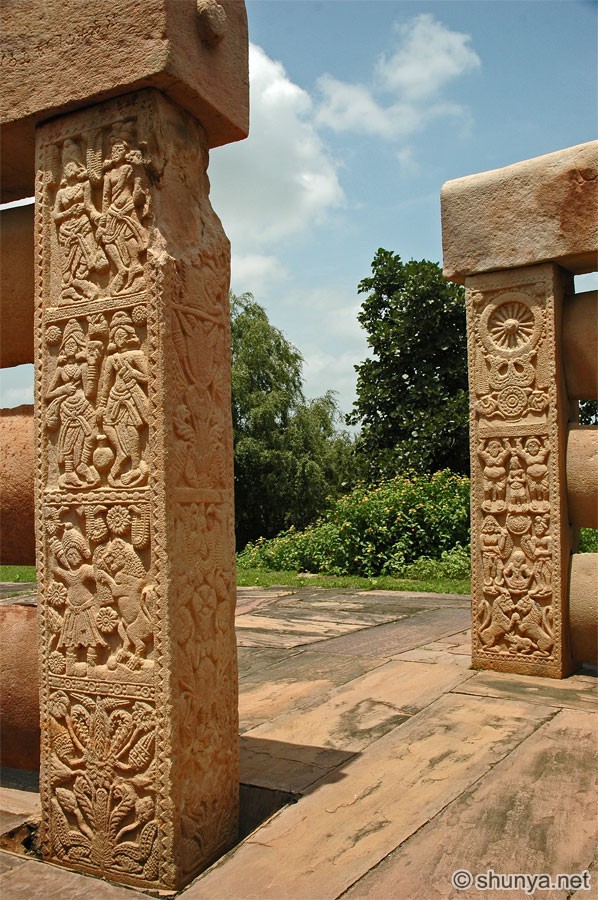
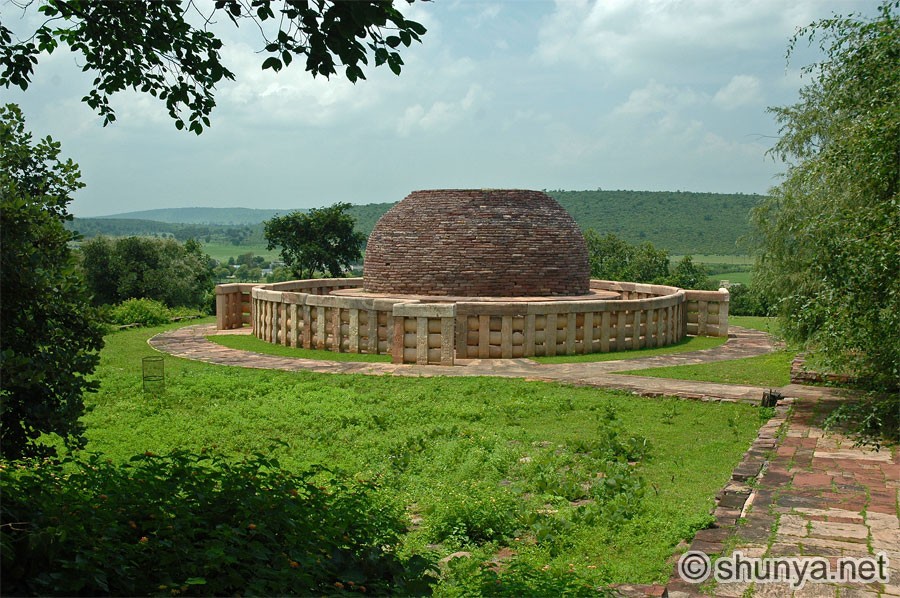
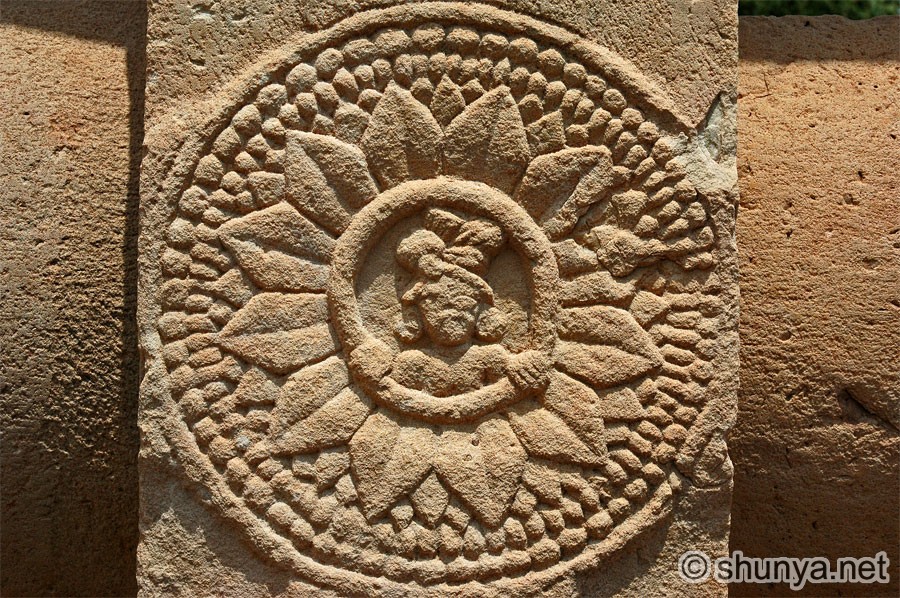
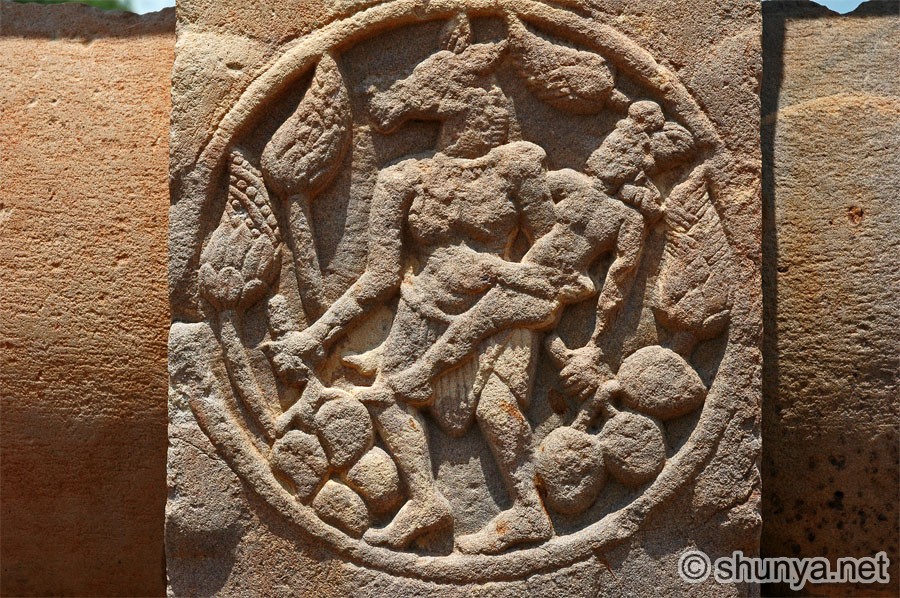
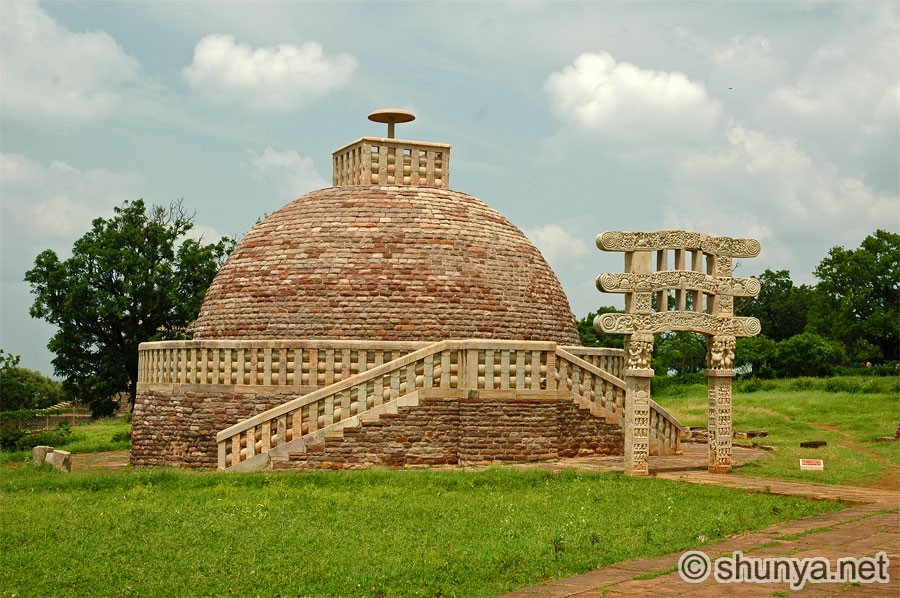
A UNESCO world heritage site in central India near the Betwa River. On a flat-topped sandstone hill, 90m above the countryside, stands the best-preserved group of Buddhist monuments in India. Most noteworthy is the Great Stupa, discovered in 1818. It was probably begun by the emperor Aśoka in the mid-3rd century BCE and later enlarged. Solid throughout, it is enclosed by a massive stone railing pierced by four gateways on which are elaborate carvings depicting the life of the Buddha. The stupa itself consists of a base bearing a hemispherical dome representing the dome of heaven enclosing the Earth; it is surmounted by a squared rail unit, the world mountain, from which rises a mast to symbolize the cosmic axis. The mast bears umbrellas that represent the various heavens. Other remains include several smaller stupas, an assembly hall (caitya), an Aśokan pillar with inscription, and several monasteries (4th-11th cent. CE). Several relic baskets and more than 400 epigraphical records have also been discovered. [Adapted from Encyclopedia Britannica; Aug 05]
Sanchi town 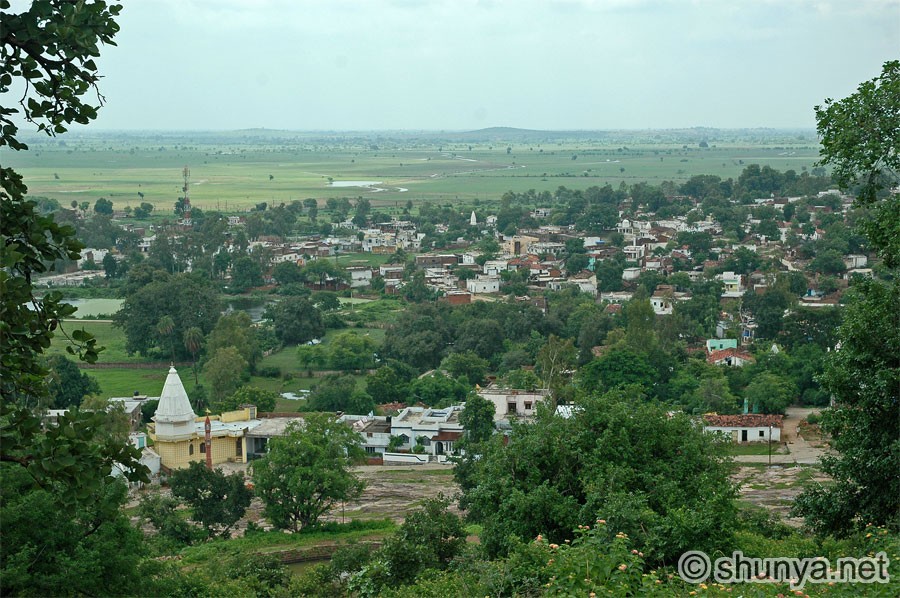 |
Northern gateway 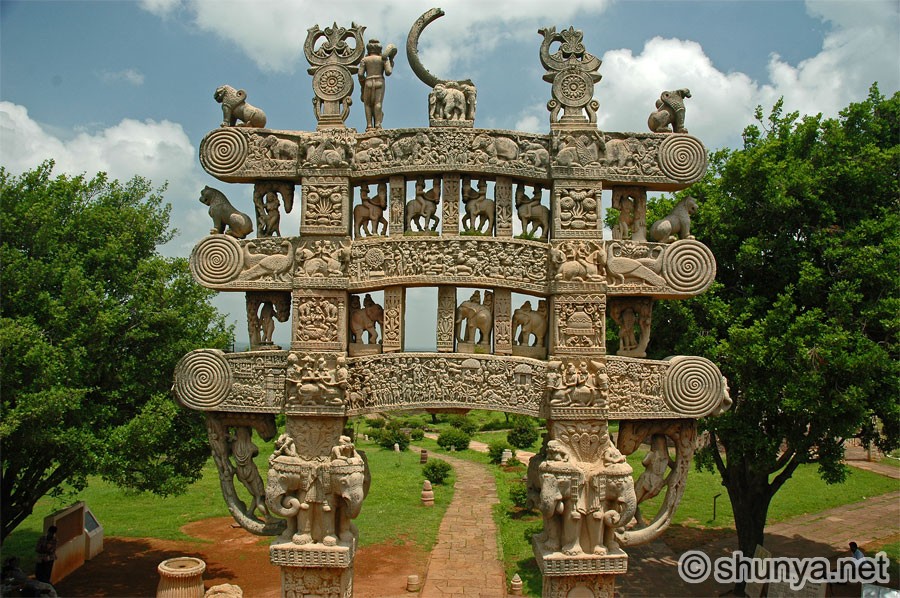 |
Great Stupa, eastern gateway 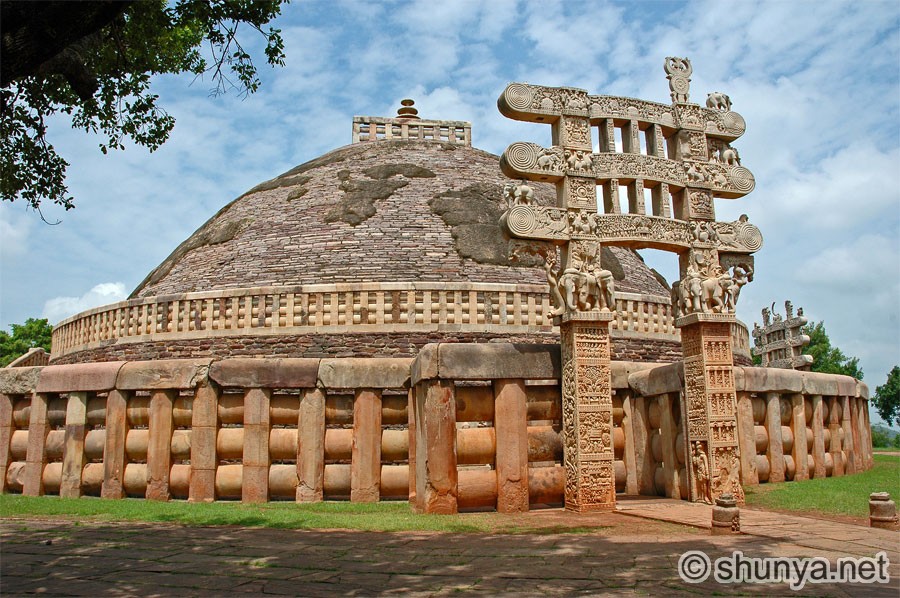 |
Yakshi, eastern gateway 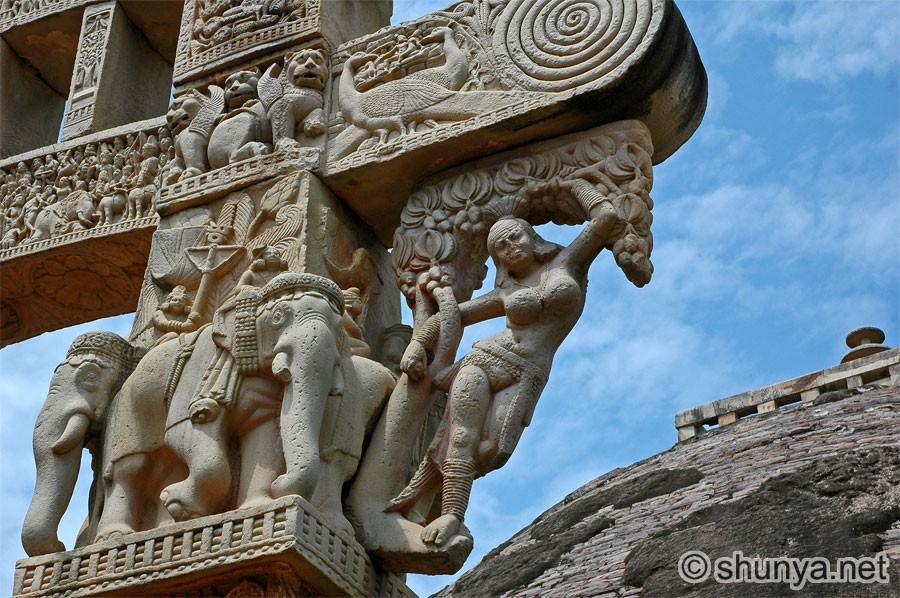 |
Eastern gateway 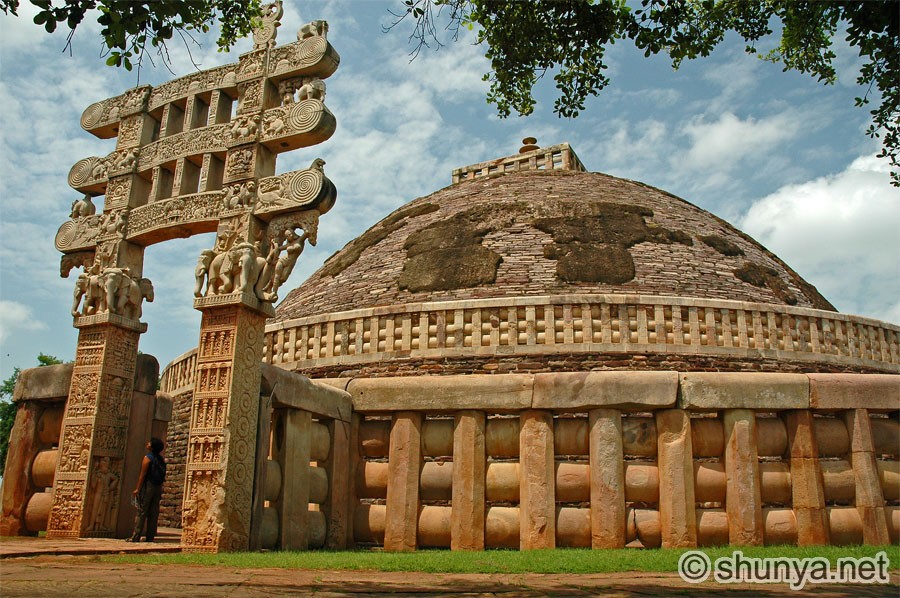 |
Southern gateway 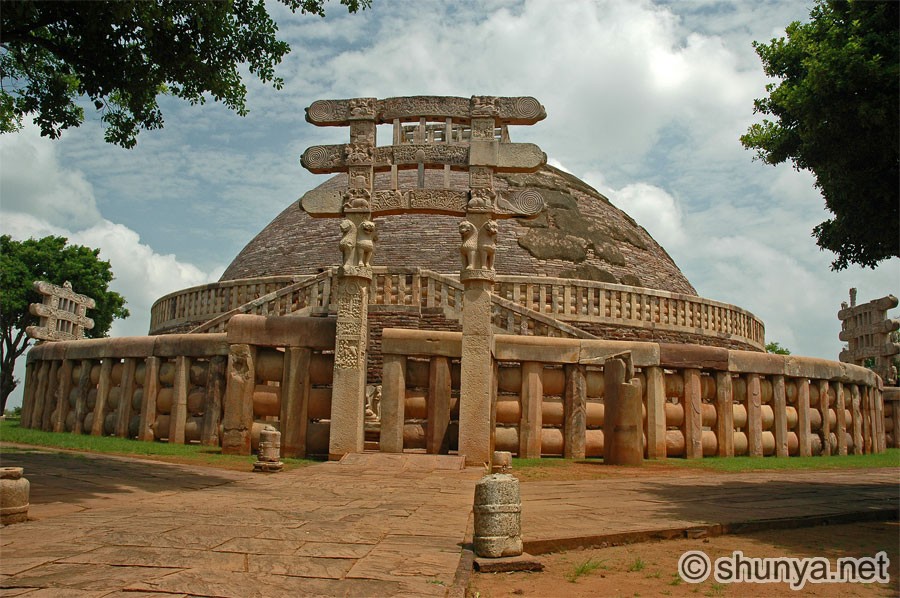 |
||
Eastern gateway (reverse) 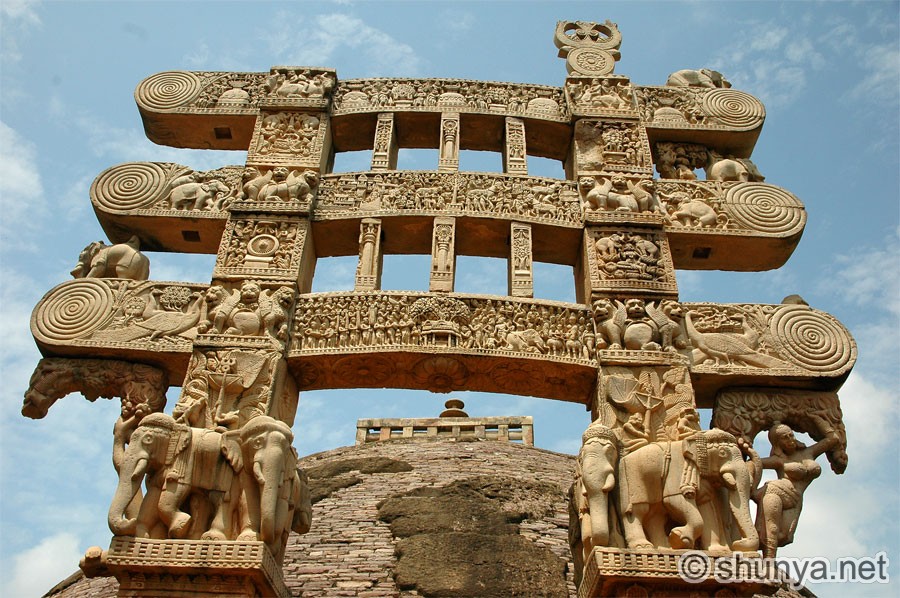 |
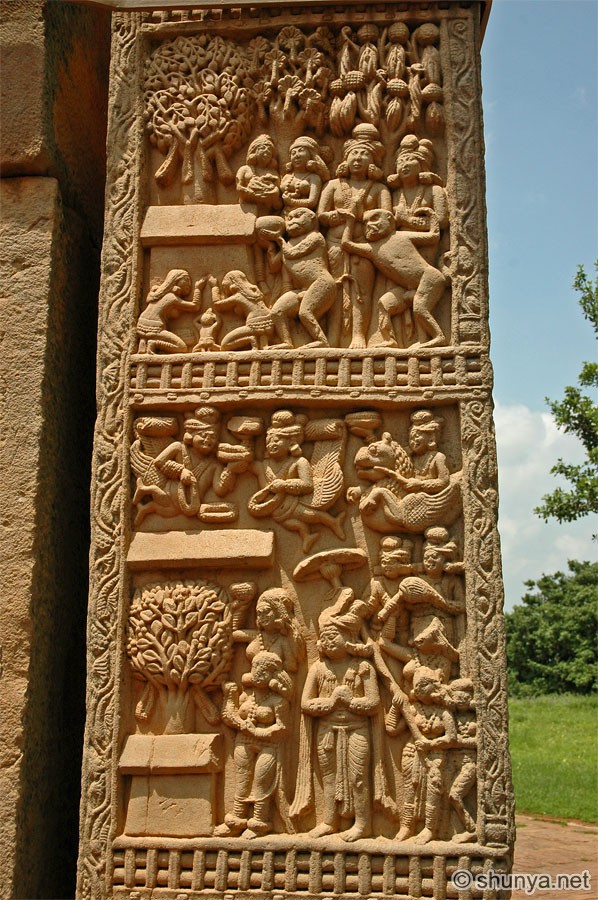 |
||
Western gateway 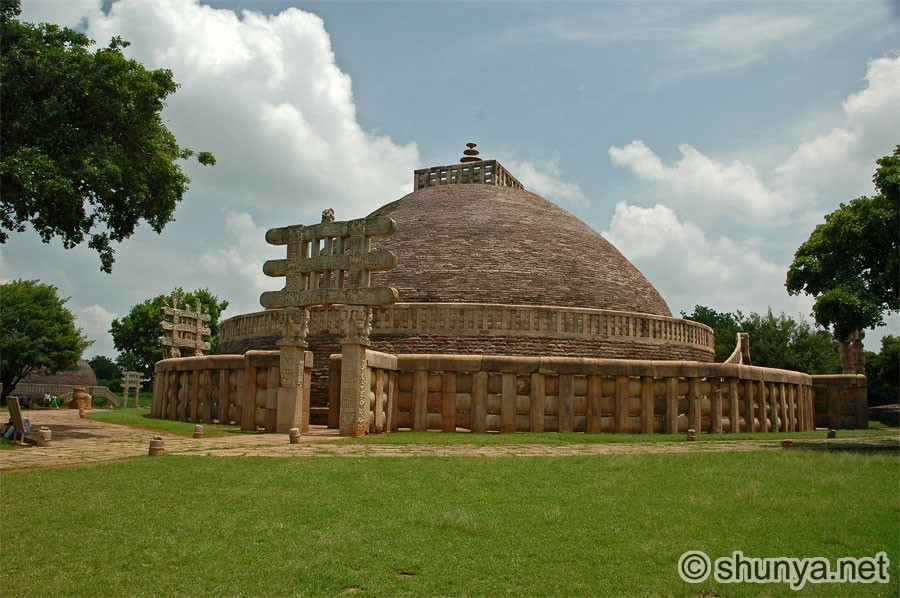 |
Western gateway 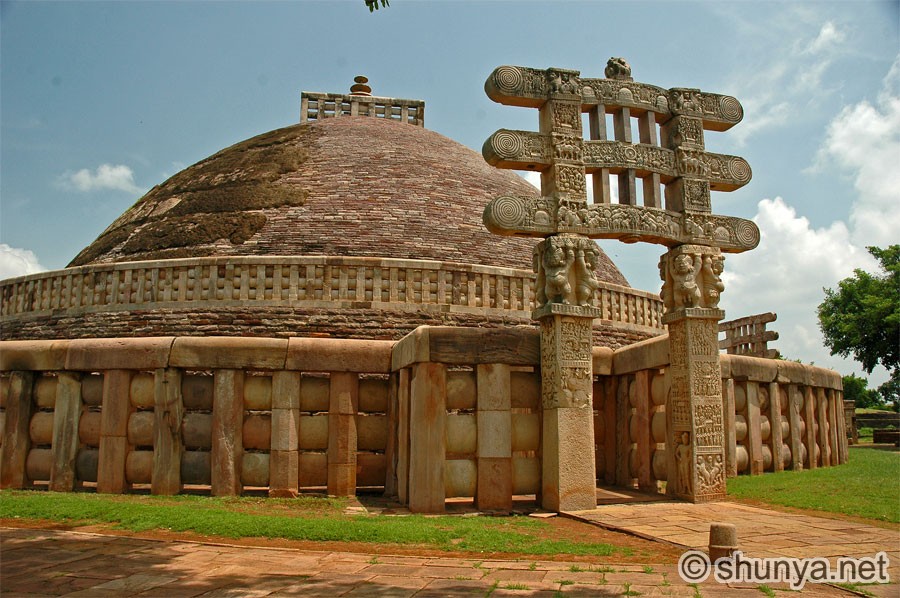 |
Western gateway (more) 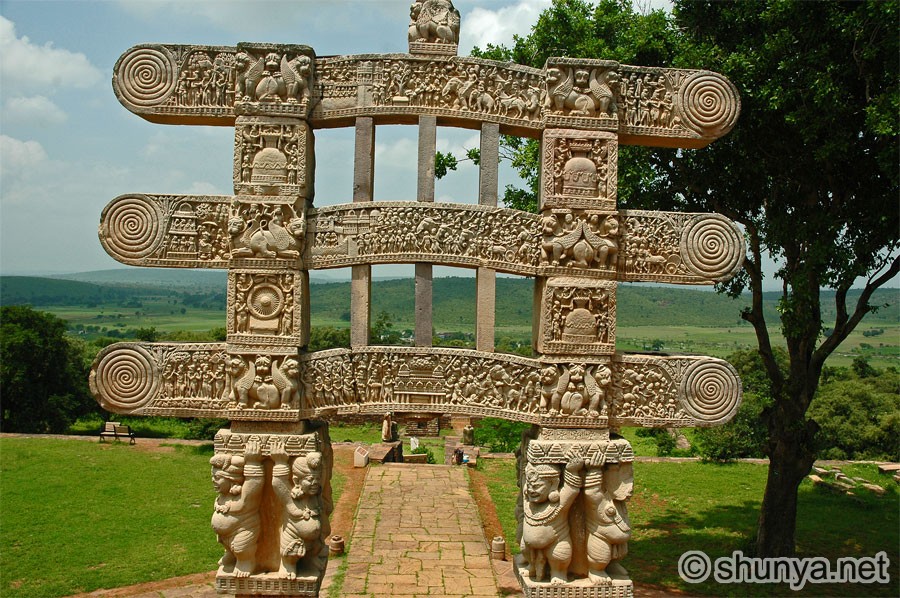 |
Temples 17 and 40 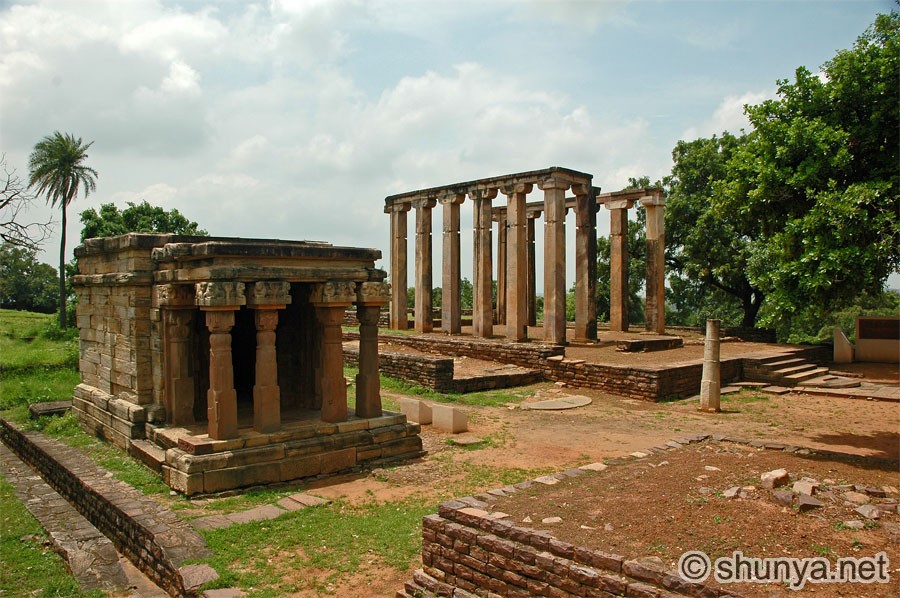 |
Remains of another stupa 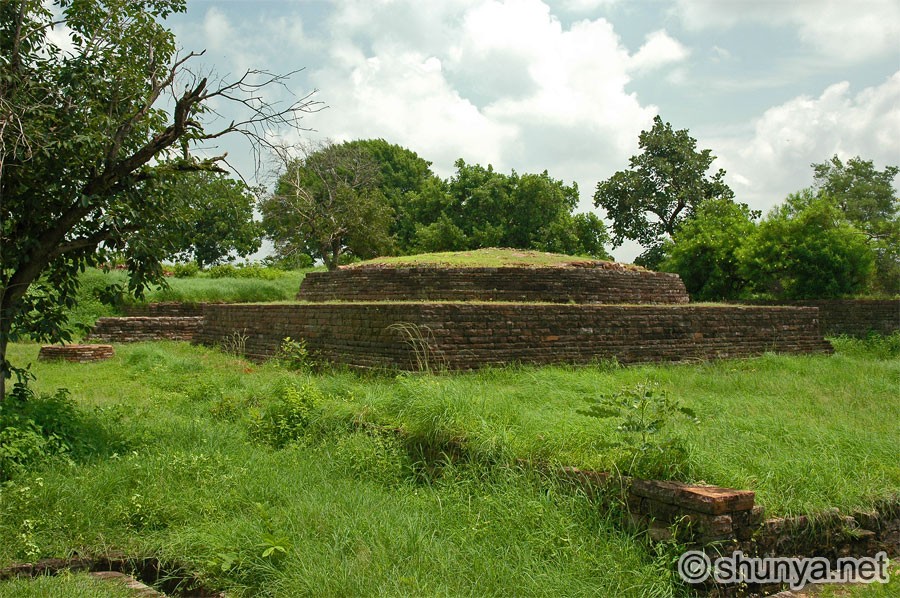 |
Monastery 51 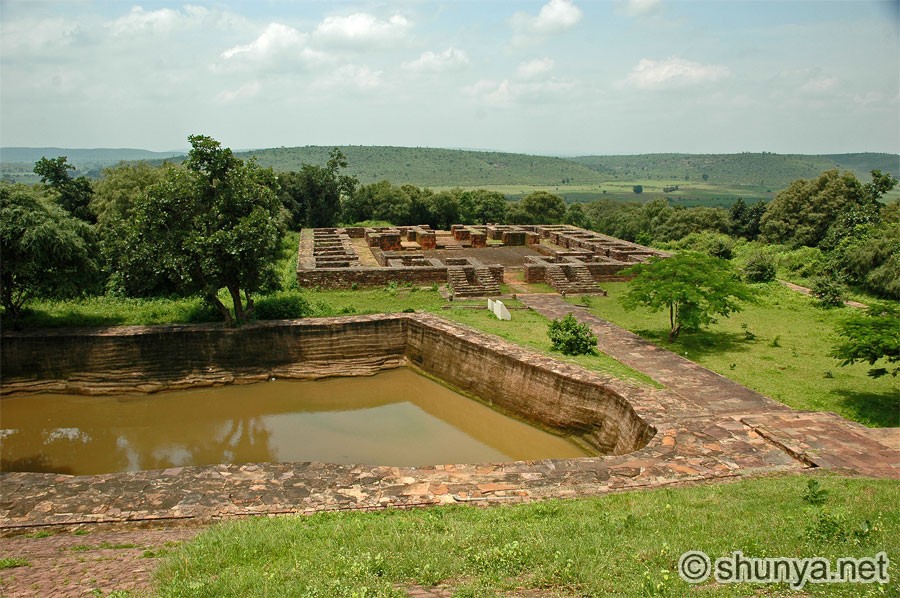 |
||
More stupas 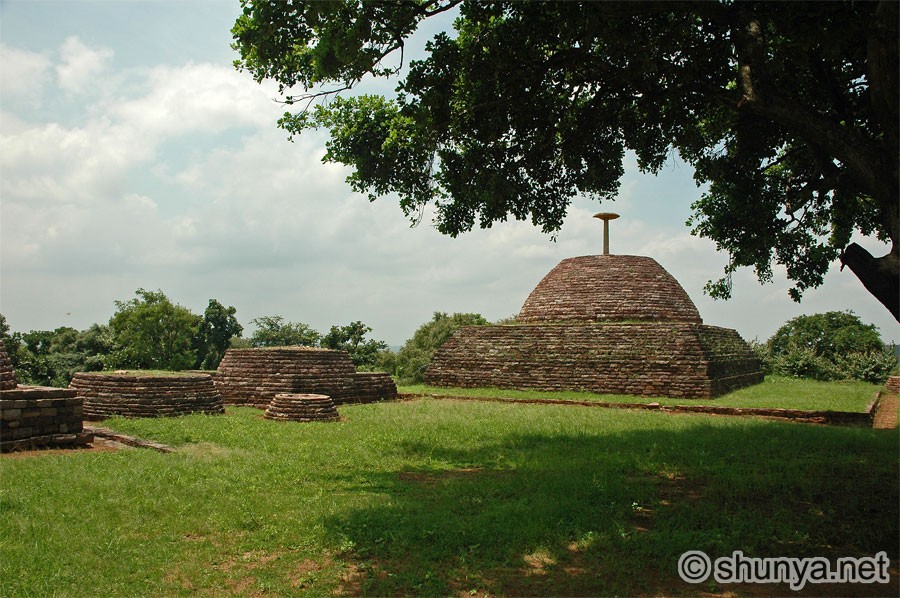 |
Green pond 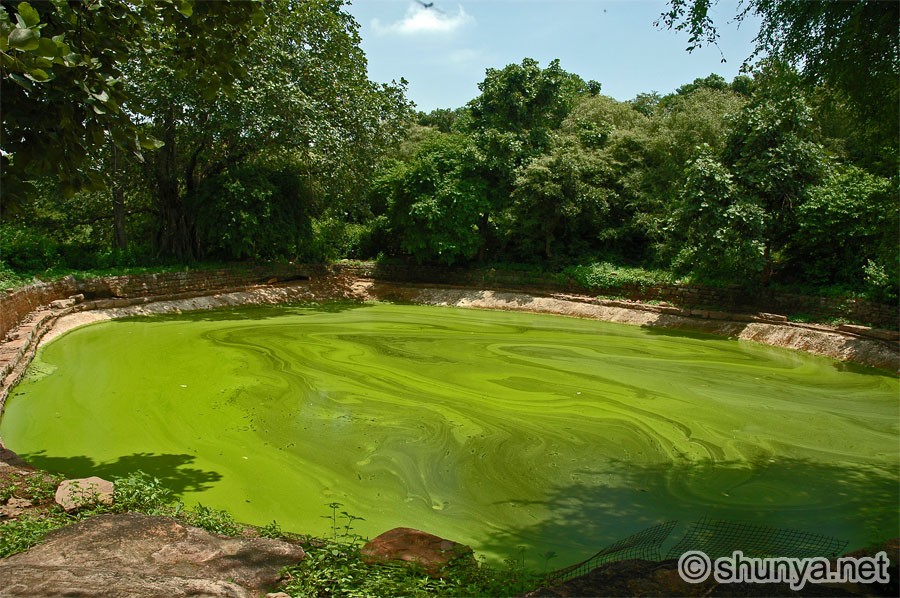 |
||
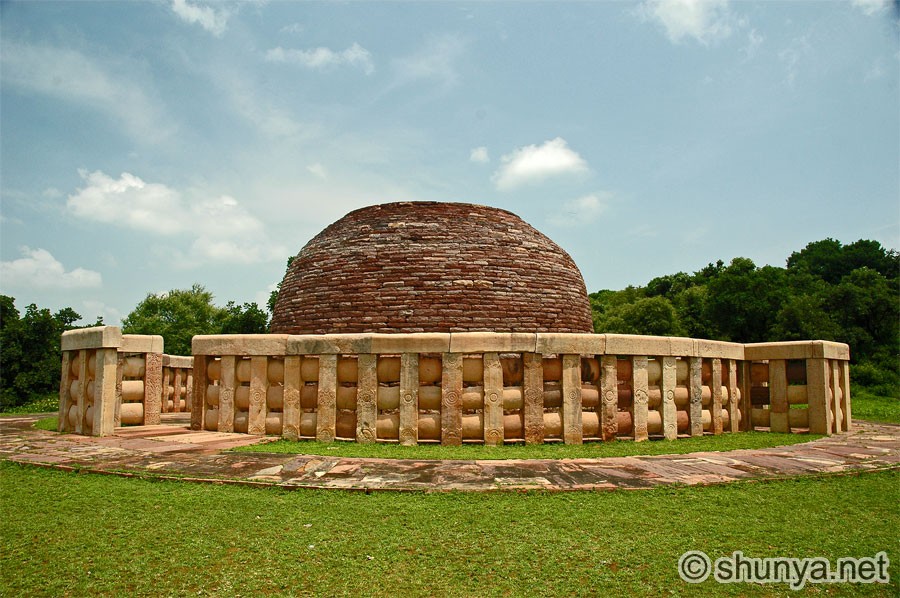 |
Aboard Stupa 2 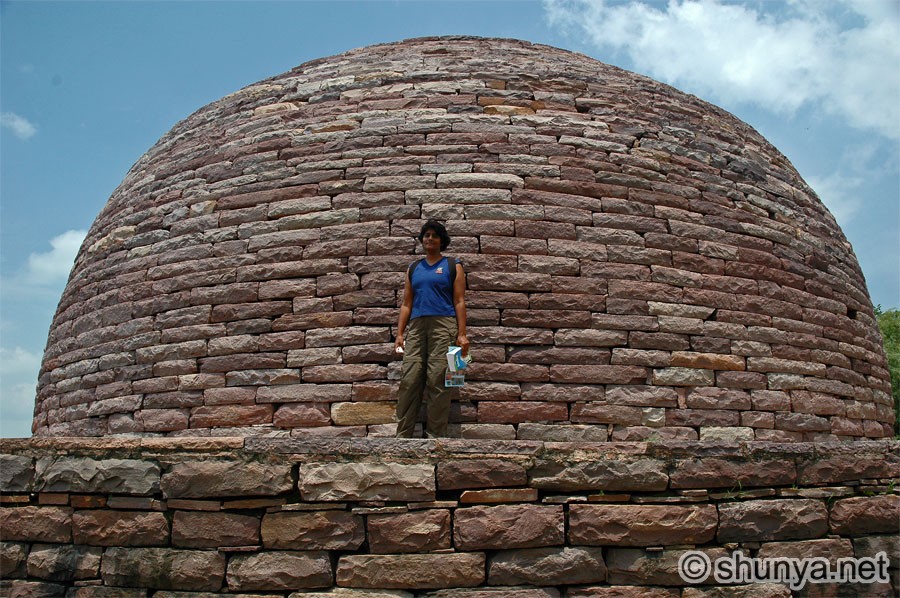 |
Stupa 2 sculpture 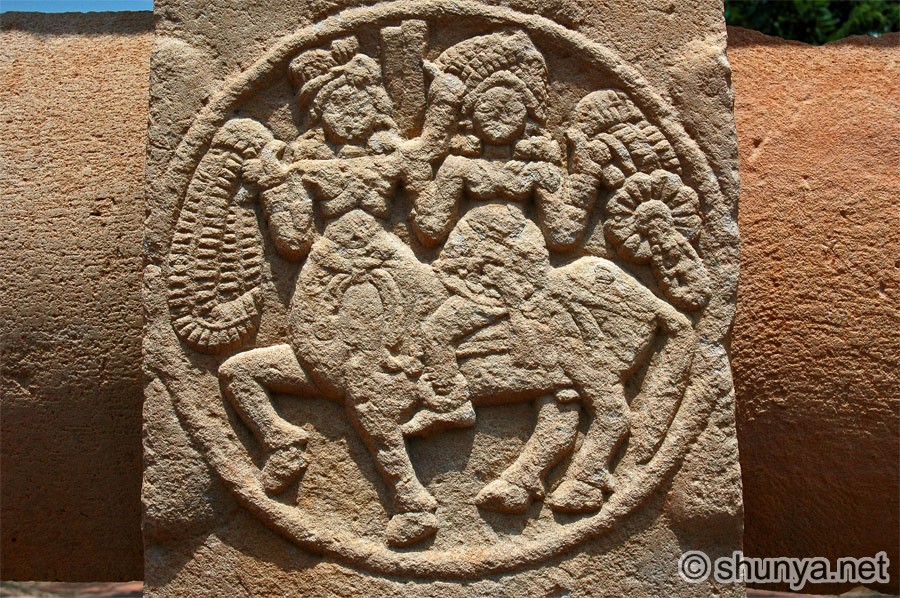 |
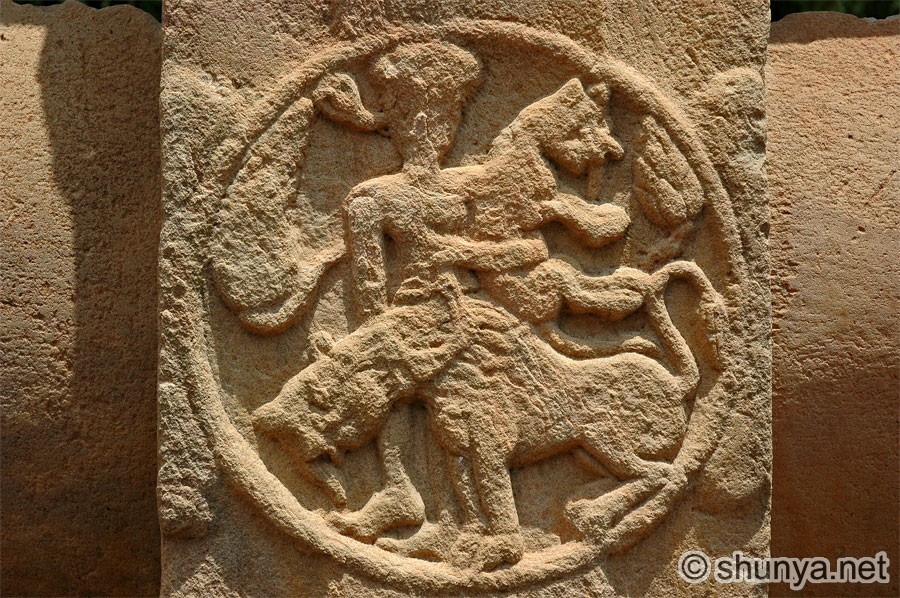 |
Stupa ruins 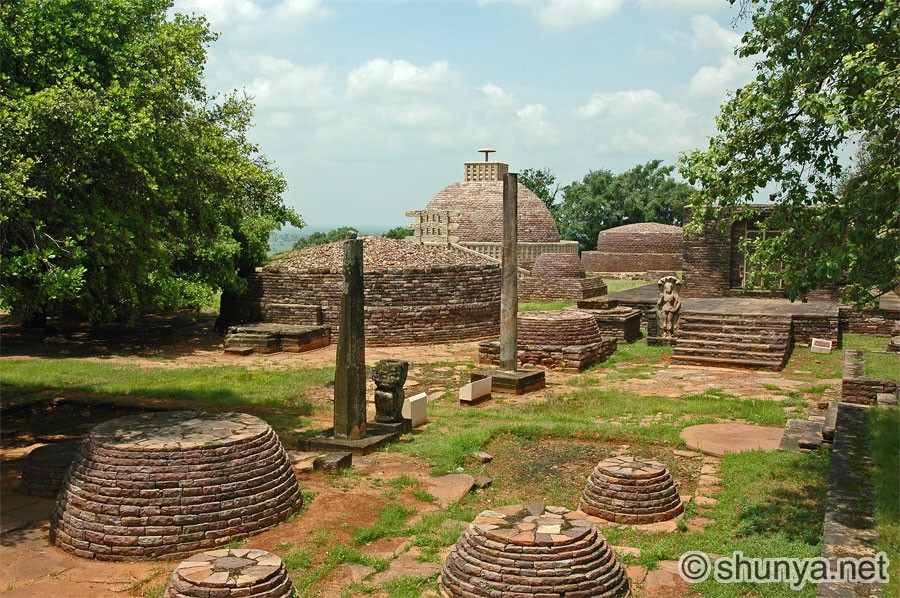 |
Sri Lankan visitors 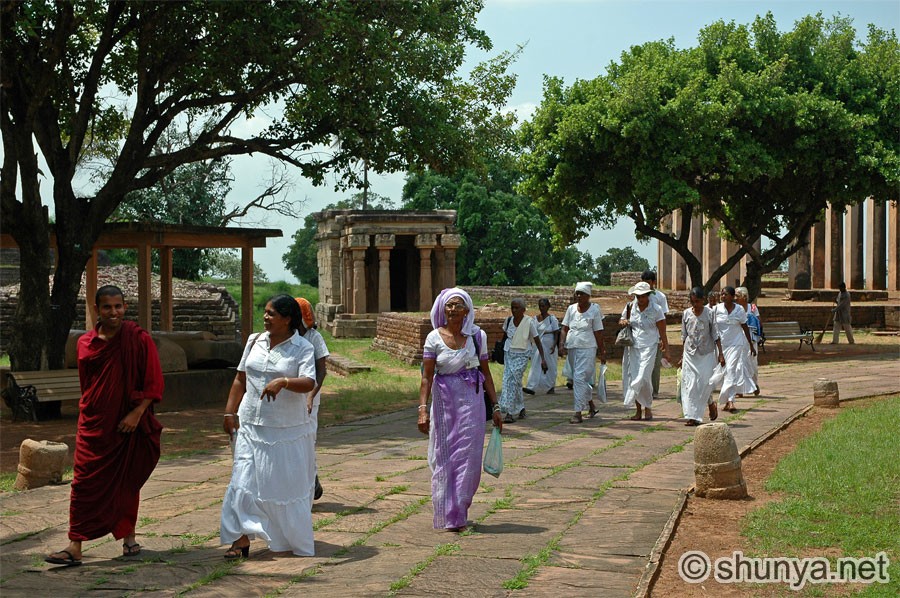 |
Monasteries 45, 46, 47 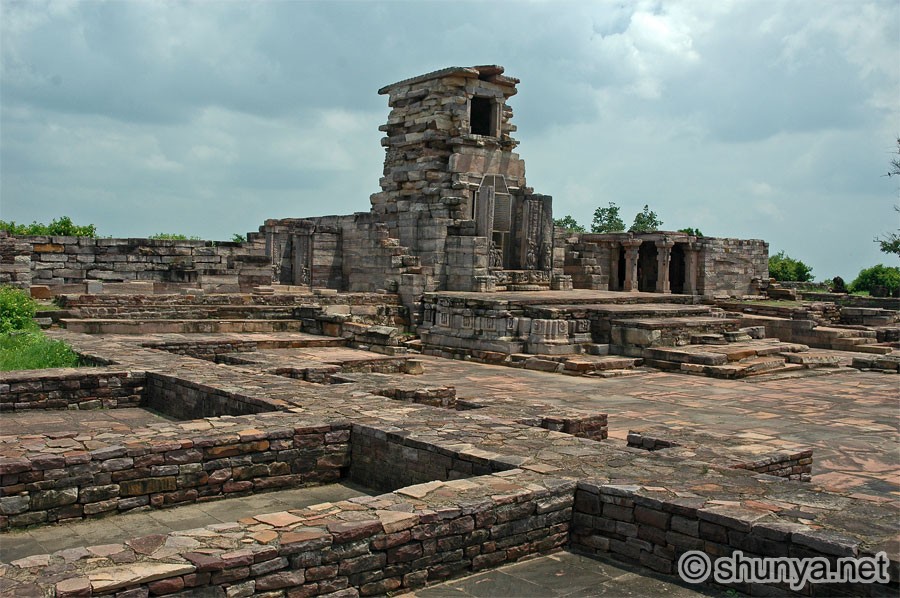 |
Monasteries 45, 46, 47 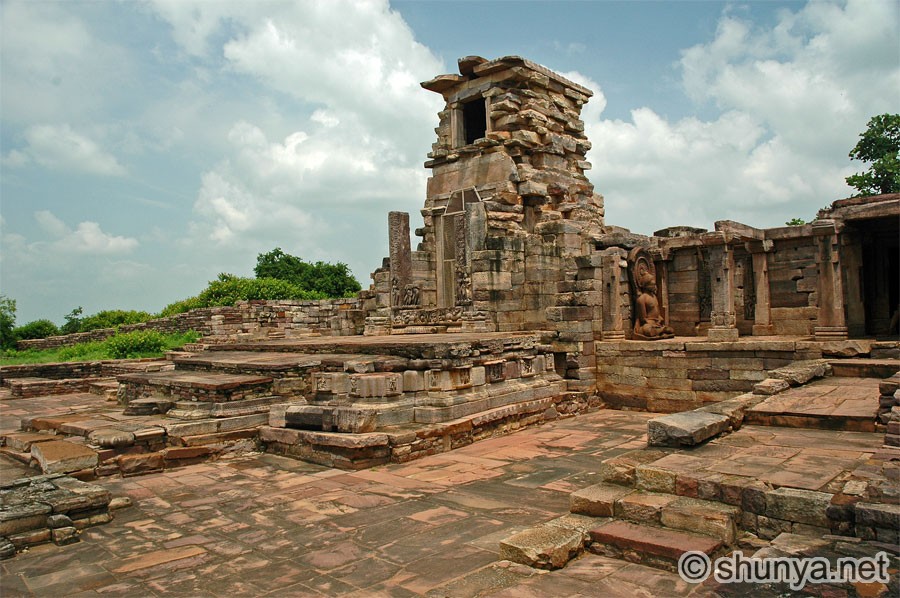 |
Stupa 3 (more) 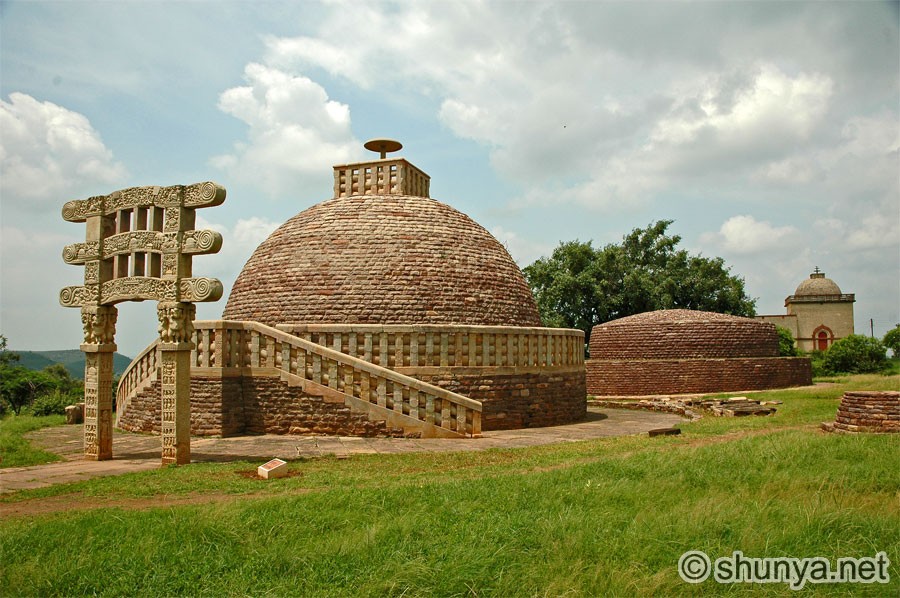 |
Maha Bodhi Society vihara 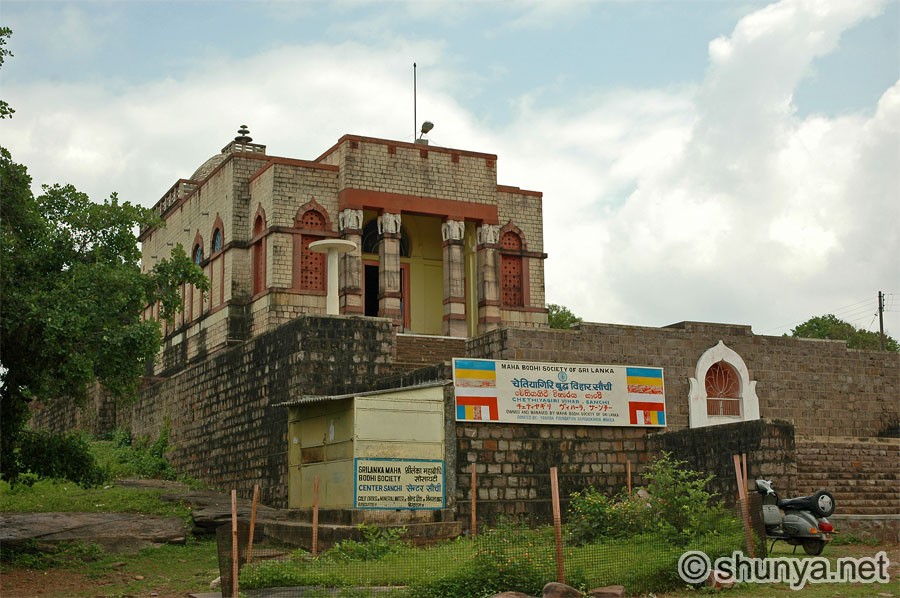 |
Inside the Vihara 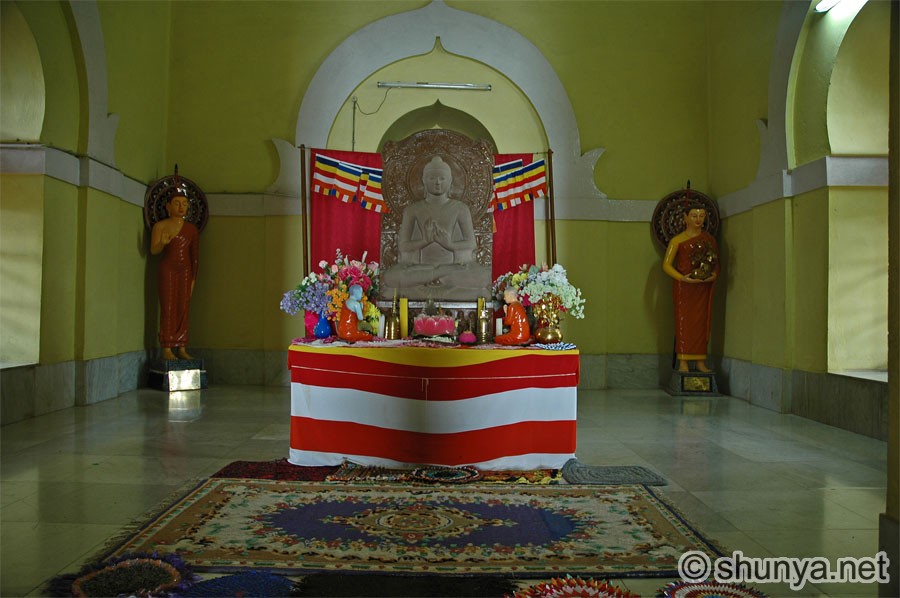 |
The death of Buddha 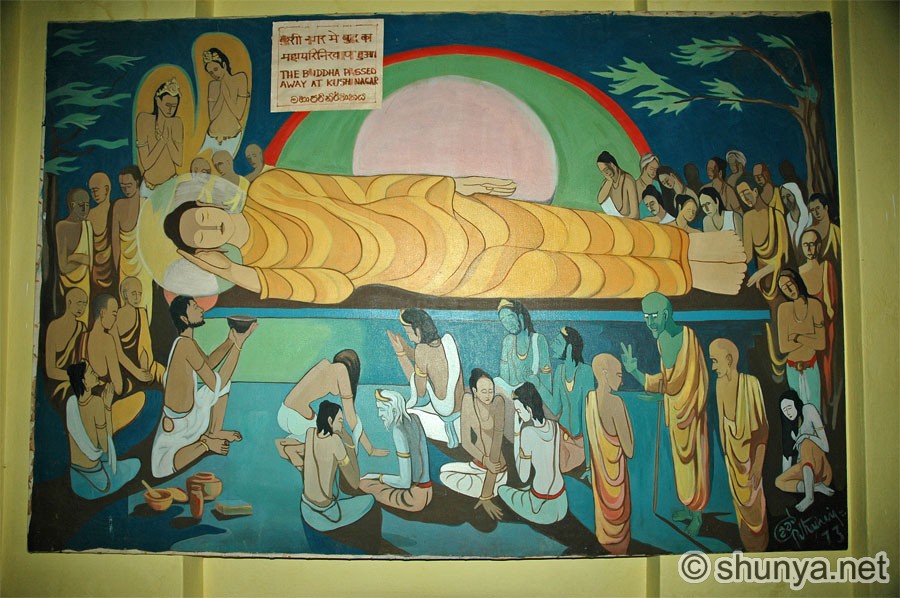 |
Landscape 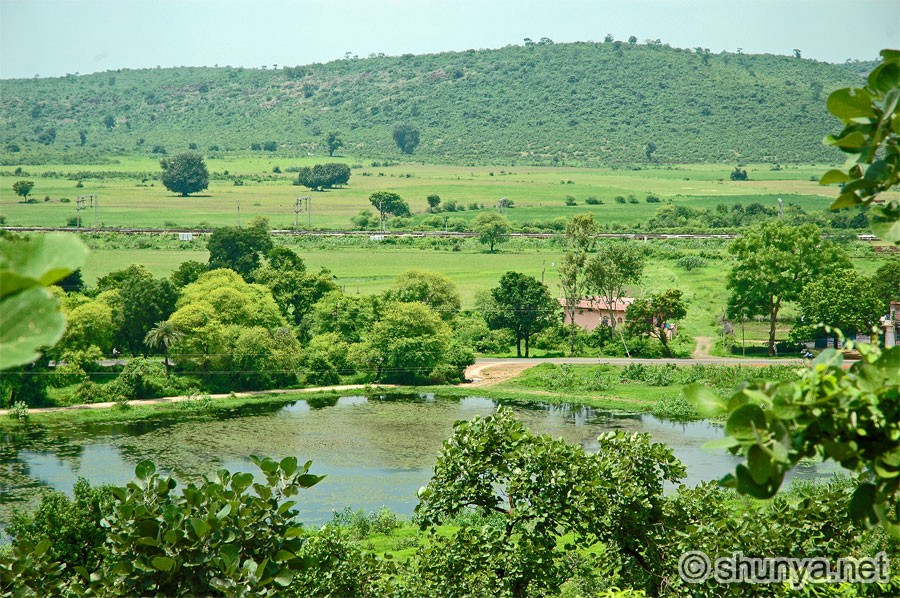 |
Transporting buffaloes 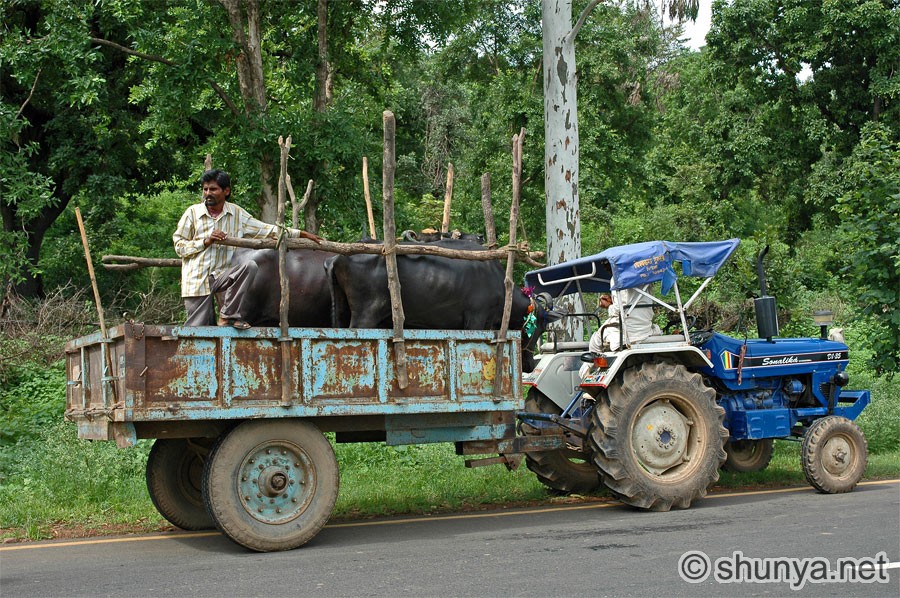 |
River 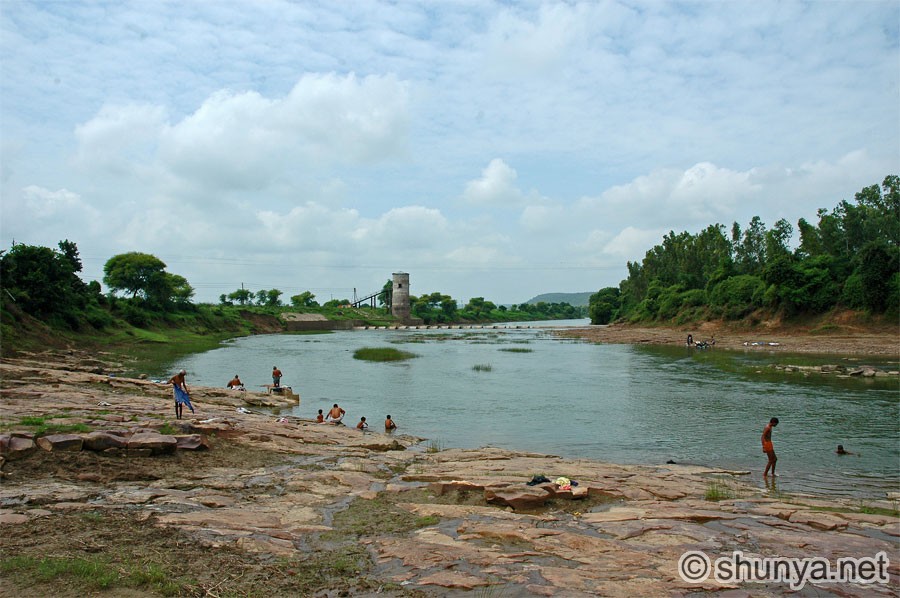 |
Landscape 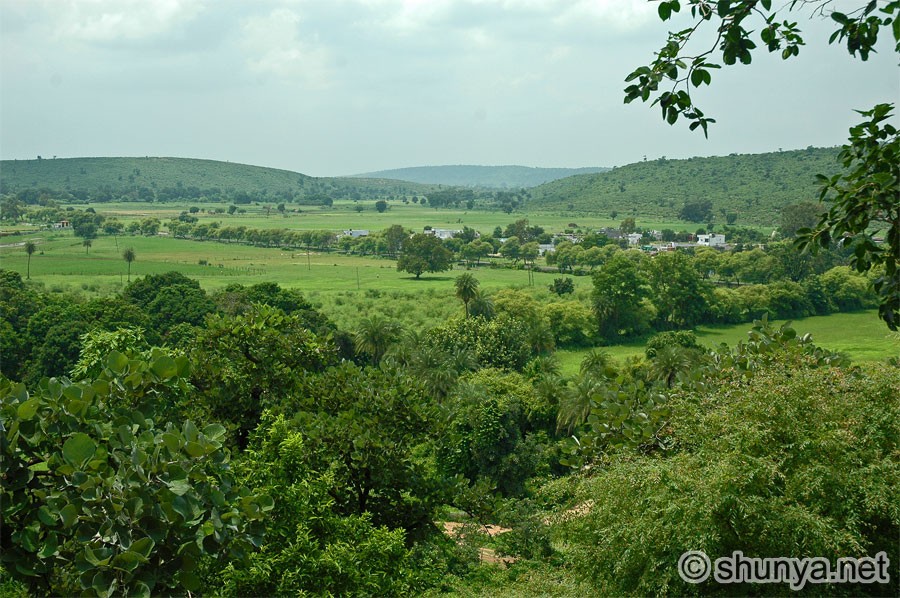 |
Designed in collaboration with Vitalect, Inc. All rights reserved. |