






Murshidabad, West Bengal , India
Murshidabad was reputedly founded by the Mughal emperor Akbar in the 16th century. In 1704, the nawab Murshid Quli Khan (following Aurangzeb's orders) moved the capital there from Dacca and renamed the city Murshidabad. The reign of Siraj-ud-daula marked the entry of Great Britain into the subcontinent's affairs. The nawab, peeved by the persistent British defiance of his wishes, marched to Calcutta and drove the British out of Fort Williams to their ships offshore. What followed was the 'Black Hole' incident, in which numerous English captives died of suffocation in a jail cell. Months later, the British, led by Robert Clive, retook Calcutta and plotted with Mir Jafar, Siraj-ud-Daula's general, to overthrow and assassinate the nawab in 1757 after the battle of Plassey (now Palashi). Murshidabad remained the capital under the British until 1790 and is still the seat of the descendants of the nawabs of Bengal. The city, lying just east of the Bhagirathi River, is now an agricultural trade and silk-weaving centre. [Adapted from Encyclopedia Britannica; Dec 05]
|
Crossing the Bhagirathi  |
 |
 |
Imambara mosque 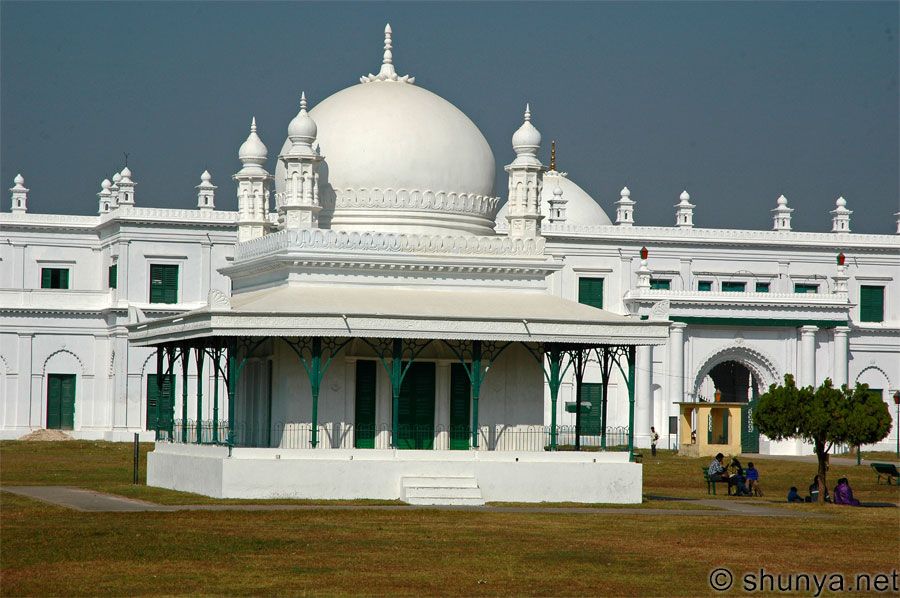 |
Clock tower 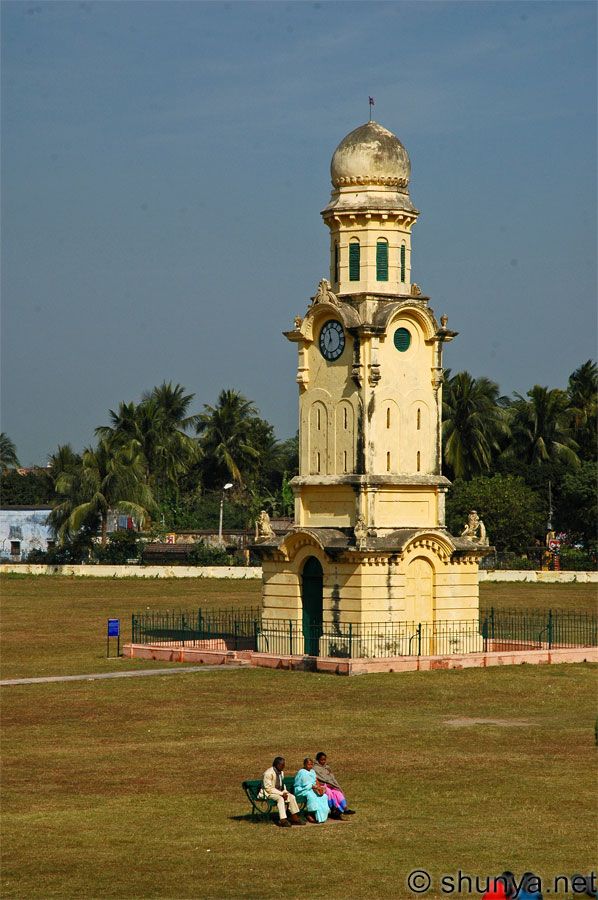 |
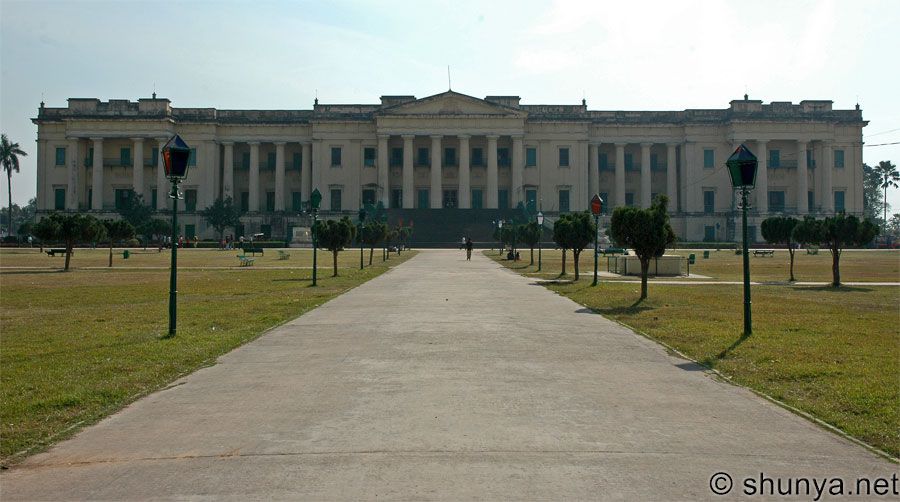
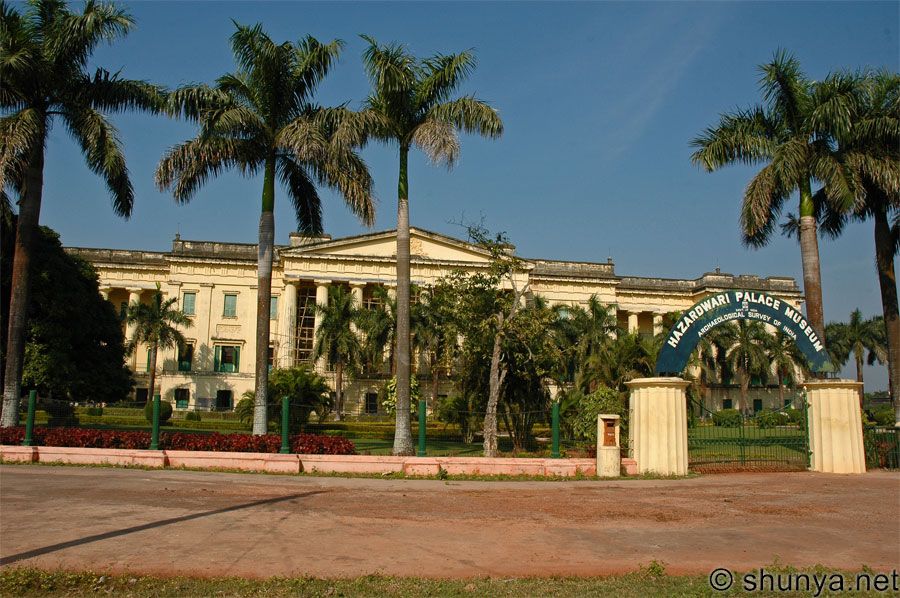
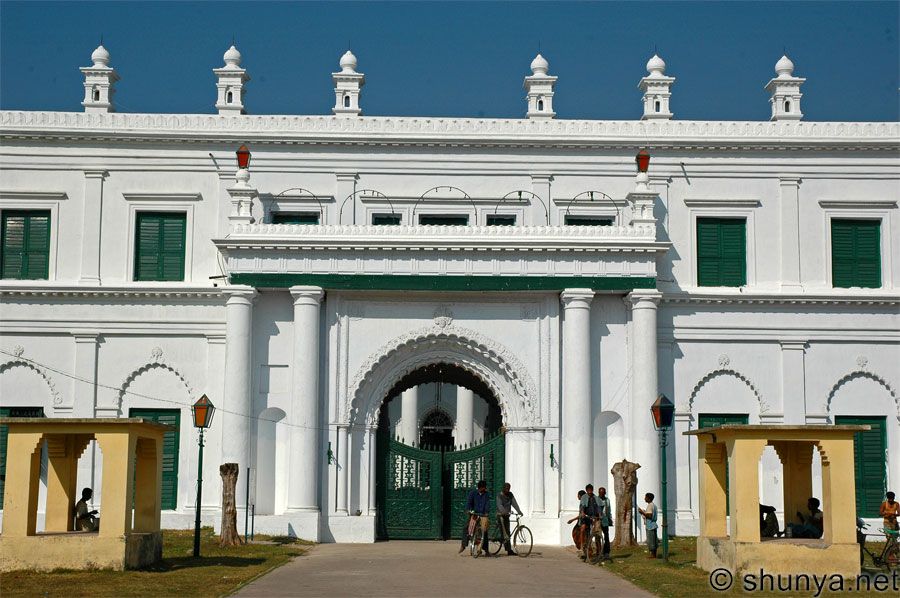
Ex-haunt of the Nawabs 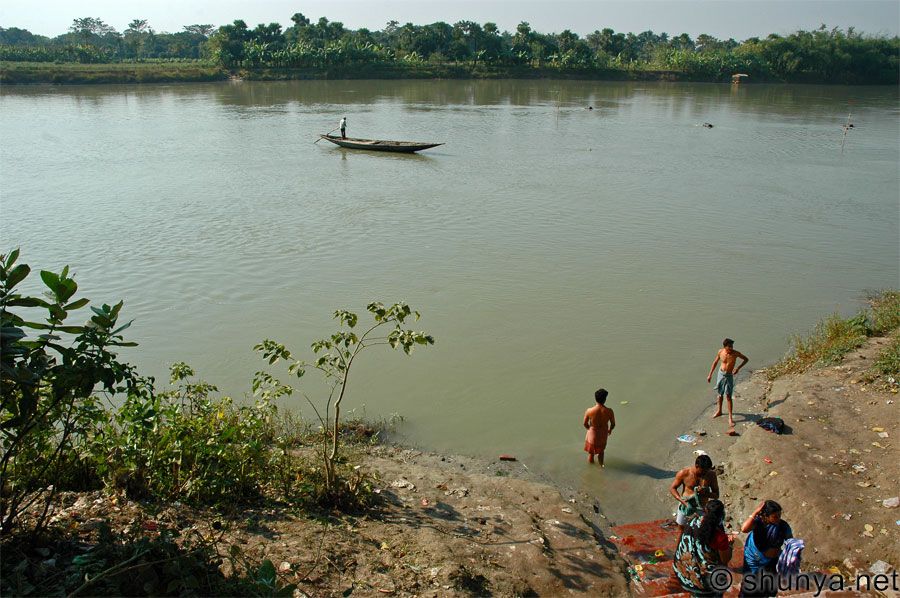 |
||
Bhagirathi river 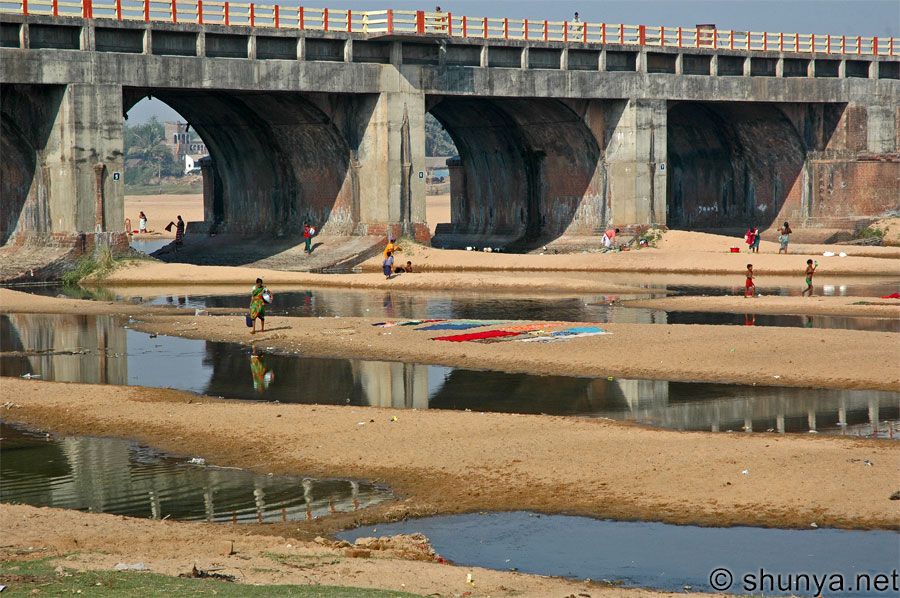 |
Crossing the Bhagirathi 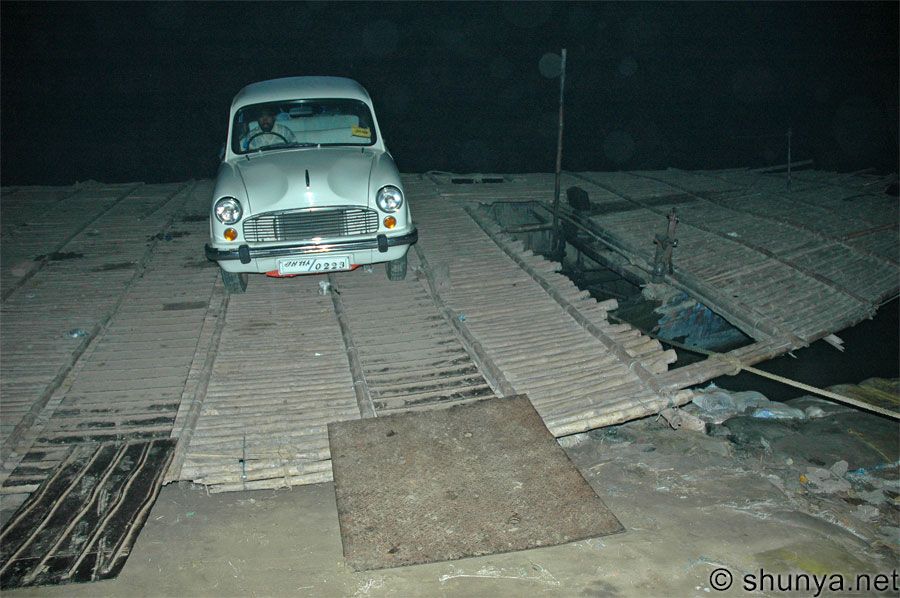 |
||

Designed in collaboration with Vitalect, Inc. All rights reserved. |