




Darjeeling, West Bengal, India
|
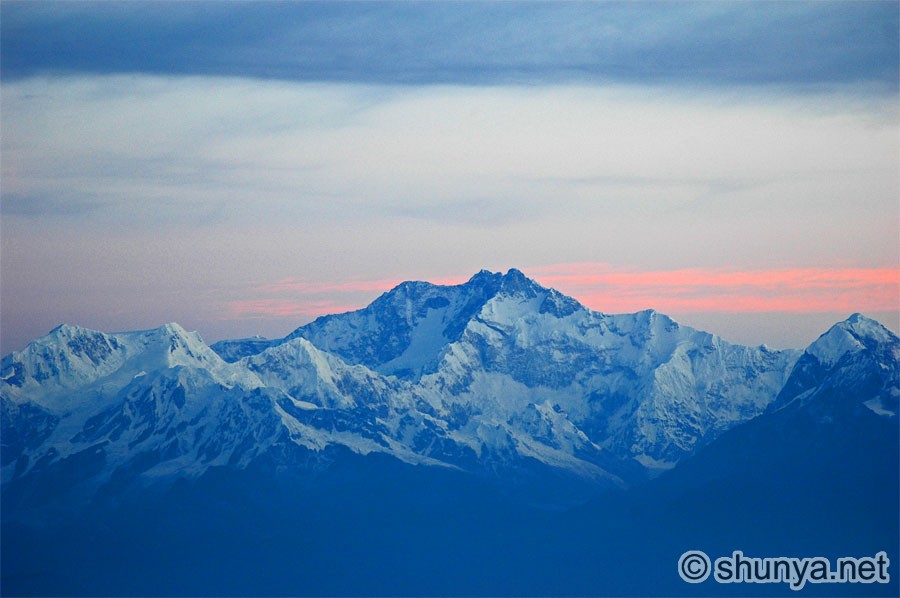
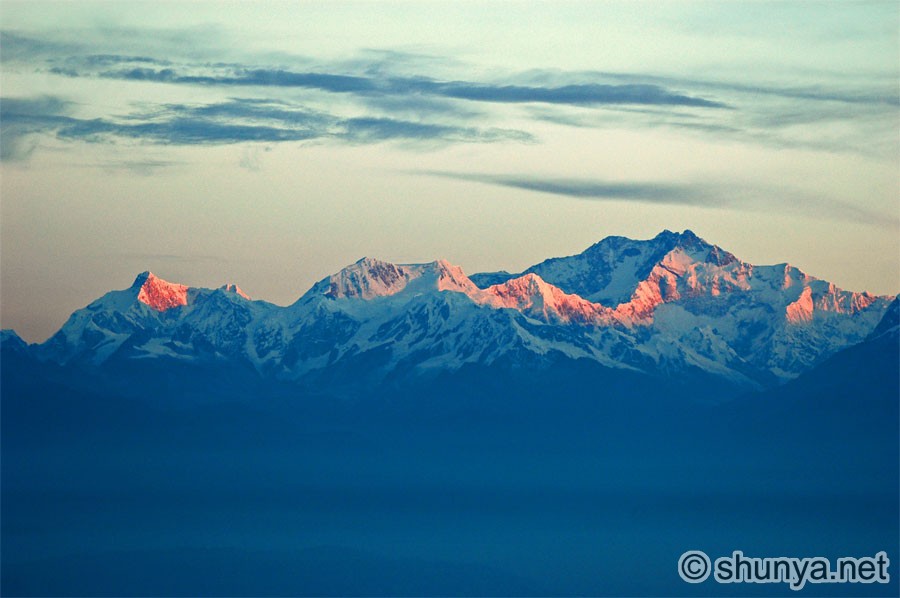
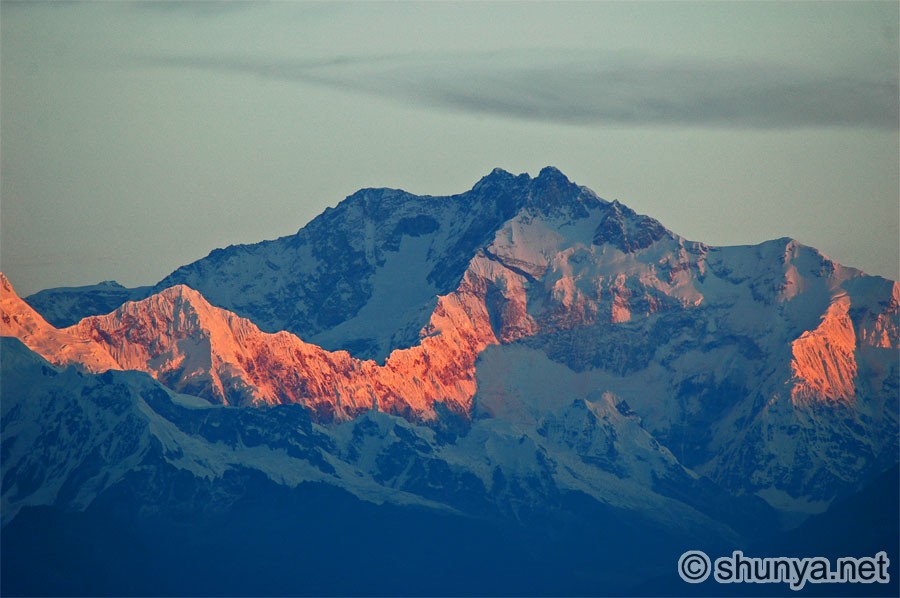
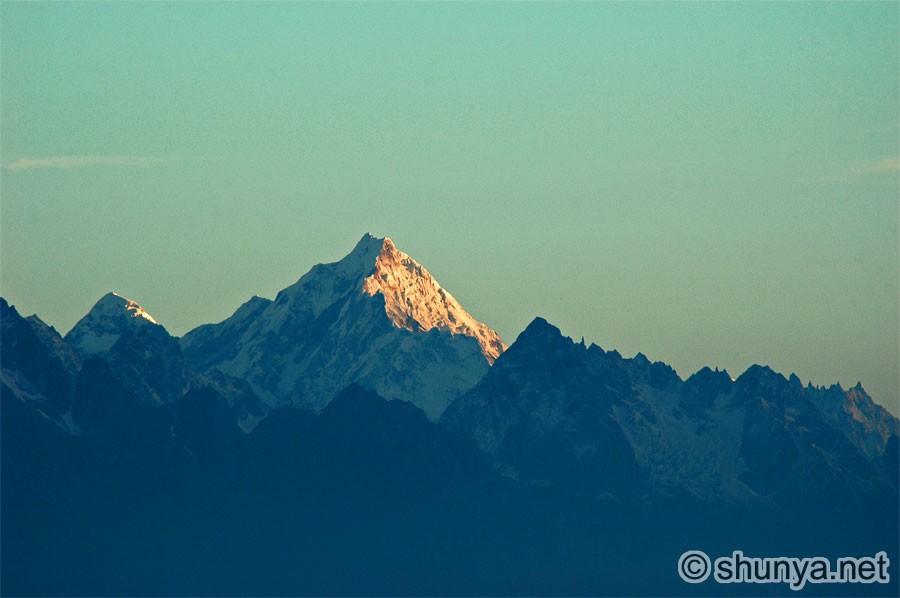
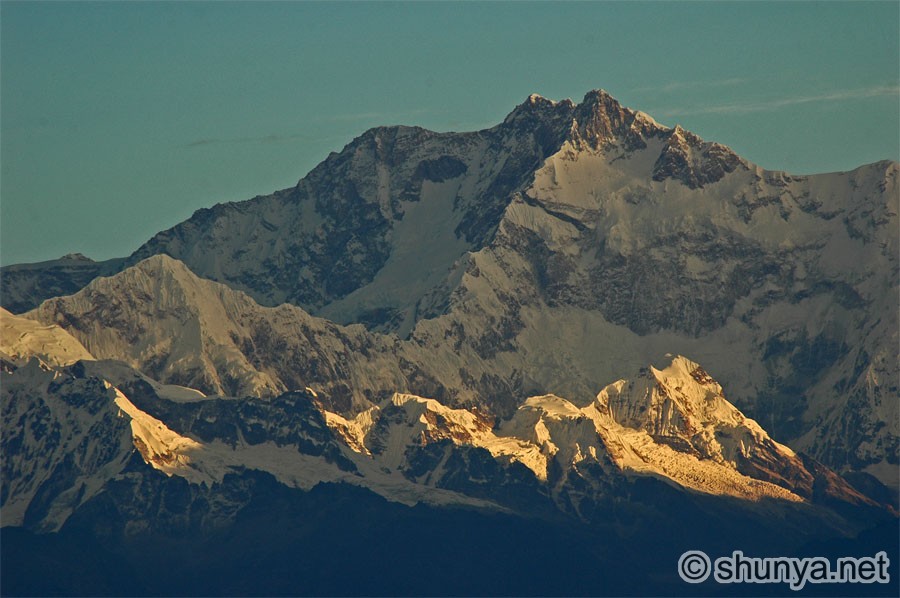
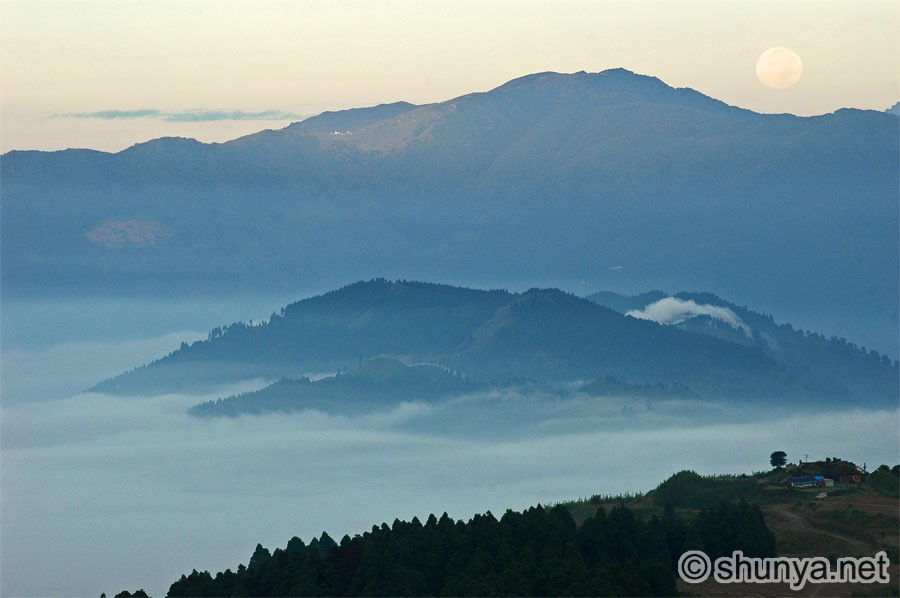
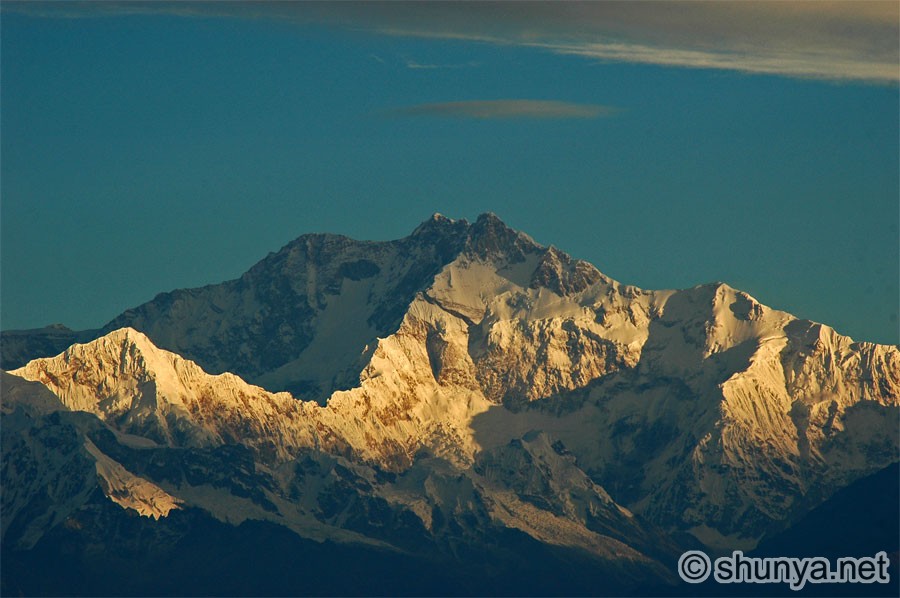
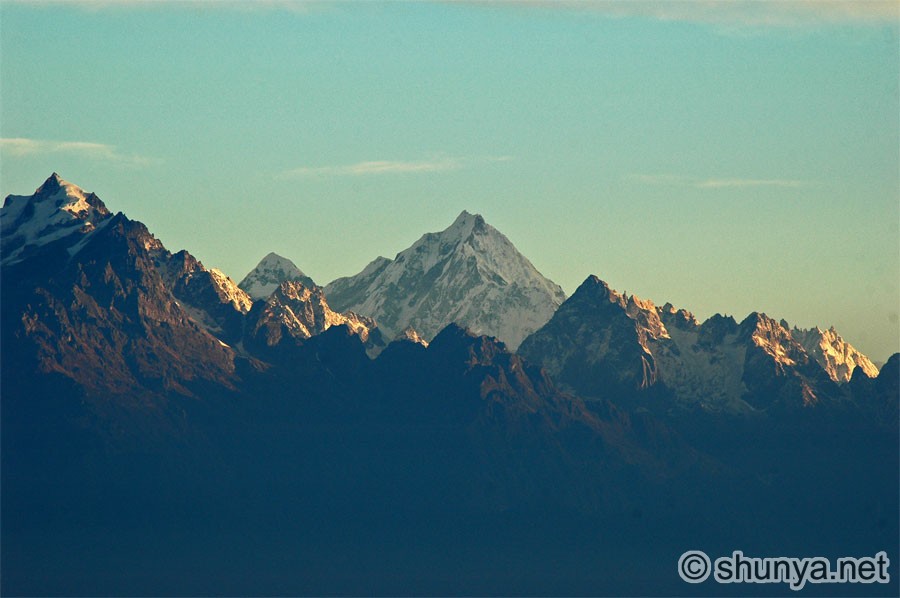
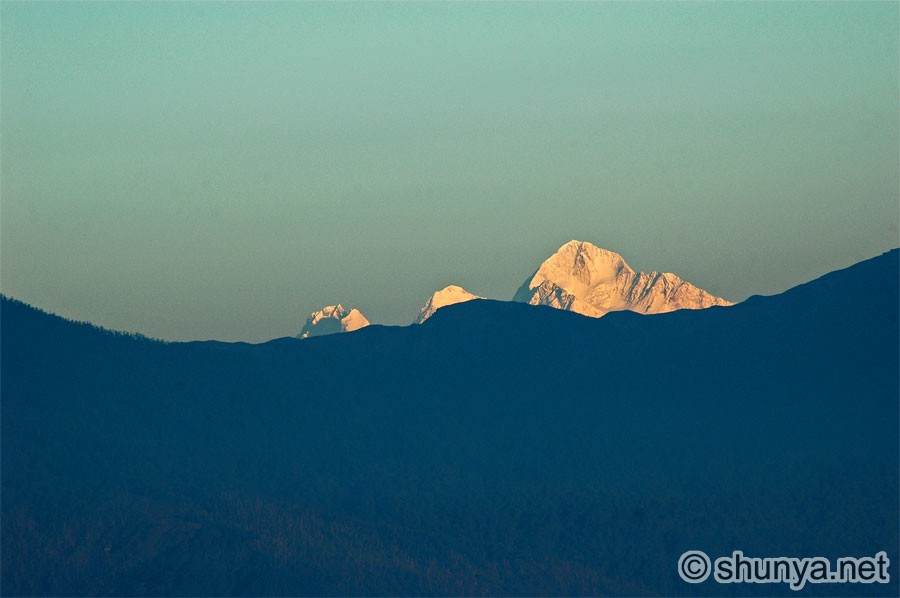
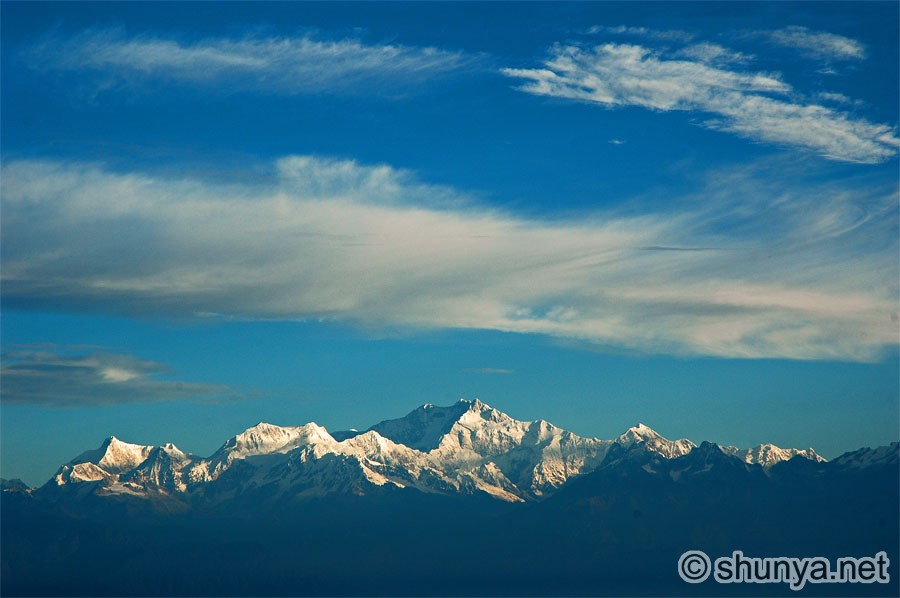
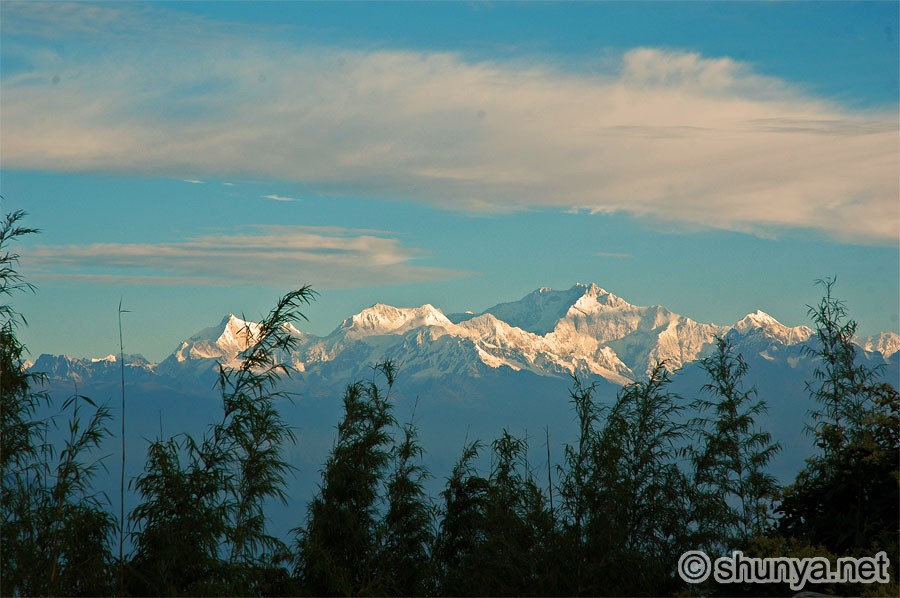
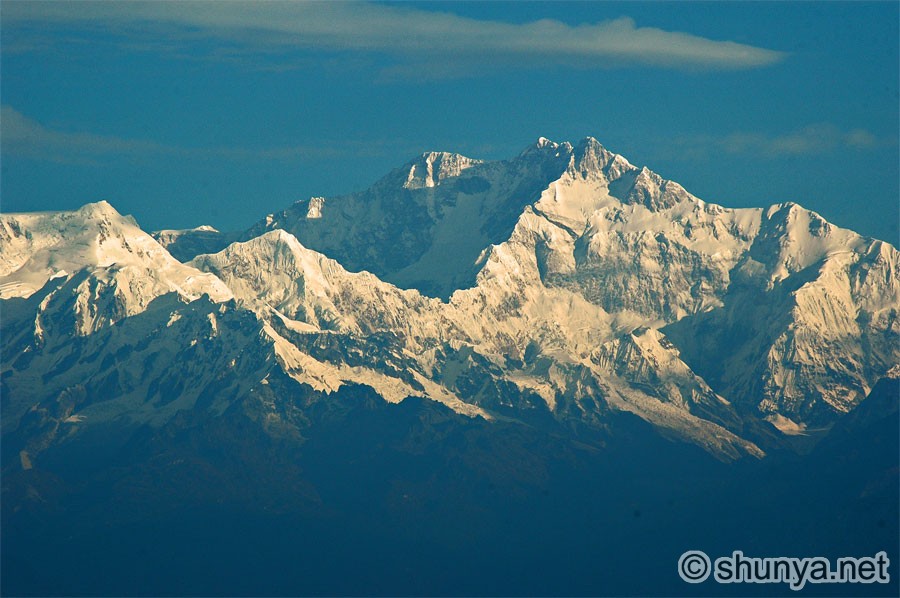
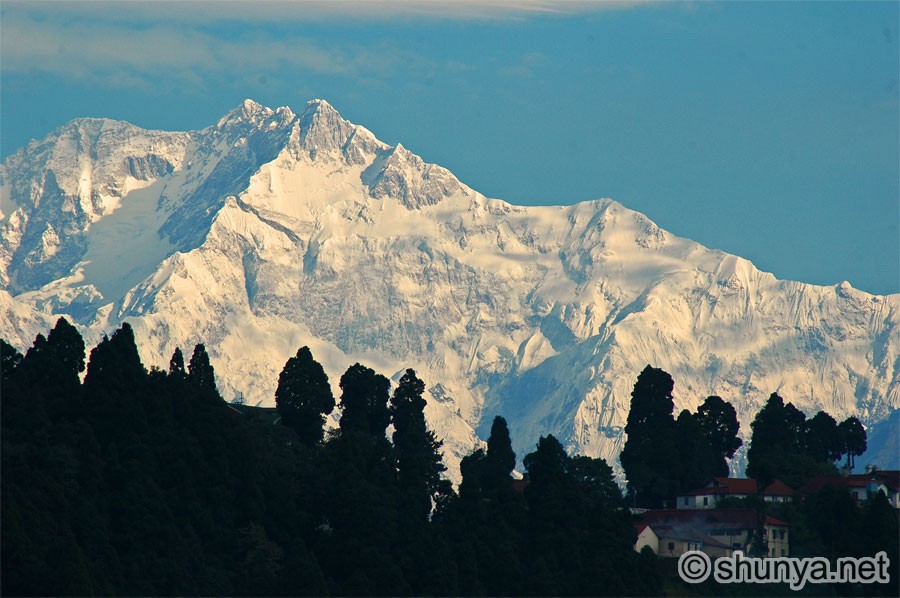
The Himalayas from Tiger Hill The view here is dominated by the Kanchenjunga massif, the world's third highest mountain at 8,586 m, located in Sikkim, India, 74 km from Darjeeling. It has the form of a gigantic cross, the arms of which lie north, south, east, and west. The individual summits connect to neighboring peaks by four main ridges, from which four glaciers flow-the Zemu (northeast), Talung (southeast), Yalung (southwest), and Kanchenjunga (northwest). The mountain is important in the mythology and religious ritual of the locals, and its slopes were no doubt familiar to herdsmen and traders for centuries before a rough survey of it was made. The name Kānchenjunga is derived from four words of Tibetan origin, usually rendered Kang-chen-dzo-nga, or Yang-chhen-dzö-nga, and interpreted in Sikkim as the "Five Treasuries of the Great Snow." Kanchenjunga was first mapped by Rinzin Namgyal, one of the pandit ("learned") explorers of the mid-19th century. A Bavarian expedition led by P. Bauer in 1929 and 1931 attempted it from the Zemu side, and G.O. Dyhrenfurth, in 1930, attempted it from the Kanchenjunga Glacier. The greatest height reached during these explorations was 7,700 m in 1931. Fatal accidents on two of these expeditions gave the mountain a reputation for unusual danger and difficulty. No more efforts were made to climb it until 1954, when, partly because the Sikkimese objected, attention was again turned to the Yalung face in Nepal. Gilmour Lewis' visits to the Yalung in 1951, 1953, and 1954 led to a 1955 British expedition led by Charles Evans, under the auspices of the Royal Geographical Society and the Alpine Club (London), which stopped within a few yards of the actual summit in deference to the religious beliefs and wishes of the Sikkimese. [Adapted from Encyclopedia Britannica; Oct 05] |
|||
 |
 |
 |
 |
 |
 |
 |
 |
 |
 |
 |
 |
|
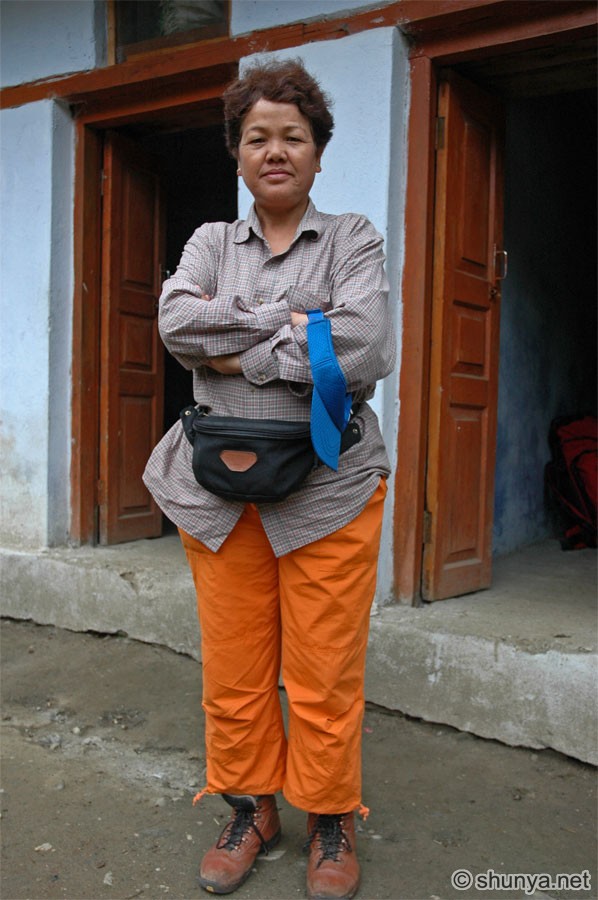
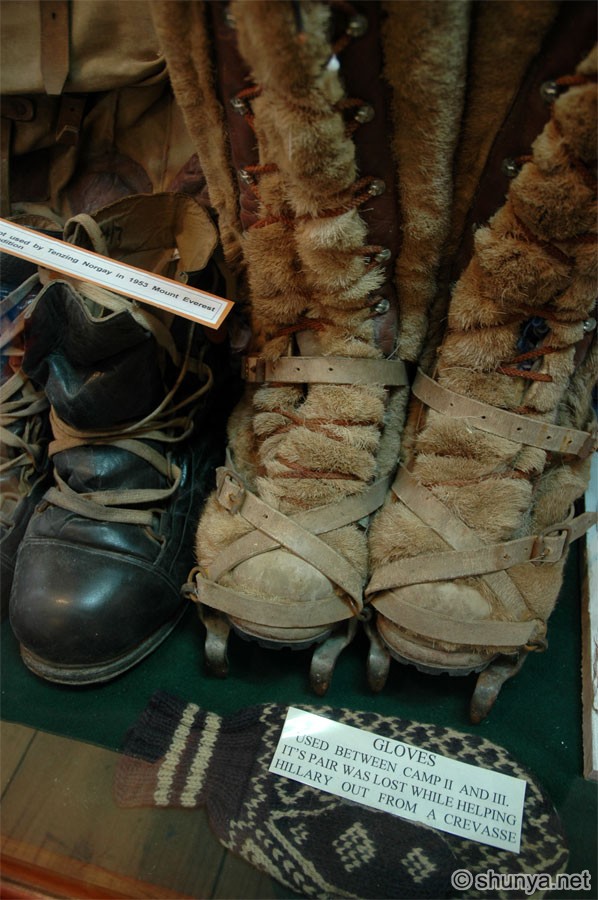
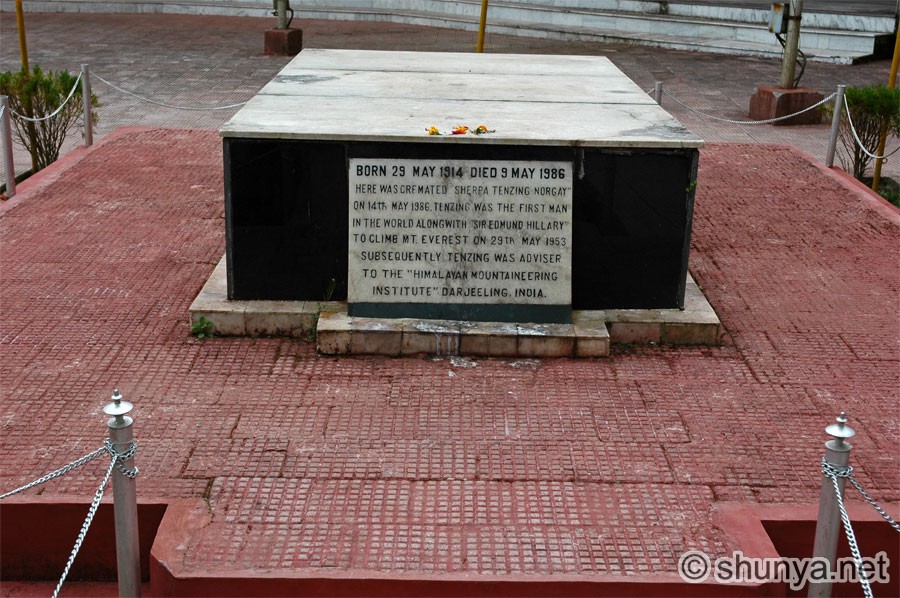
Darjeeling ("place of the thunderbolt"), at an elevation of 2,100 m, is situated on a long, narrow mountain ridge of the Sikkim Himalayas. Darjeeling was purchased in 1835 from the raja of Sikkim, developed as a sanatorium for British troops, and constituted a municipality in 1850. Chaurastha, with the Mall, is the town's main shopping centre and the most attractive promenade. Observatory Hill, the town's highest point (7,137 ft), is crowned by Mahakal Temple, sacred to both Hindus and Buddhists. Birch Hill contains a natural park and the Institute of Mountaineering. The Lloyd Botanic Gardens date from 1865. Darjeeling also has a zoo, a natural history museum, a racecourse, and is the seat of the University of North Bengal.♣ Other than the views of Mt. Kanchenjunga, Darjeeling was a bit of a letdown for me. I had been there in 1994 and remembered it as a quiet little town clinging to the emerald slopes of the mountains, bounded by dense jungles and neat tea estates. No longer. It's now a noisy, thronging city and a major tourist center, plagued by many of the ills of other Indian cities, including noise and pollution. Used to be you could just stroll from the center of town into tea estates and villages; now you must go quite some distance to find peace. We did take a long hike one day from the top of Tiger Hill, down through Ghoum, and back to Darjeeling. Ghoum has a very old Tibetan Buddhist monastery, but the Tibetans in Darjeeling (and Sikkim) do not belong to the same branch of Buddhism as the Dalai Lama, and are not recent migrants. This branch of Tibetan Buddhists (called the Bhutia) respect the Dalai Lama as a great spiritual teacher, but they do not recognize him as the "head of their order;" the Bhutia's Buddhism is closer to its shamanistic roots than "mainstream" Tibetan Buddhism. Sherpa Tenzing Norgay is a local cultural icon; after pioneering the climb of Mt. Everest with Sir Edmund Hillary in 1953, he moved to Darjeeling where he headed the Himalayan Mountaineering Institute until his death. Bachendri Pal, also a local hero, was the first Indian woman to climb Mt. Everest (1984), and the fifth woman in the world to do so; a poor girl from a mountain village, she, too, has a real "rags to riches" story. [—Usha Alexander, Oct 2005] |
|||
"Queen of the hills" 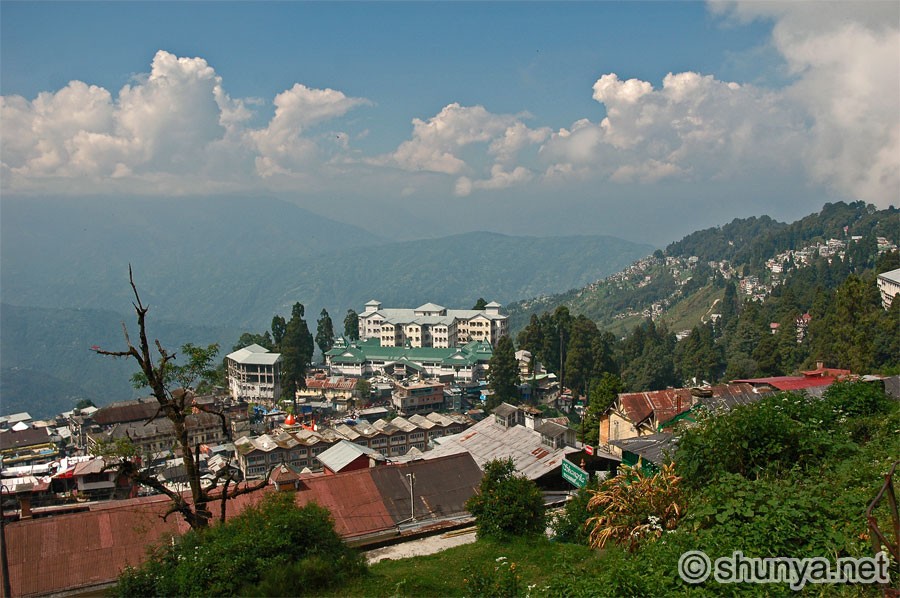 |
Darjeeling settlement 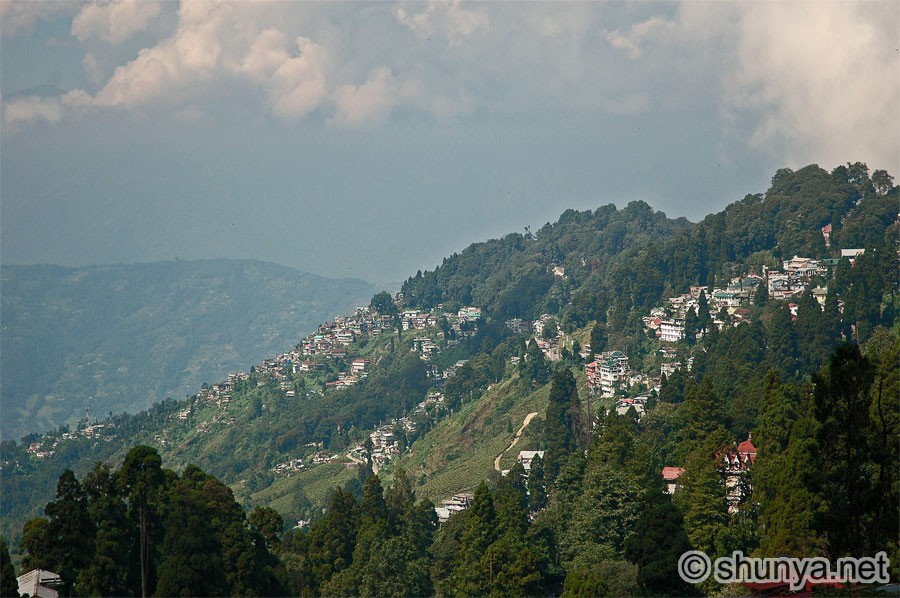 |
Dense hillside 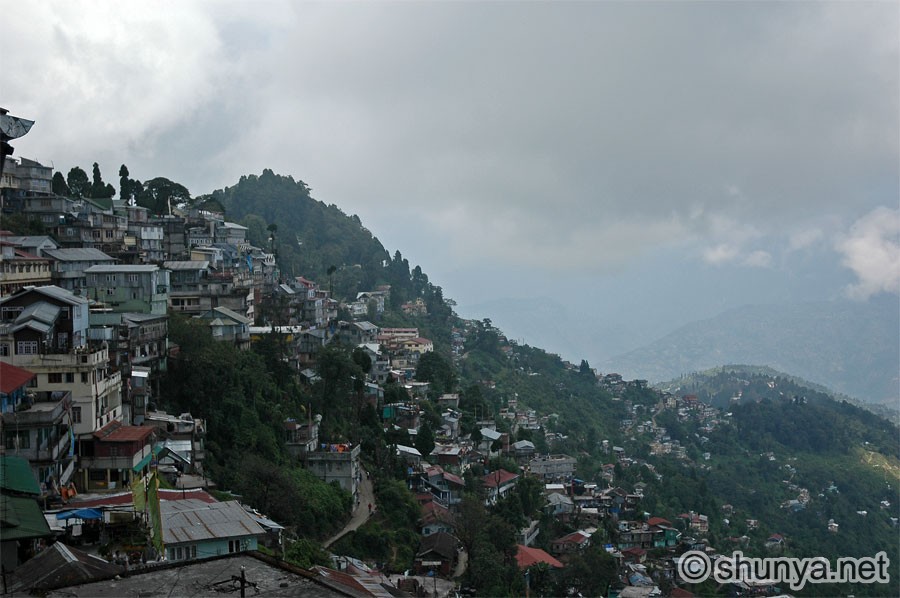 |
Square 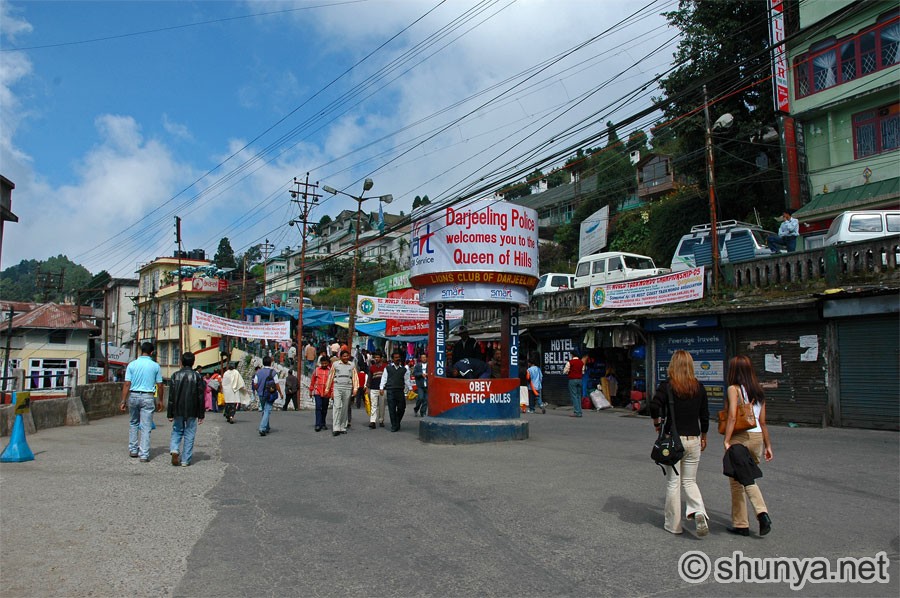 |
Darjeeling stall 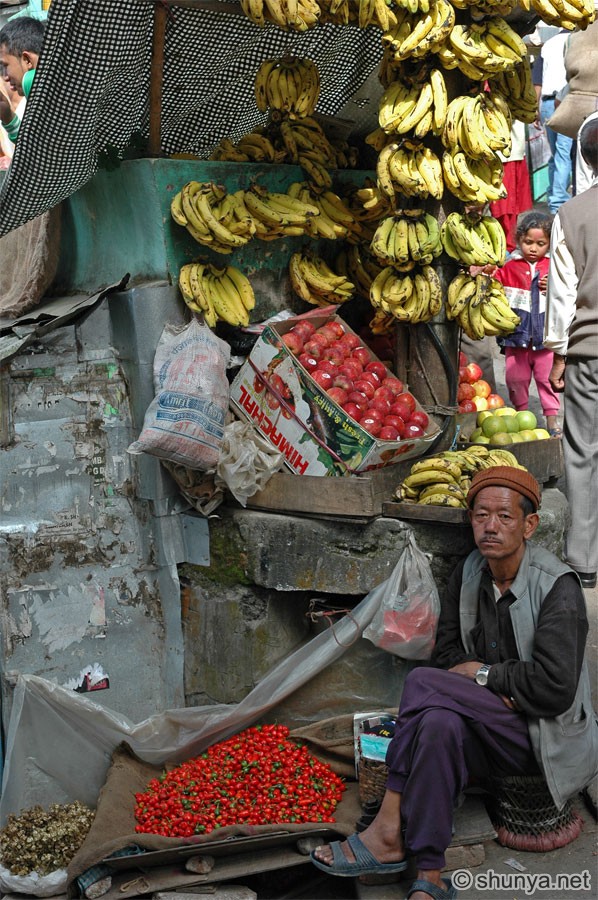 |
Two kids singing 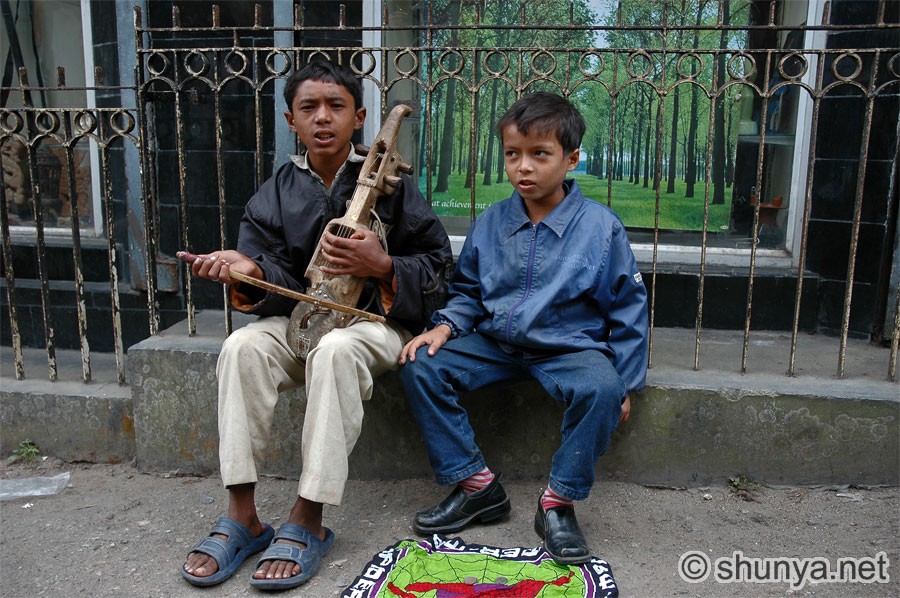 |
Himalayan view 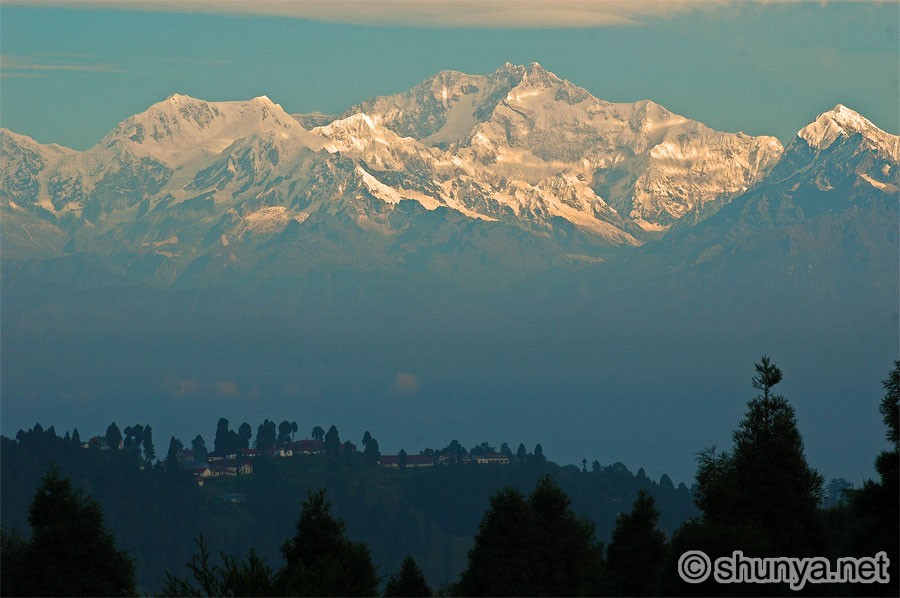 |
Steep staircase 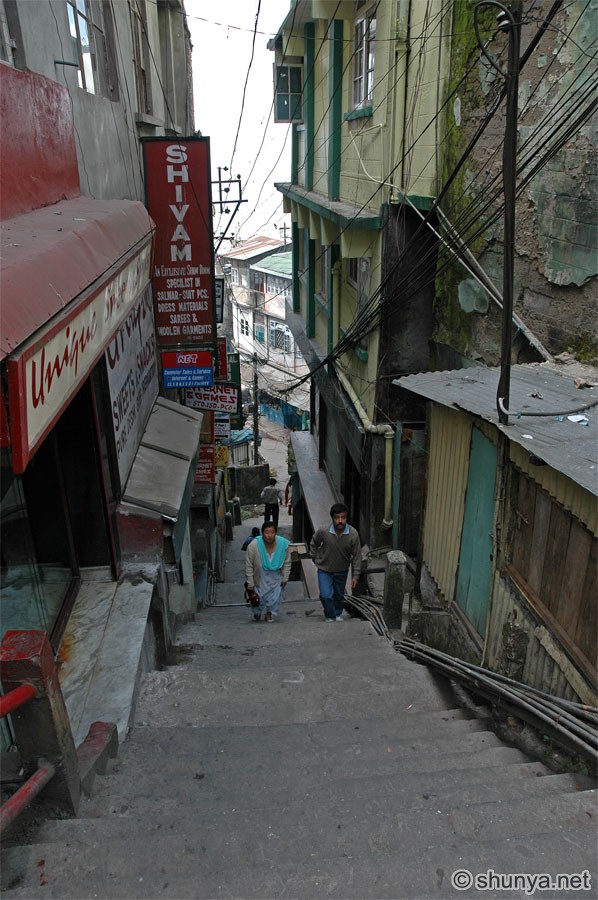 |
|
Ghoom 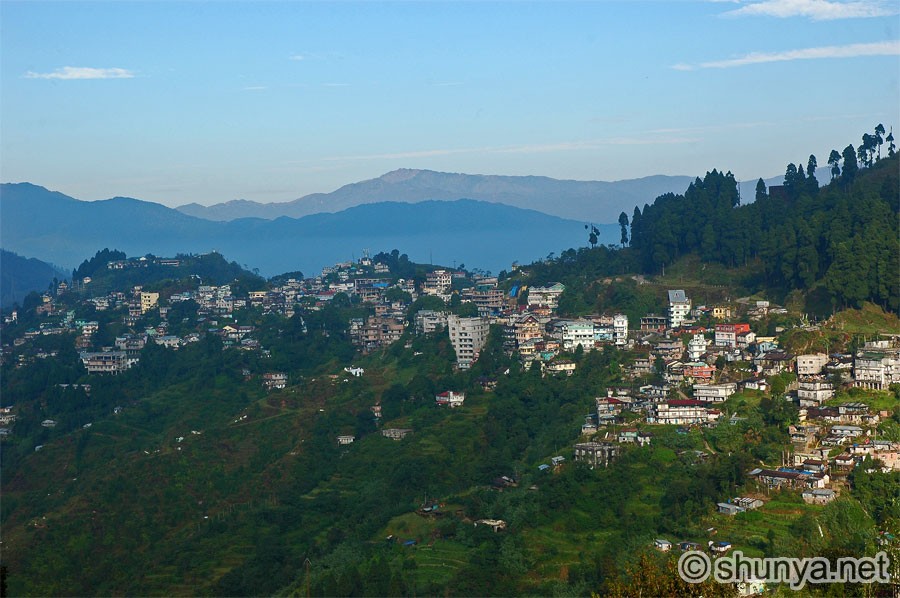 |
Ghoom train station 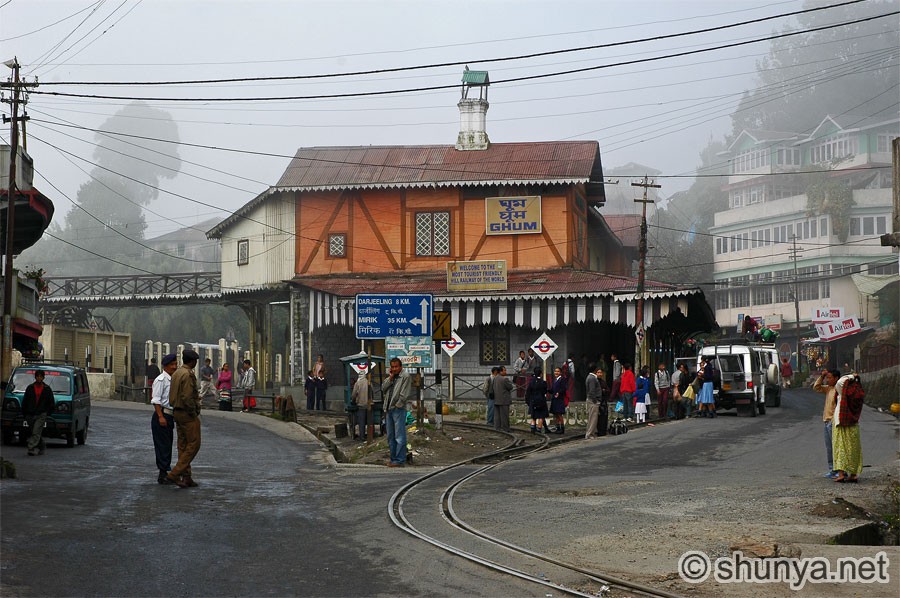 |
Hindu temple 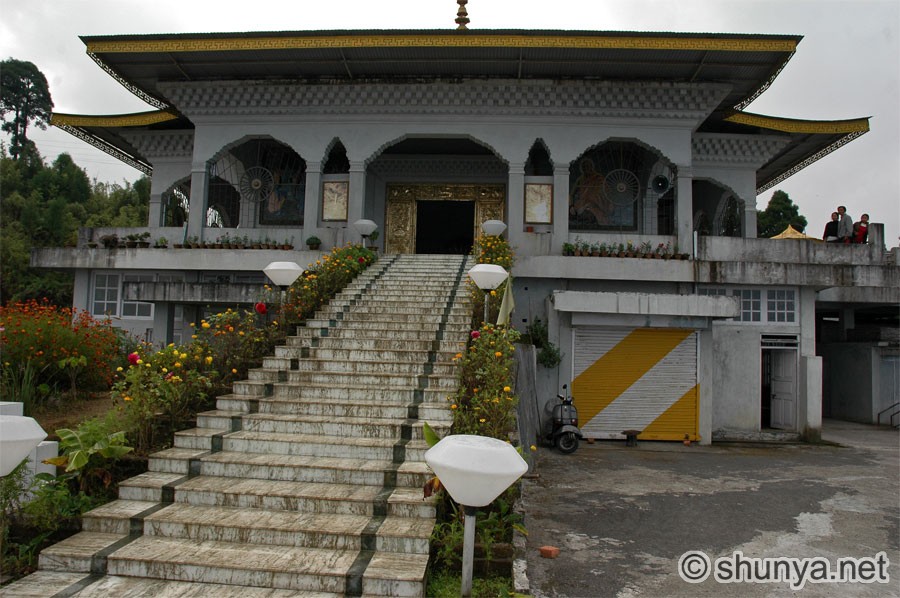 |
Hindu temple painting 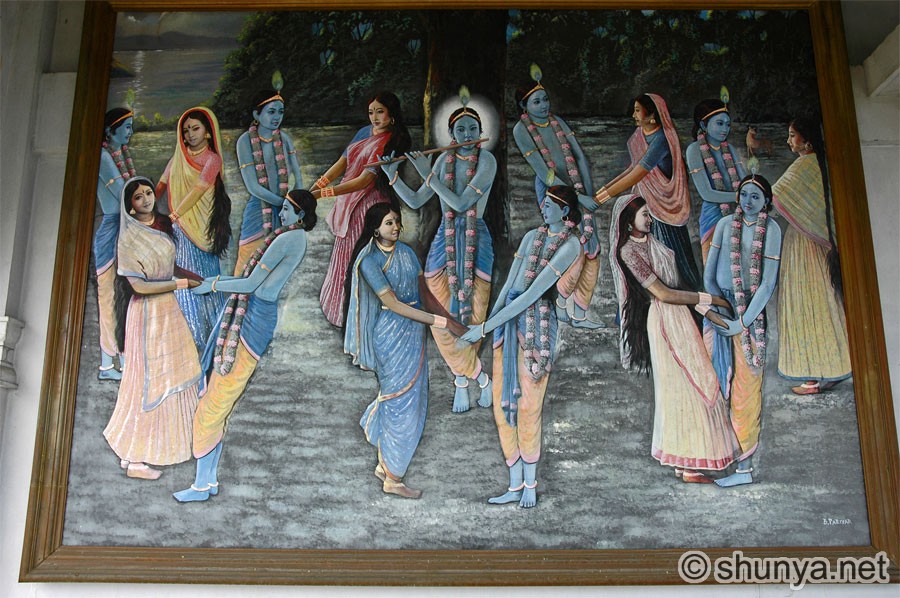 |
|
Sakyaguru gompa 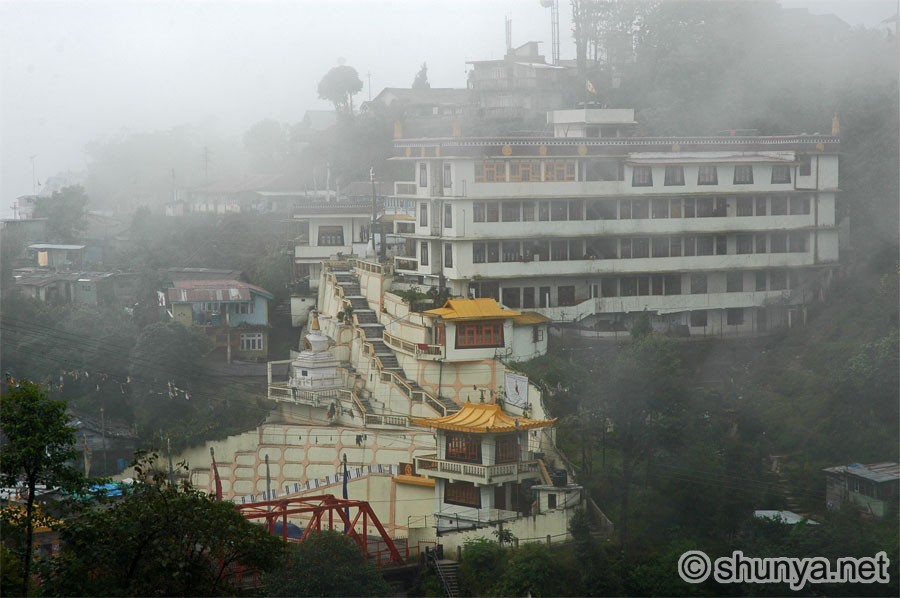 |
Main entrance 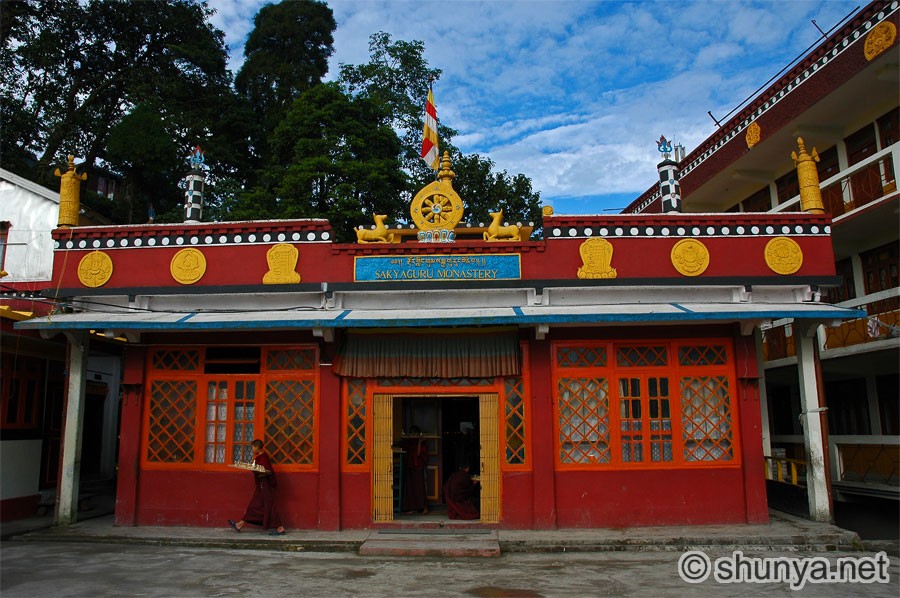 |
Prayer session 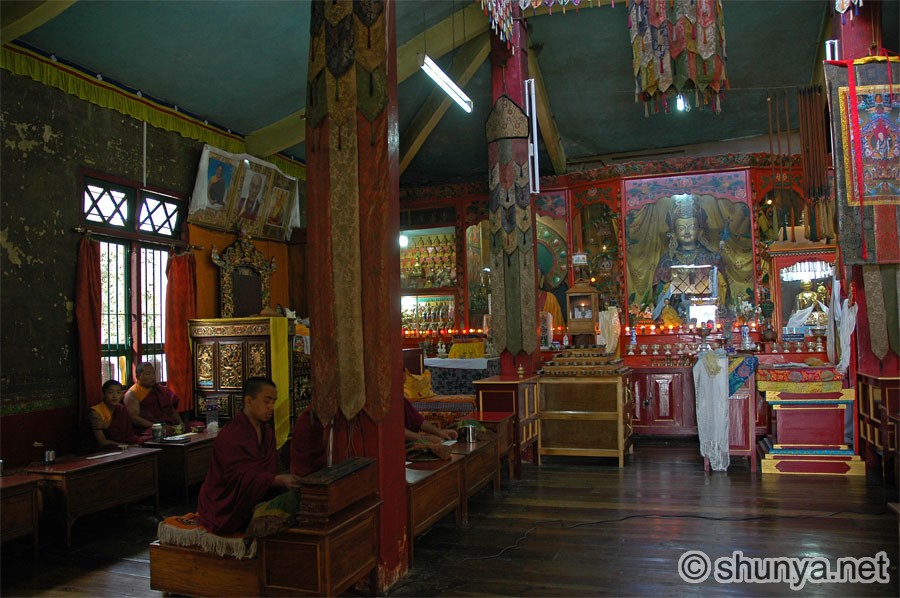 |
Monk beating a drum 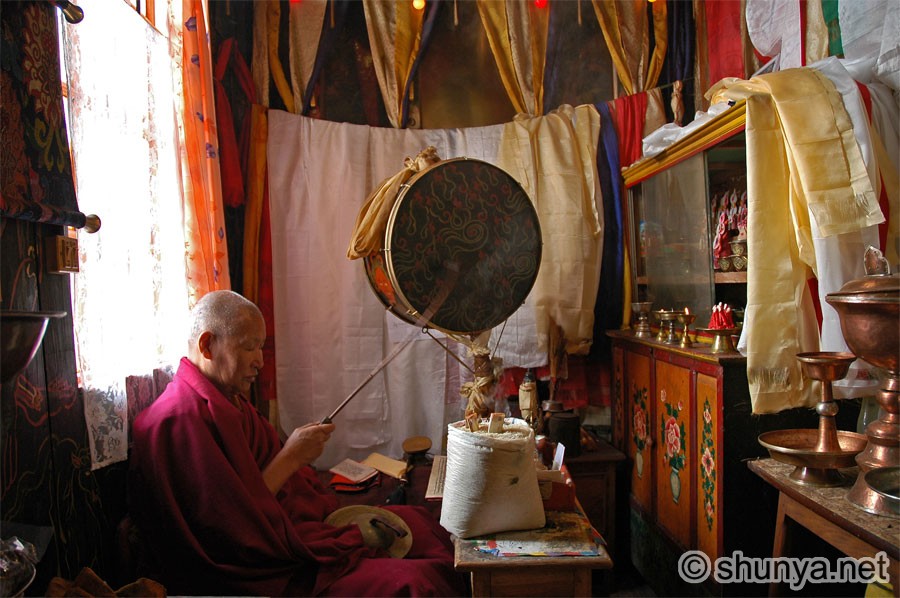 |
|
Local kids 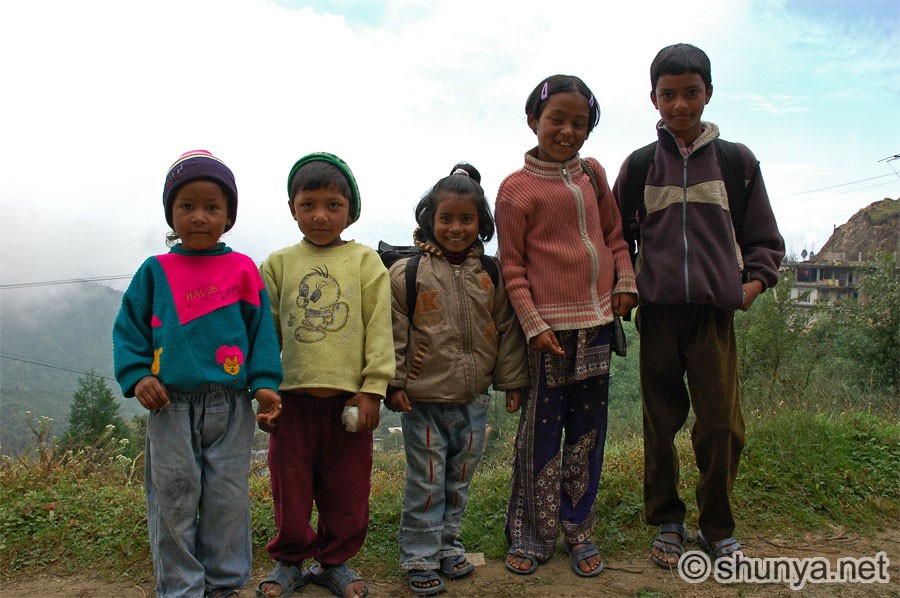 |
Druk Sangak gompa 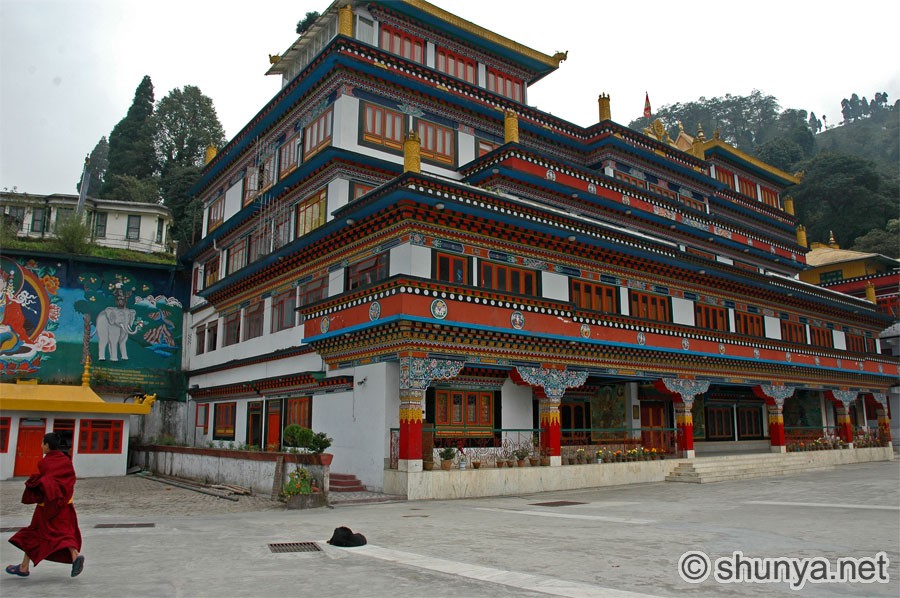 |
Main entrance (painting) 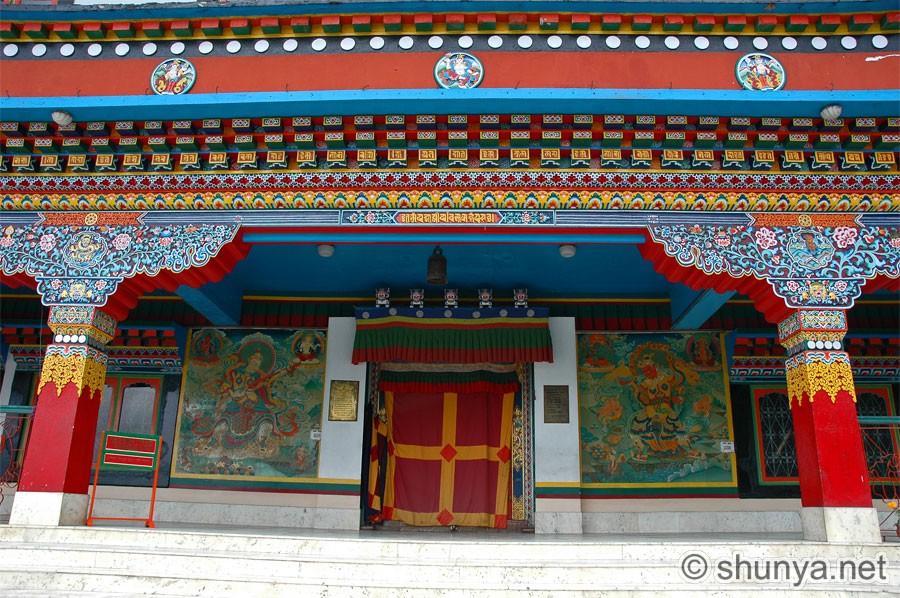 |
View from hiking path (more) 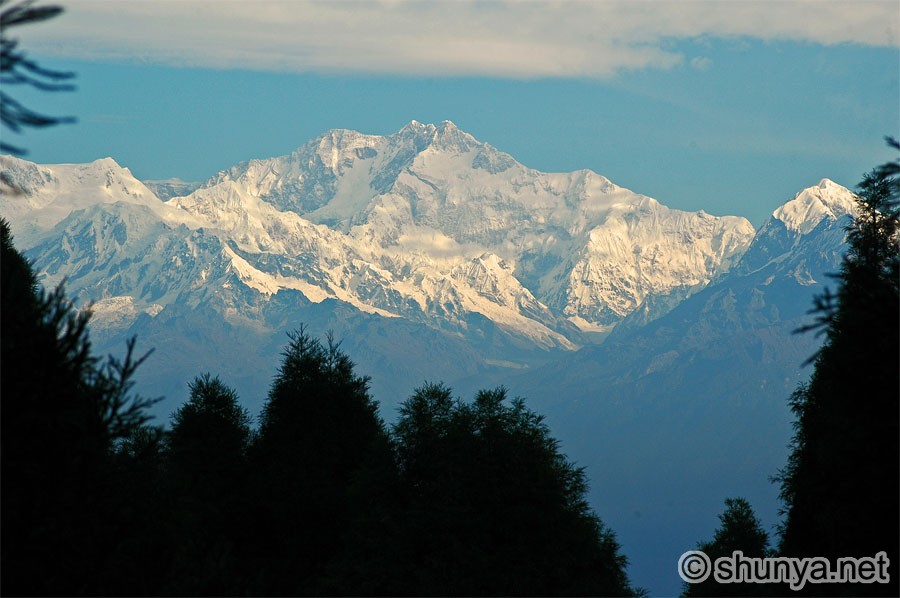 |
|
Natural spring 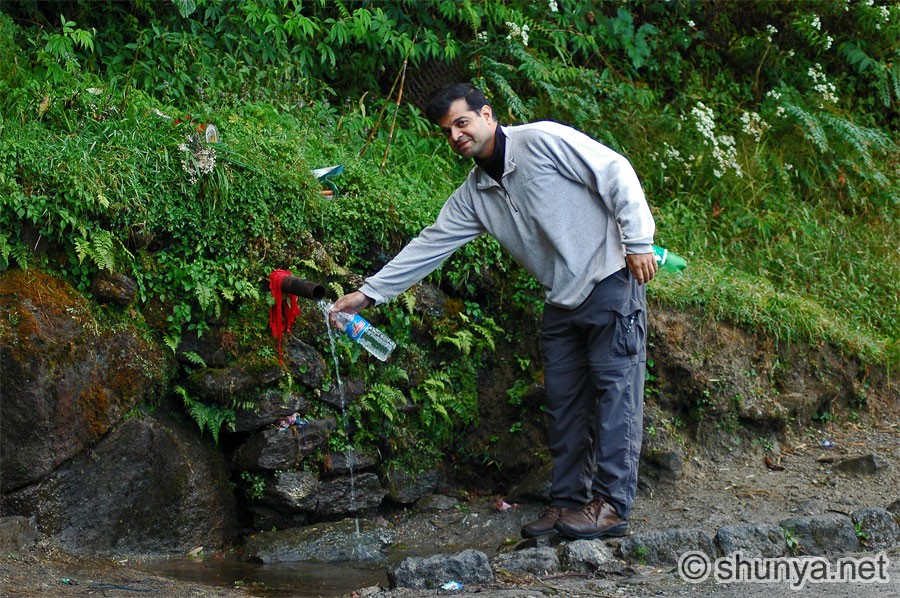 |
Local kids 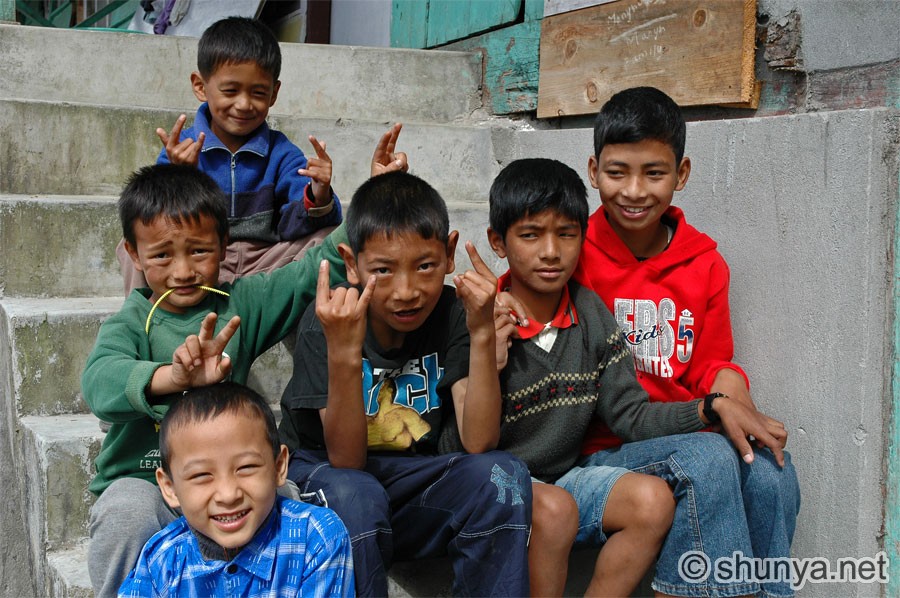 |
Chowrasta square 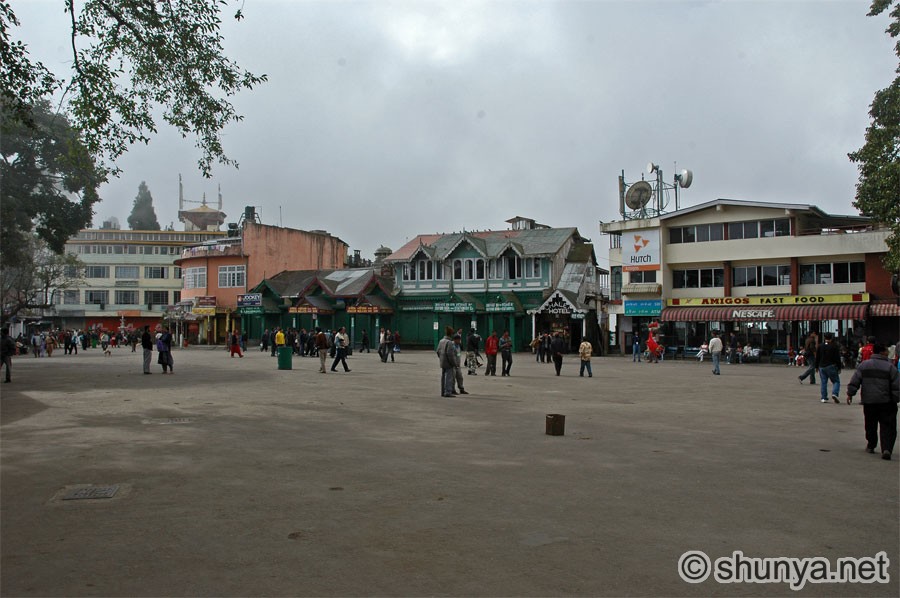 |
Bhanubhakt Acharya 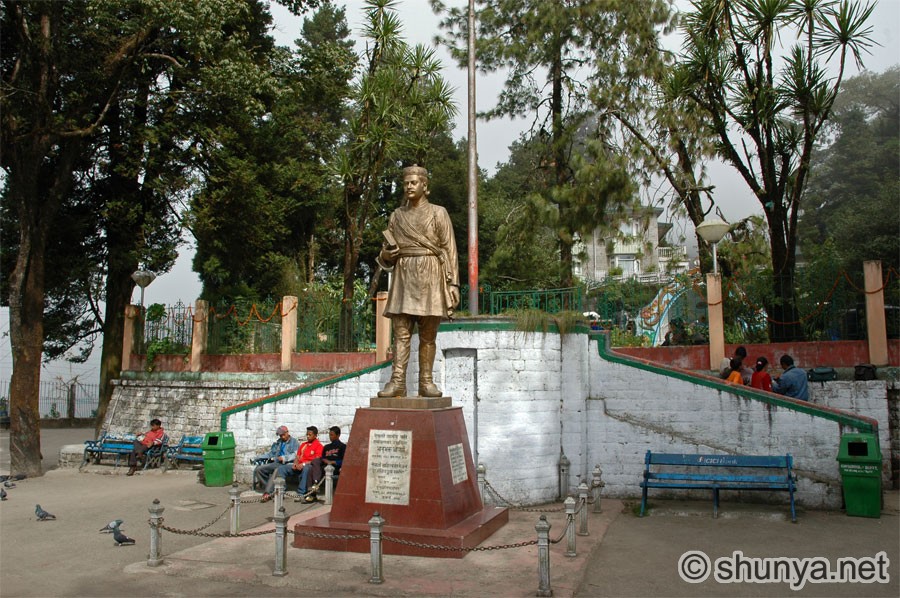 |
|
Mahakala temple 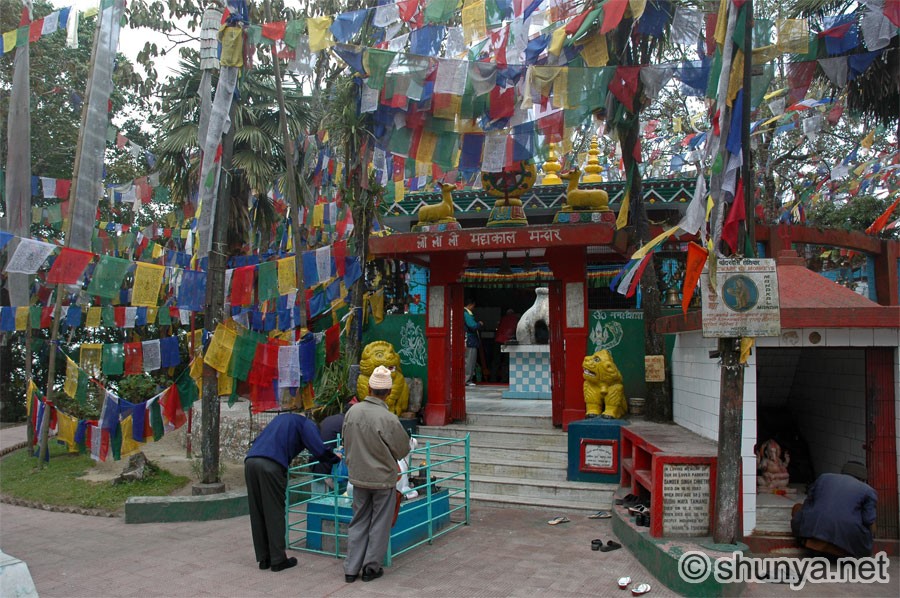 |
Darjeeling hillside 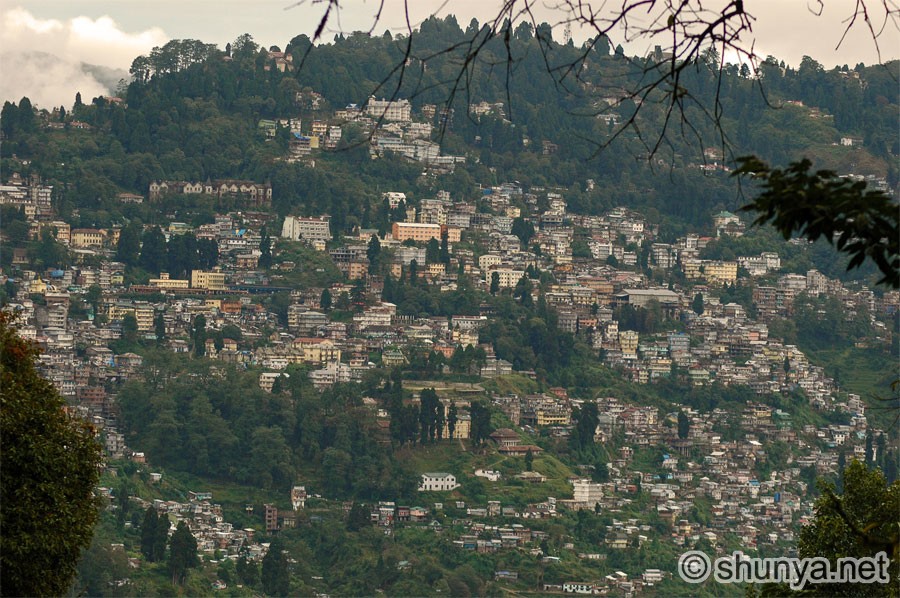 |
Fog rolling in 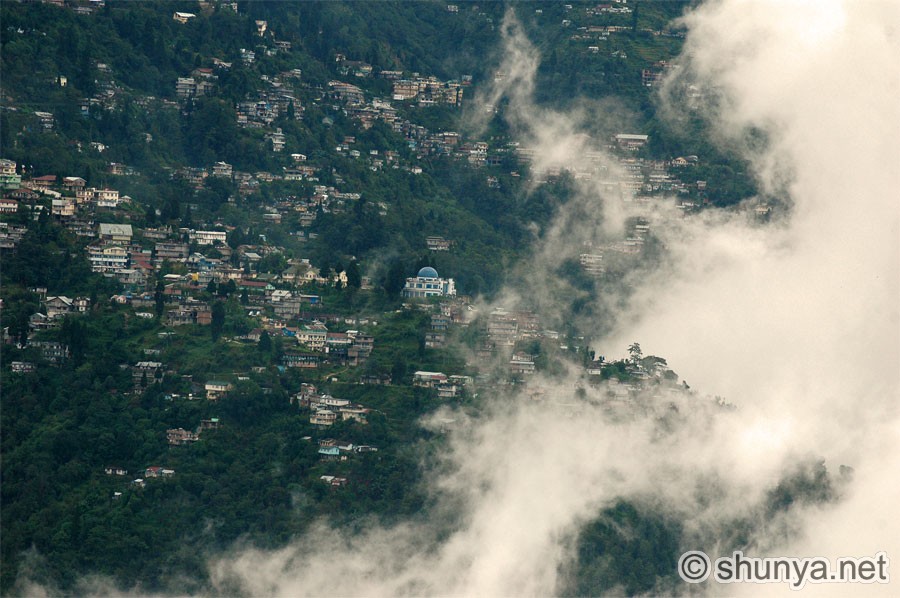 |
Cloud cover 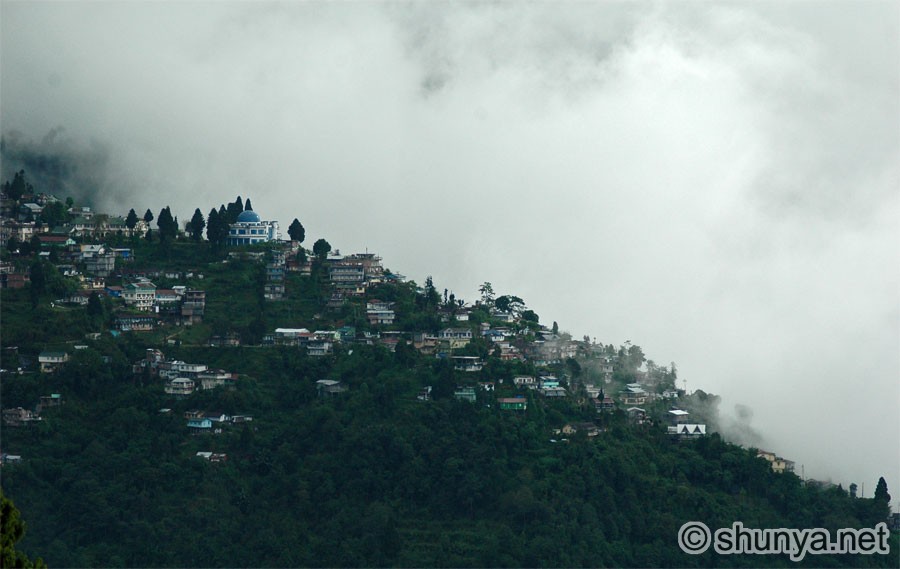 |
|
Himalayan Mountaineering Institute |
|||
Bachendri Pal 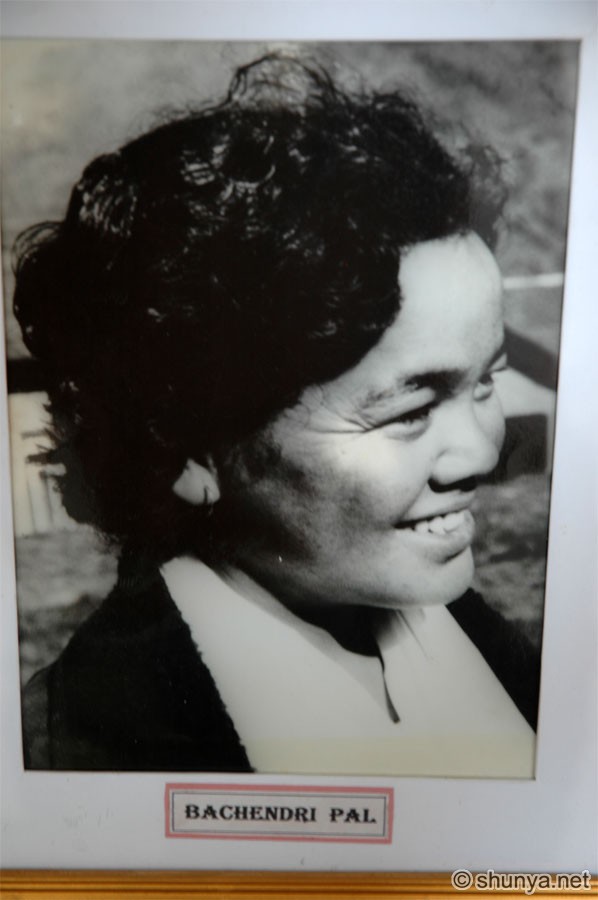 |
Himalayan Mountaineering Institute 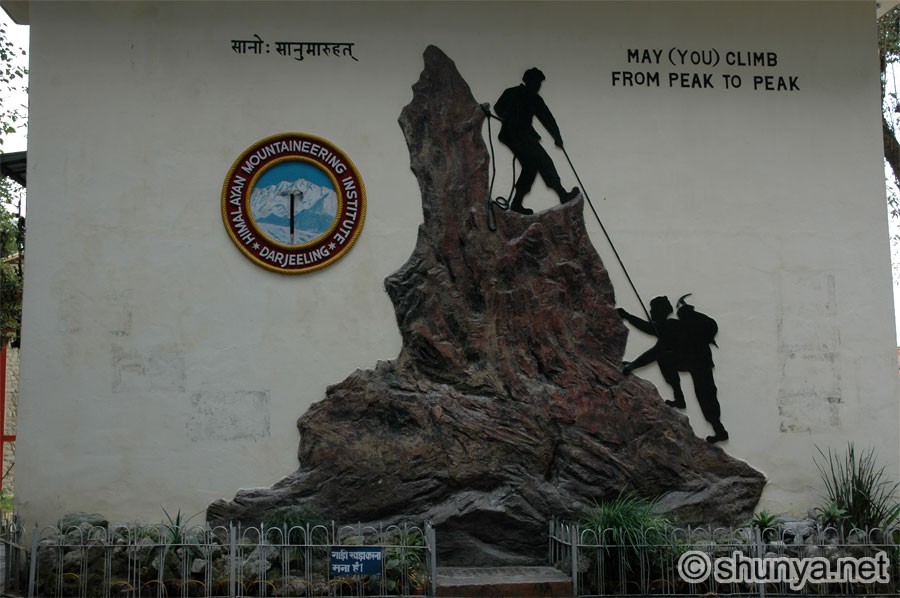 |
Of British
blood and breed 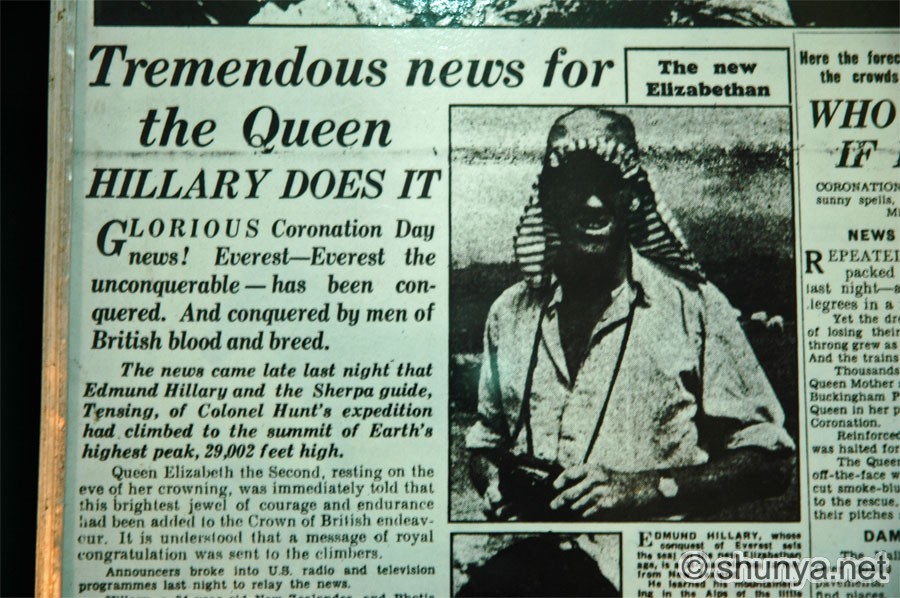 |
Sherpa Tenzing (memorial) 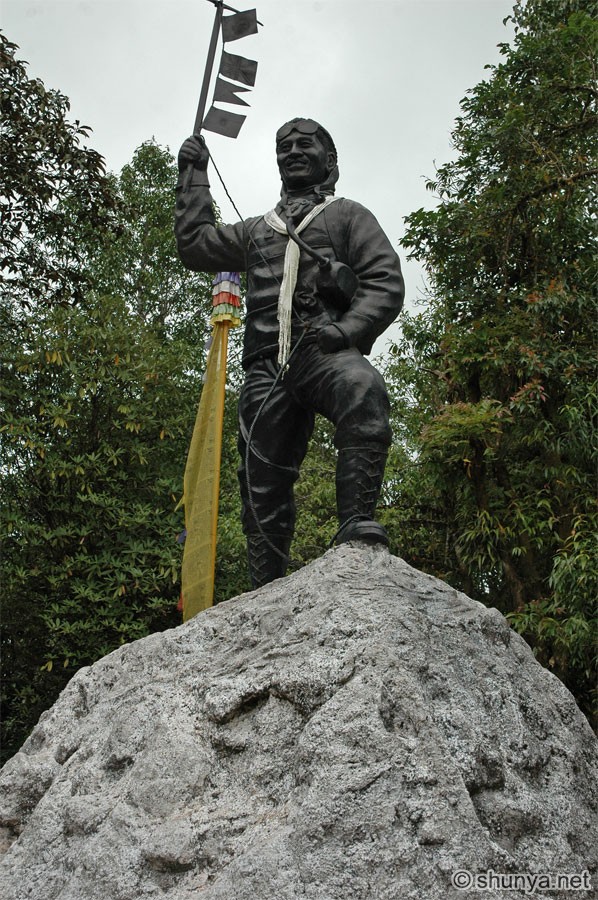 |
|
Padmaja Naidu Himalayan Zoological Park Established in 1958 to study and conserve Himalayan fauna, especially the endangered, this park has been able to breed several species in captivity, such as red pandas, Tibetan wolves, and snow leopards. Most large animals are kept in near-natural, no-roof enclosures and are cared for by dedicated keepers. |
|||
Snow leopard 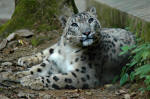 |
Siberian tiger 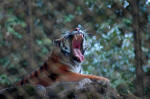 |
Himalayan Black bear 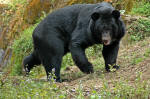 |
Tibetan wolf 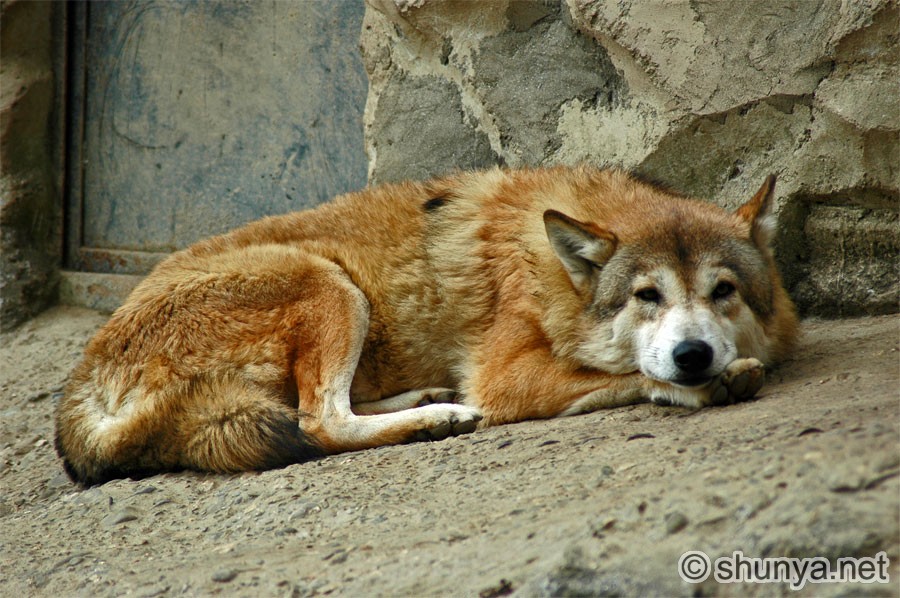 |
|
Himalayan wild pig 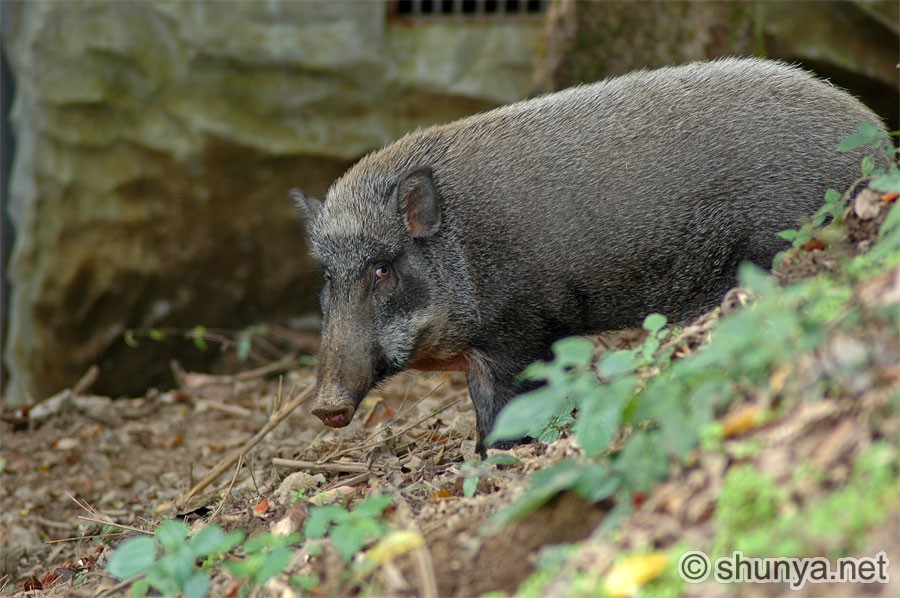 |
Red panda  |
Barking deer 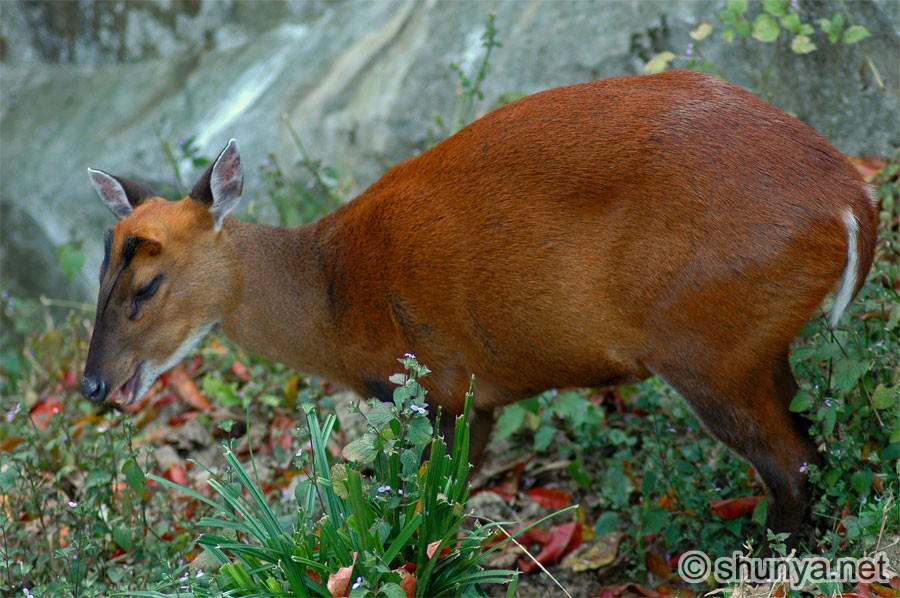 |
Himalayan Palm civet 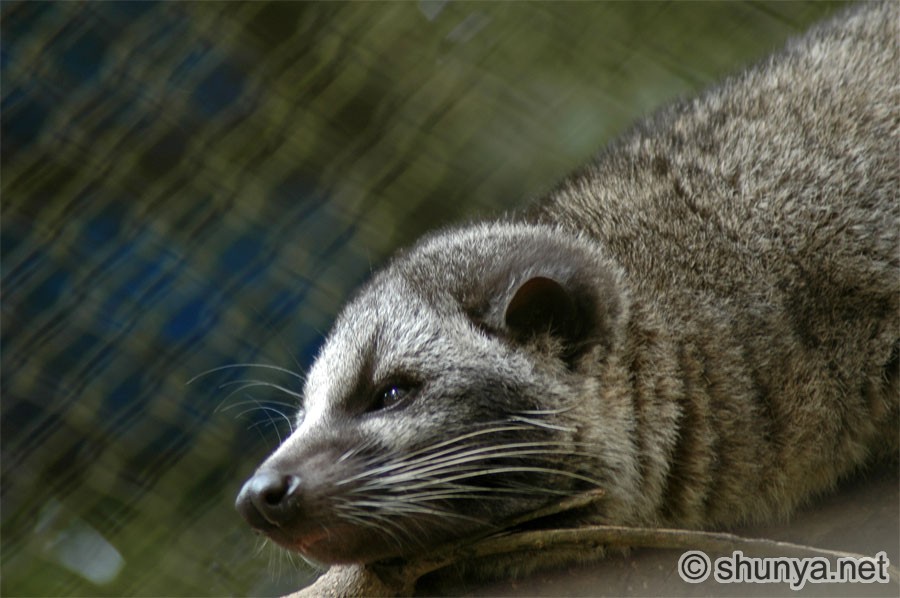 |
Designed in collaboration with Vitalect, Inc. All rights reserved. |