




People of India Click on thumbnails below for additional pictures.
 |
|||
 |
 |
 |
|
|
|

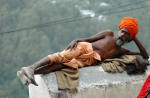
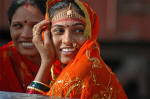
"Afternoon now, and the train's shadow racing behind us. Sunset, evening, night; station after dimly-lit station. It was an Indian railway journey, but everything that had before seemed pointless was now threatened [by the advancing Chinese in the '62 Sino-Indian war] and seemed worth cherishing; and as in the mild sunshine of a winter morning we drew near to green Bengal, which I had longed to see, my mood towards India and her people became soft. I had taken so much for granted. There, among the Bengali passengers who had come on, was a man who wore a long woolen scarf and a brown tweed jacket above his Bengali dhoti. The casual elegance of his dress was matched by his fine features and relaxed posture. Out of all the squalor and human decay, its eruptions of butchery, India produced so many people of grace and beauty, ruled by elaborate courtesy. Producing too much life, it denied the value of life; yet it permitted a unique human development to so many. Nowhere were people so heightened and rounded and individualistic; nowhere did they offer themselves so fully and with such assurance. To know Indians was to take delight in people as people; every encounter was an adventure. I did not want India to sink; the mere thought was painful." [--VS Naipaul, An Area of Darkness, pp. 263, 1962-64] |
||
Designed in collaboration with Vitalect, Inc. All rights reserved. |